Trends in urolithiasis mortality in the United States, 1999–2024: a Joinpoint regression analysis of age, sex, race, and regional disparities - Scorecard - MDSpire
Conexiant’s news site is now MDSpire News. Learn more
Advertisement
Analysis of Mortality Trends Associated with Urolithiasis in the United States from 1999 to 2024: A Joinpoint Regression Study Examining Age, Gender, Ethnicity, and Geographic Variations
Clinical Scorecard: Analysis of Mortality Trends Associated with Urolithiasis in the United States from 1999 to 2024: A Joinpoint Regression Study Examining Age, Gender, Ethnicity, and Geographic Variations
At a Glance
Category
Detail
Condition
Urolithiasis
Key Mechanisms
Mortality trends associated with demographic and geographic disparities.
Target Population
Adults aged ≥45 years.
Care Setting
Public health analysis using CDC WONDER database.
Key Highlights
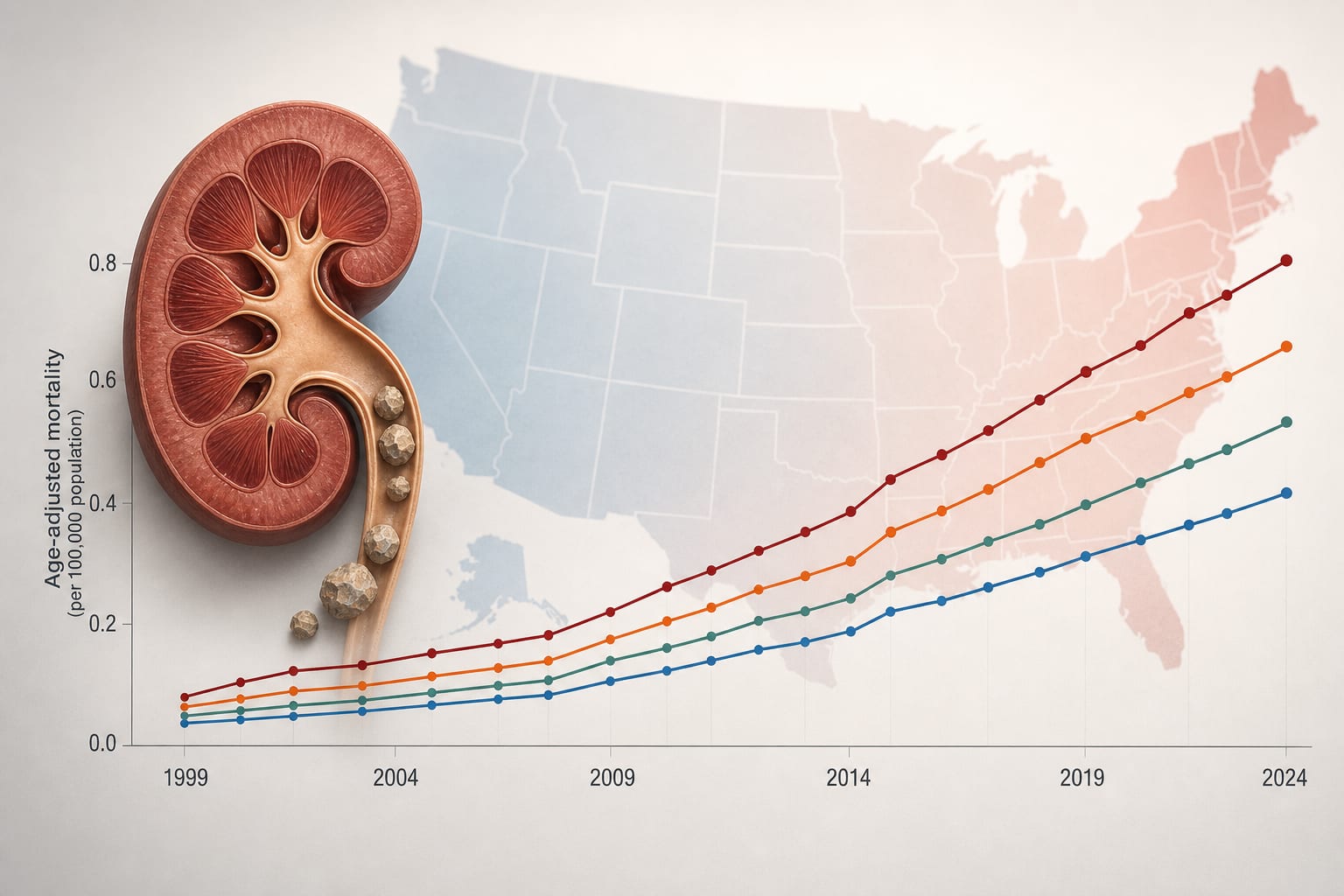
Urolithiasis mortality rose from 0.22 to 0.72 per 100,000 population from 1999 to 2024.
Significant increase in mortality observed post-2014, with an annual percent change of 8.54%.
Females had a higher age-adjusted mortality rate than males by 2024.
Non-Hispanic white individuals experienced the highest mortality rate at 0.86 per 100,000.
The highest mortality rate was among individuals aged 85 years and older, reaching 5.72 per 100,000.
Guideline-Based Recommendations
Diagnosis
Utilize ICD-10 codes N20–N23 for identifying urolithiasis-related deaths.
Management
Targeted interventions needed for high-risk populations including older adults and non-Hispanic white individuals.
Monitoring & Follow-up
Regular assessment of mortality trends across demographic and geographic groups.
Risks
Increased mortality associated with advancing age and demographic disparities.
Patient & Prescribing Data
Adults aged ≥45 years with urolithiasis.
Consider demographic factors and geographic location when planning treatment.
Clinical Best Practices
Implement public health strategies to address rising mortality trends.
Focus on high-risk settings, particularly in the Midwest and rural areas.