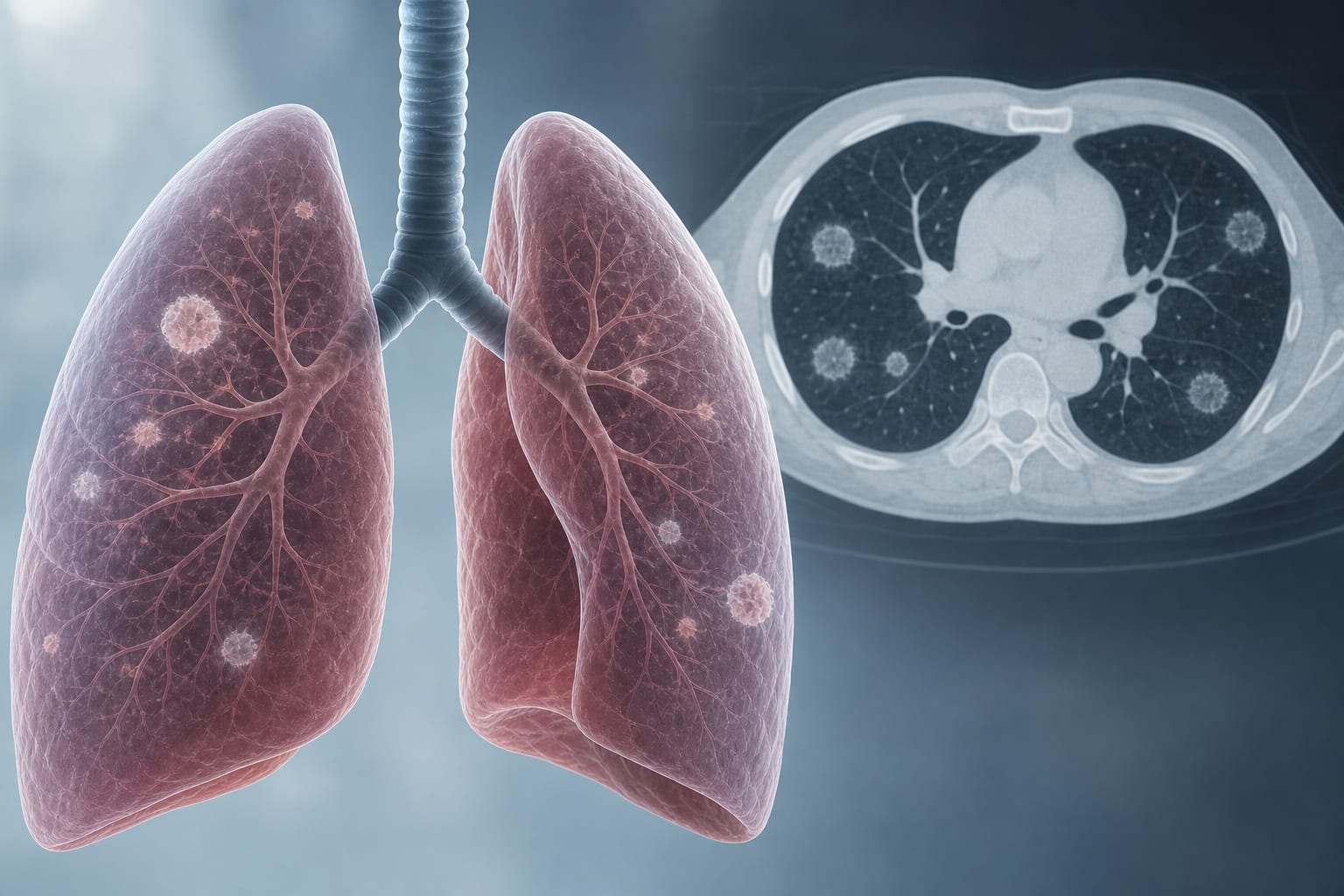
Clinical Scorecard: Atypical Solid Variant of Primary Pulmonary Adenoid Cystic Carcinoma with Pleural Metastasis and Malignant Effusion: An Uncommon Case Study
At a Glance
Category
Detail
Condition
Primary Pulmonary Adenoid Cystic Carcinoma (PACC)
Key Mechanisms
Biphasic epithelial–myoepithelial differentiation with expression of SOX10 and c-Myb.
Target Population
Adults, particularly those with a history of salivary gland-type tumors.
Care Setting
Oncology and Pulmonary Medicine.
Key Highlights
PACC accounts for 0.04%–0.2% of primary lung neoplasms.
The solid variant is associated with more aggressive behavior.
Diagnostic challenges exist due to immunophenotypic overlap with squamous cell carcinoma.
Combination therapy with tislelizumab and chemotherapy showed partial response.
Malignant pleural effusion in PACC is exceptionally rare.
Guideline-Based Recommendations
Diagnosis
Incorporate myoepithelial markers in the diagnostic workup for lung tumors.
Management
Consider systemic combination therapy for advanced PACC.
Monitoring & Follow-up
Regular imaging and clinical assessment for disease progression.
Risks
Potential for misdiagnosis as squamous cell carcinoma.
Patient & Prescribing Data
65-year-old male with advanced stage IV PACC.
Received tislelizumab, cyclophosphamide, pegylated liposomal doxorubicin, and nedaplatin.
Clinical Best Practices
Utilize comprehensive immunohistochemical profiling for accurate diagnosis.
Monitor for symptoms of malignant pleural effusion in PACC patients.
Adopt a multidisciplinary approach for management of advanced PACC.