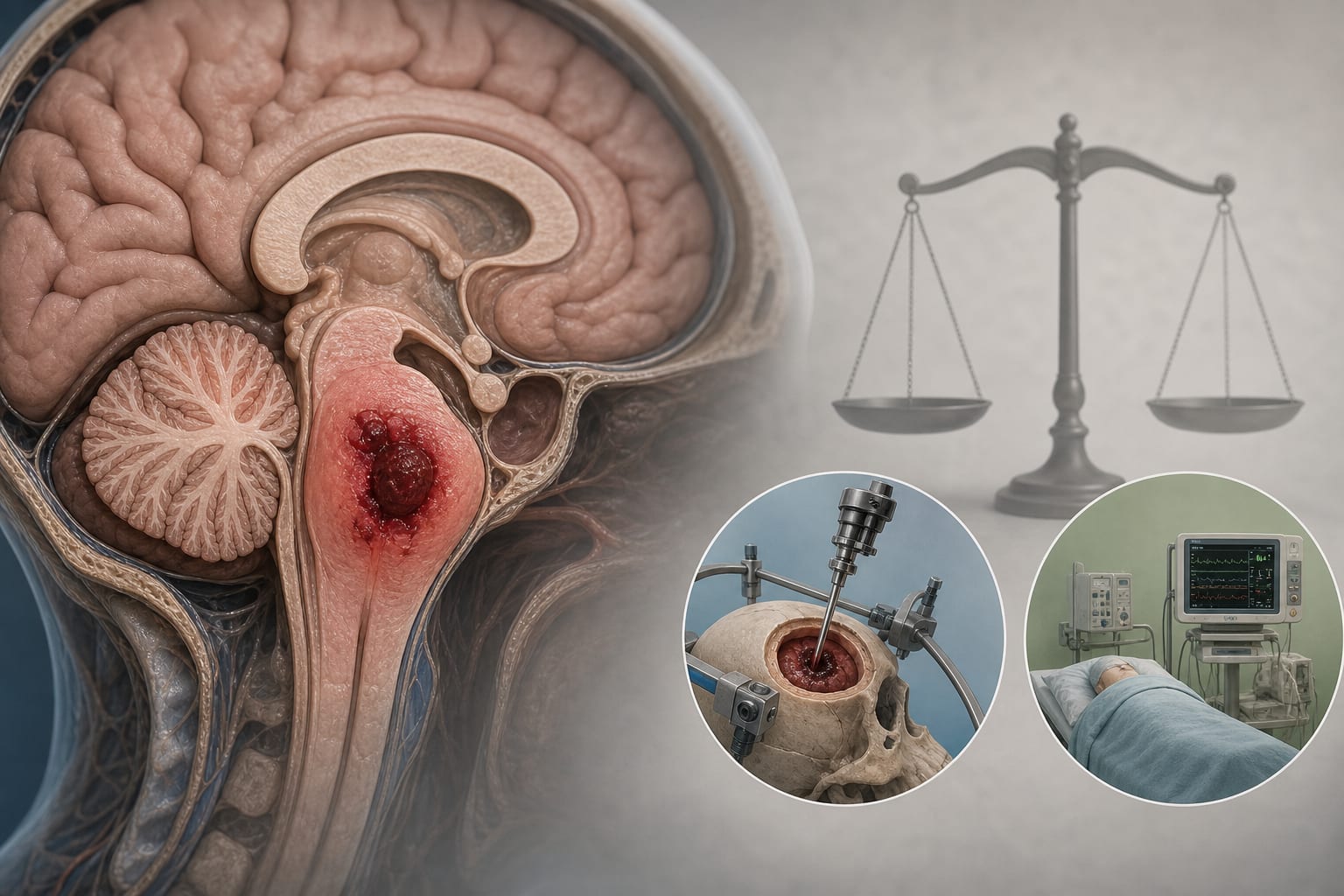
Comparative Outcomes of Surgical and Conservative Management in Severe Hypertensive Pontine Hemorrhage: A Retrospective Study
By
Ming-Lu Li
Jian-Wang Zhang
Xiao-Qiong Su
Xu-Xiang Yu
Jun-Jiang Tong
Xin-Hua Tian
Gui-Jiang Dong
Zhong Liu
June 15, 2026
Clinical Scorecard: Comparative Outcomes of Surgical and Conservative Management in Severe Hypertensive Pontine Hemorrhage: A Retrospective Study
At a Glance
Category Detail
Condition Key Mechanisms High mortality (40%-60%) and disability rates (>80% in survivors); treatment options include pharmacological therapy and surgical intervention. Target Population Care Setting
Key Highlights
Surgical management associated with lower 30/90-day mortality compared to pharmacological therapy (P < 0.05). Stereotactic drainage offers shorter ICU/hospital stays but higher rebleeding risk (specific rates needed). Craniotomy achieves higher hematoma clearance but has a higher risk of intracranial infection (specific rates needed). Older age, lower GCS score, larger hematoma volume identified as adverse prognostic factors. Regular antihypertensive use is a protective factor. Guideline-Based Recommendations
Diagnosis
Patients with GCS 4-7 and hematoma volume ≥ 5 mL are candidates for surgical intervention, considering individual risk factors. Management
Pharmacological therapy is first-line for GCS ≥ 8, hematoma volume < 5 mL, or severe vital organ dysfunction. Monitoring & Follow-up
Monitor for complications such as rebleeding and infection post-surgery, with specific follow-up protocols. Risks
Higher risk of mortality and unfavorable outcomes in patients treated pharmacologically. Patient & Prescribing Data
Severe HPH patients treated at a single center.
Surgical intervention may improve outcomes in severe cases compared to pharmacological therapy.
Clinical Best Practices
Consider surgical intervention for patients with severe HPH to reduce mortality, especially in those with specific risk factors. Evaluate individual patient characteristics (age, GCS score, hematoma volume) and hematoma features when deciding treatment approach. Related Resources & Content