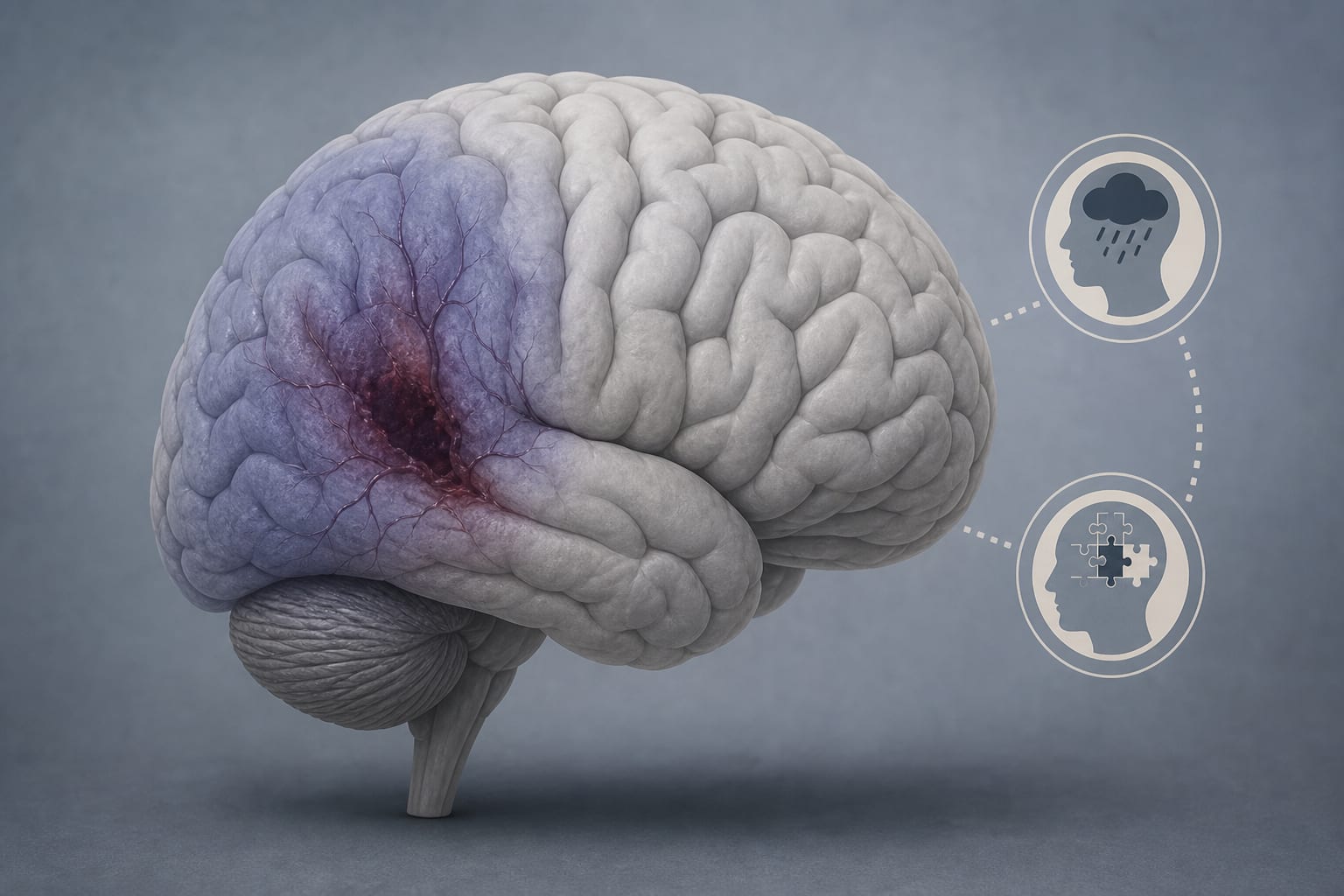
Brain-Computer Interface for Paralysis Facilitates Concurrent Speech and Gestural Communication
-
September 14, 2026
Clinical Scorecard: Brain-Computer Interface for Paralysis Facilitates Concurrent Speech and Gestural Communication
At a Glance
| Category | Detail |
|---|---|
| Condition | Paralysis due to ALS and brainstem strokes |
| Key Mechanisms | Brain-computer interface (BCI) translating neural activity into speech and gestures |
| Target Population | Individuals with severe paralysis affecting vocal and bodily functions |
| Care Setting | Research and clinical settings focused on neuroprosthetics |
Key Highlights
- First BCI to enable simultaneous speech and upper-body gestures
- Utilizes electrocorticography (ECoG) arrays for brain signal decoding
- Demonstrated improved communication through a virtual avatar
- Findings suggest multimodal communication is more than the sum of its parts
- Future plans include evaluation of a wireless, fully implantable BCI
Guideline-Based Recommendations
Diagnosis
- Assess degree of paralysis and communication impairments in patients
Management
- Consider BCI technology for patients with severe communication limitations
Monitoring & Follow-up
- Evaluate effectiveness of BCI in facilitating communication over time
Risks
- Potential for reduced speech performance with concurrent expression
Patient & Prescribing Data
Patients with ALS and brainstem strokes experiencing severe paralysis
BCI may restore integrated communication abilities
Clinical Best Practices
- Utilize machine learning to improve BCI signal interpretation
- Incorporate multimodal communication strategies in therapy
- Conduct thorough pre-training with combined speech and gesture data
Related Resources & Content
Based on findings from:
Neuroprosthesis for paralysis enables simultaneous speech and body language
National Institutes Of Health, 2026.
https://www.nih.gov/news-events/news-releases/neuroprosthesis-paralysis-enables-simultaneous-speech-body-language
This content is an AI-generated, fully rewritten summary based on a published scholarly article. It does not reproduce the original text and is not a substitute for the original publication. Readers are encouraged to consult the source for full context, data, and methodology.