Immunoinformatics-driven design of a multi-epitope vaccine against Clostridium perfringens in yaks
By
Dan Wu
Runbo Luo
Kexin Li
Yulin Peng
Xiao Yue
Yurui Wang
Haoyu Fan
Yifang Wen
Yixin Huang
Sizhu Suolang
Suizhong Cao
June 29, 2026
Clinical Scorecard: Development of a Multi-Epitope Vaccine for Clostridium perfringens in Yaks Using Immunoinformatics Techniques
At a Glance
Category Detail
Condition Clostridium perfringens infection in yaks Key Mechanisms Multi-epitope vaccine design using immunoinformatics techniques Target Population Yaks on the Qinghai-Tibet Plateau Care Setting Veterinary immunology and vaccine development
Key Highlights
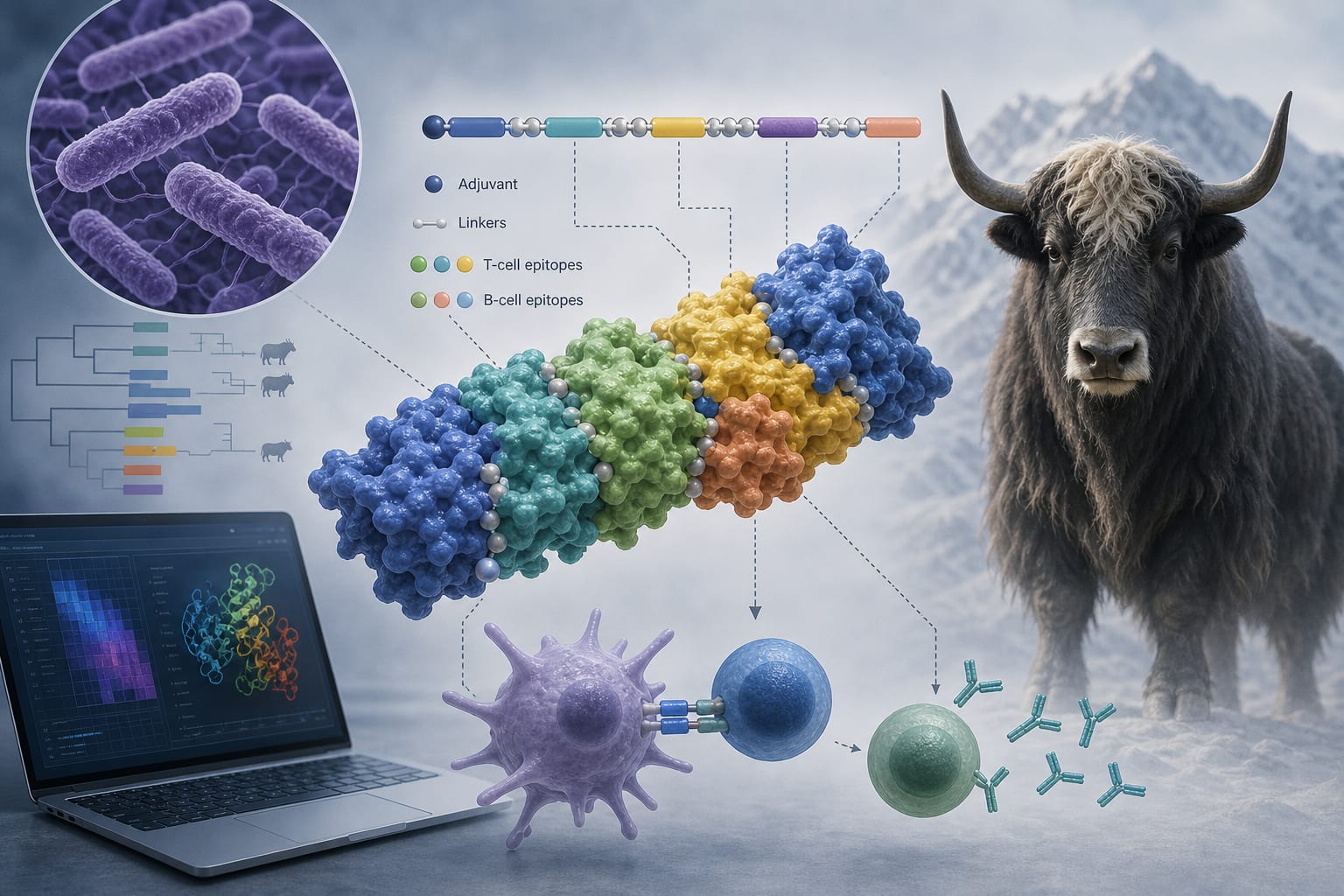
Identification of five core virulence proteins from C. perfringens Design of a 352-amino-acid multi-epitope vaccine candidate High antigenicity and structural stability confirmed through computational evaluations Strong binding affinity with TLR2 and TLR4 observed in molecular docking Predicted robust immune responses including elevated antibody titers and T-cell activation Guideline-Based Recommendations
Diagnosis
Identification of C. perfringens toxinotypes A, C, and E in yaks Management
Development of a multi-epitope vaccine to enhance protective efficacy Monitoring & Follow-up
Assessment of immune responses post-vaccination Risks
Limited efficacy of conventional vaccines in yaks due to species-specific immune differences Patient & Prescribing Data
Yaks at risk of enterotoxemia due to C. perfringens
Potential for broad-spectrum protection against multiple toxinotypes
Clinical Best Practices
Utilization of immunoinformatics for vaccine design In silico validation of vaccine candidates before in vitro and in vivo testing Related Resources & Content