Two temporally validated diagnostic models for arterial stiffness using routine clinical indicators: a practical tool for resource-limited settings - Scorecard - MDSpire
Advertisement
Two temporally validated diagnostic models for arterial stiffness using routine clinical indicators: a practical tool for resource-limited settings
Clinical Scorecard: Development and Validation of Two Diagnostic Models for Assessing Arterial Stiffness with Standard Clinical Indicators: A Resource-Conscious Approach
At a Glance
Category
Detail
Condition
Arterial Stiffness
Key Mechanisms
Independent predictor of cardiovascular diseases, influenced by insulin resistance and metabolic indices.
Target Population
Permanent residents aged ≥18 years in Yinchuan City, Ningxia, China.
Care Setting
Community-based cardiovascular health surveys.
Key Highlights
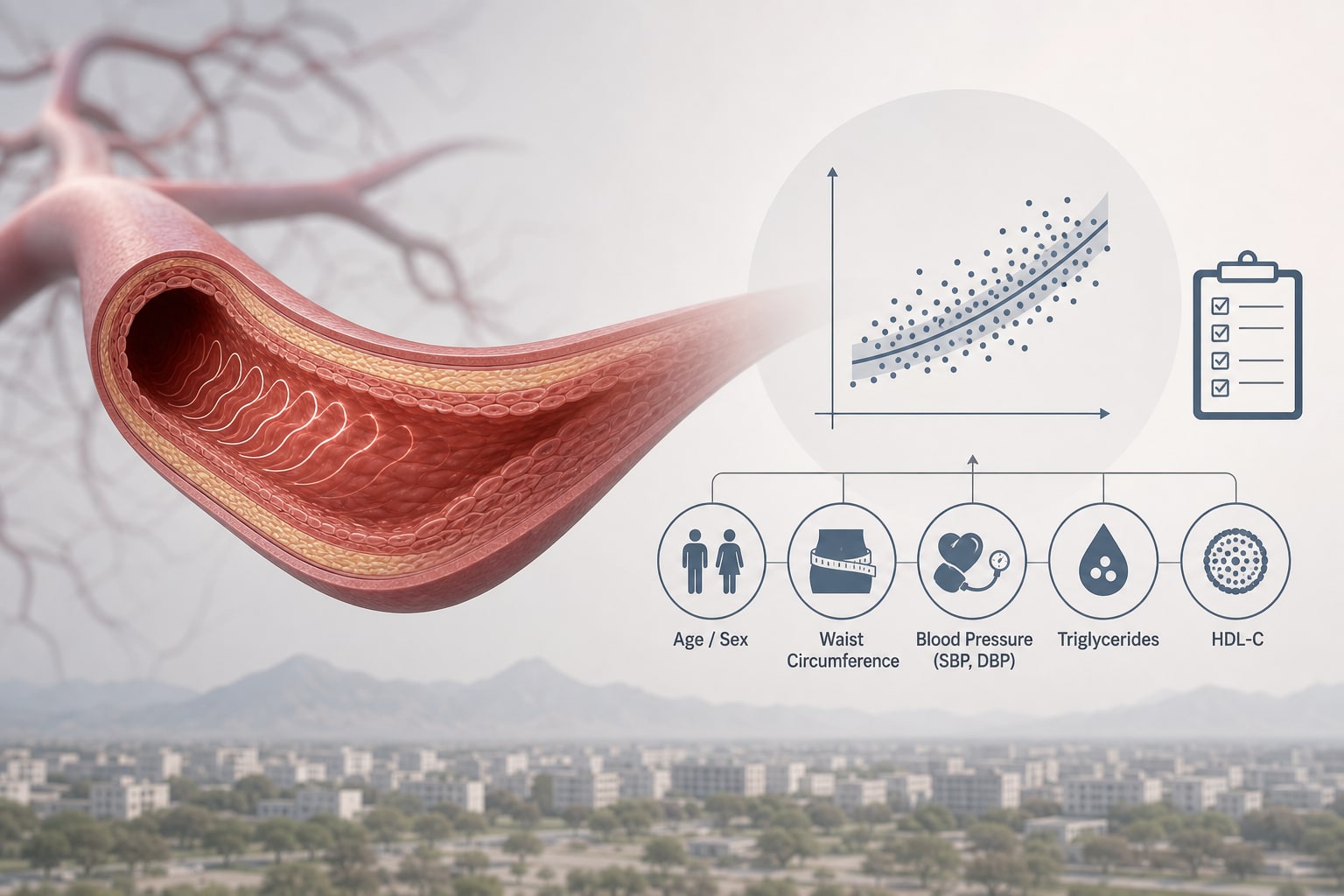
Two logistic regression models developed for assessing arterial stiffness.
Model 1 includes sex, age, waist circumference, systolic and diastolic blood pressure.
Model 2 adds triglycerides and high-density lipoprotein cholesterol.
Both models demonstrated excellent discriminative performance (AUC > 0.9).
Models outperformed established metabolic indices in predicting arterial stiffness.
Guideline-Based Recommendations
Diagnosis
Use logistic regression models incorporating easily collectible clinical indicators.
Management
Implement community-based or home-based risk assessment for arterial stiffness.
Monitoring & Follow-up
Utilize calibration curves and decision curve analysis for ongoing evaluation.
Risks
Consider exclusion criteria such as severe diseases and recent surgeries in participant selection.
Patient & Prescribing Data
Participants from community-based cardiovascular health surveys.
Models provide a resource-conscious approach for screening arterial stiffness.
Clinical Best Practices
Incorporate simple, economical indicators for arterial stiffness assessment.
Focus on early detection to prevent cardiovascular diseases.