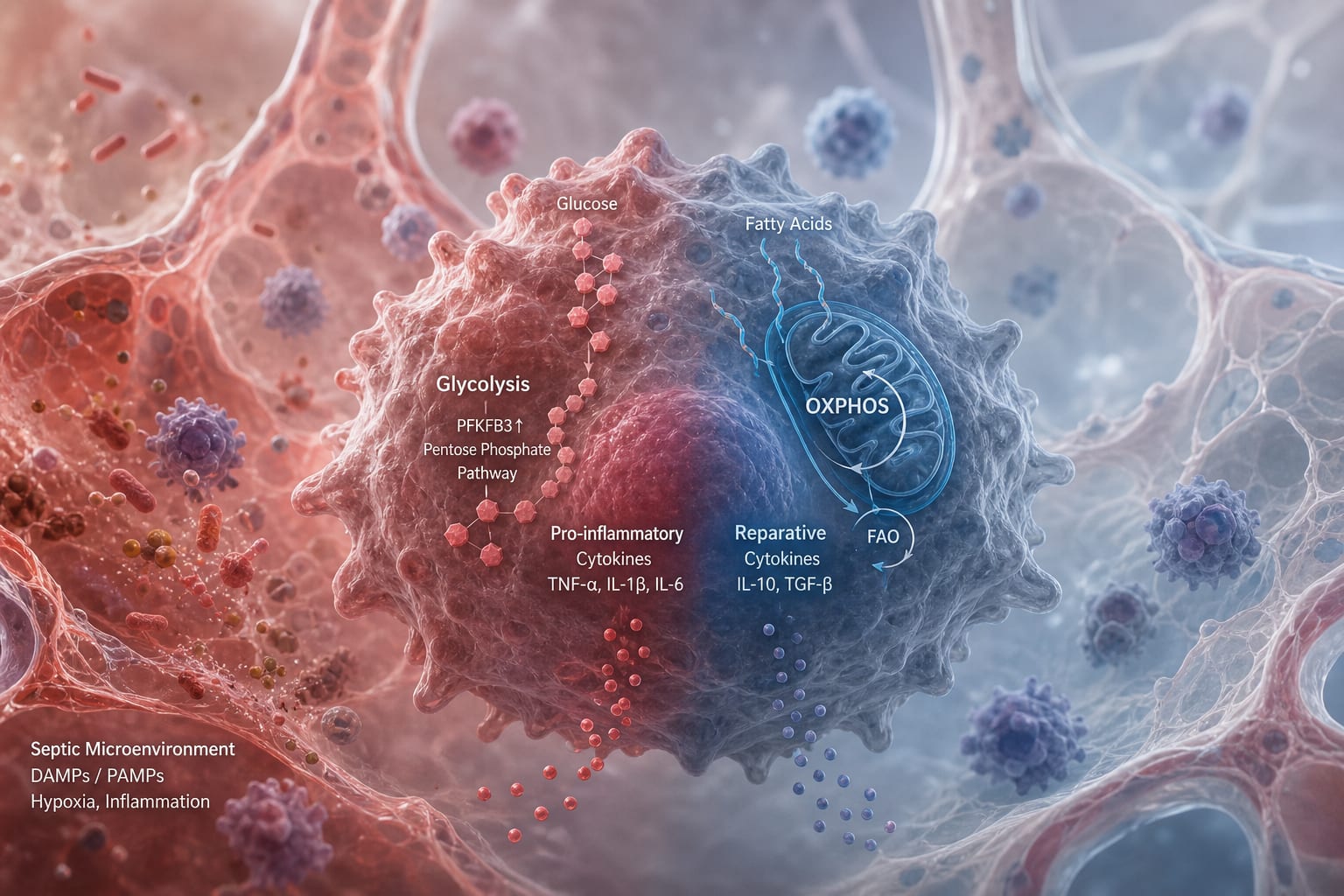
Macrophage metabolic reprogramming in sepsis-associated acute lung injury: mechanisms and therapeutic strategies
By
Ran Pan
Yiyi Sun
Lu Chen
Jianping Pan
Junping Guo
May 15, 2026
Clinical Scorecard: Metabolic Reprogramming of Macrophages in Acute Lung Injury Related to Sepsis: Insights into Mechanisms and Treatment Approaches
At a Glance
Category Detail
Condition Sepsis-associated acute lung injury (S-ALI) Key Mechanisms Metabolic reprogramming of macrophages, involving glycolysis, TCA cycle, and fatty acid oxidation. Target Population Patients with sepsis experiencing acute lung injury. Care Setting Critical care and emergency medicine.
Key Highlights
Approximately 68.2% of sepsis patients develop ALI, with a 90-day mortality rate of 35.5%. Macrophages exhibit functional plasticity, transitioning between pro-inflammatory and reparative states. Metabolic pathways such as aerobic glycolysis and oxidative phosphorylation are critical in macrophage function. Natural compounds and innovative delivery platforms show promise in reprogramming macrophage metabolism. Challenges include cytotoxicity, macrophage selectivity, and timing of interventions. Guideline-Based Recommendations
Diagnosis
Identify clinical features of ALI in sepsis patients, including hypoxemia and pulmonary edema. Management
Focus on restoring immune homeostasis through metabolic reprogramming of macrophages. Monitoring & Follow-up
Assess the metabolic status and inflammatory markers in patients with S-ALI. Risks
High mortality and long-term impairment in survivors of sepsis-associated ALI. Patient & Prescribing Data
Patients with sepsis and acute lung injury.
Emerging therapies include aerosolized CRISPR/Cas9 and biomimetic nanoplatforms.
Clinical Best Practices
Develop cell-type-restricted delivery systems for targeted therapy. Validate metabolic targets in human-relevant models. Design phase-specific interventions based on the metabolic trajectory of S-ALI. Related Resources & Content