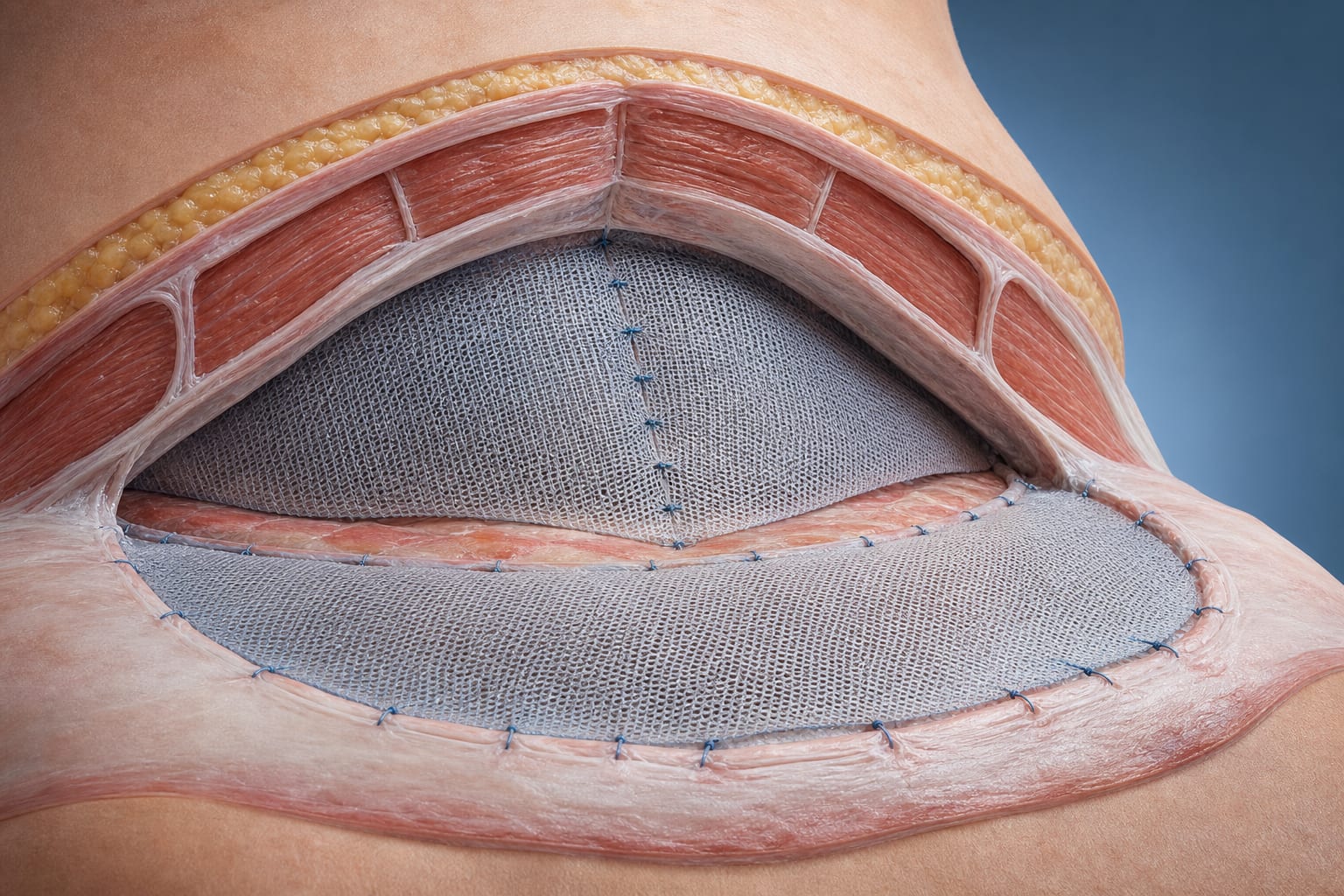
Clinical Scorecard: Rates of Ventral Hernia Repair Following Laparoscopic Bariatric Surgery in Sweden: A Registry Analysis from 2009 to 2019
At a Glance
Category
Detail
Condition
Ventral incisional hernia, including trocar site hernia (TSH), following laparoscopic bariatric surgery
Key Mechanisms
Obesity-related increased intra-abdominal pressure, impaired wound healing, and higher postoperative complications contribute to hernia development and recurrence
Target Population
Patients undergoing laparoscopic bariatric surgery (gastric bypass or sleeve gastrectomy) in Sweden
Care Setting
Specialized bariatric surgery centers with follow-up in inpatient and outpatient specialized care
Key Highlights
Incidence of trocar site hernia (TSH) after laparoscopic bariatric surgery varies widely (few percent up to 40%) depending on study design and follow-up duration.
Longer follow-up periods are associated with increased detection rates of incisional hernias, with later hernias generally less symptomatic.
Sleeve gastrectomy may involve larger fascial defects due to specimen retrieval, but evidence suggests similar rates of hernia repair compared to Roux-en-Y gastric bypass.
Guideline-Based Recommendations
Diagnosis
Clinical examination supplemented by imaging (CT or ultrasound) to detect trocar site hernias, noting imaging detects more hernias than clinical exam alone.
Management
Surgical repair is indicated for symptomatic ventral hernias; approximately one third of midline incisional hernias undergo repair.
Consider timing of hernia repair as some hernias develop late and may be less symptomatic.
Monitoring & Follow-up
Long-term follow-up is important to detect late-onset incisional hernias after bariatric surgery.
Risks
Obesity increases risk of hernia development and recurrence due to mechanical and healing factors.
Trocar site hernias can be asymptomatic but carry risk of acute complications such as bowel incarceration and strangulation.
Patient & Prescribing Data
Patients undergoing primary laparoscopic gastric bypass or sleeve gastrectomy in Sweden from 2009 to 2019
Registry data indicate ventral hernia repair rates post-bariatric surgery, with no clear difference in reoperation rates between sleeve gastrectomy and gastric bypass.
Clinical Best Practices
Exclude patients with prior ventral hernia repair before bariatric surgery when assessing hernia incidence postoperatively.
Use national registries with high acquisition rates for comprehensive data collection and follow-up.
Recognize limitations in coding systems lacking specific codes for trocar site hernia and use proxy measures cautiously.
Consider the impact of surgical technique differences (e.g., specimen retrieval site enlargement in sleeve gastrectomy) on hernia risk.