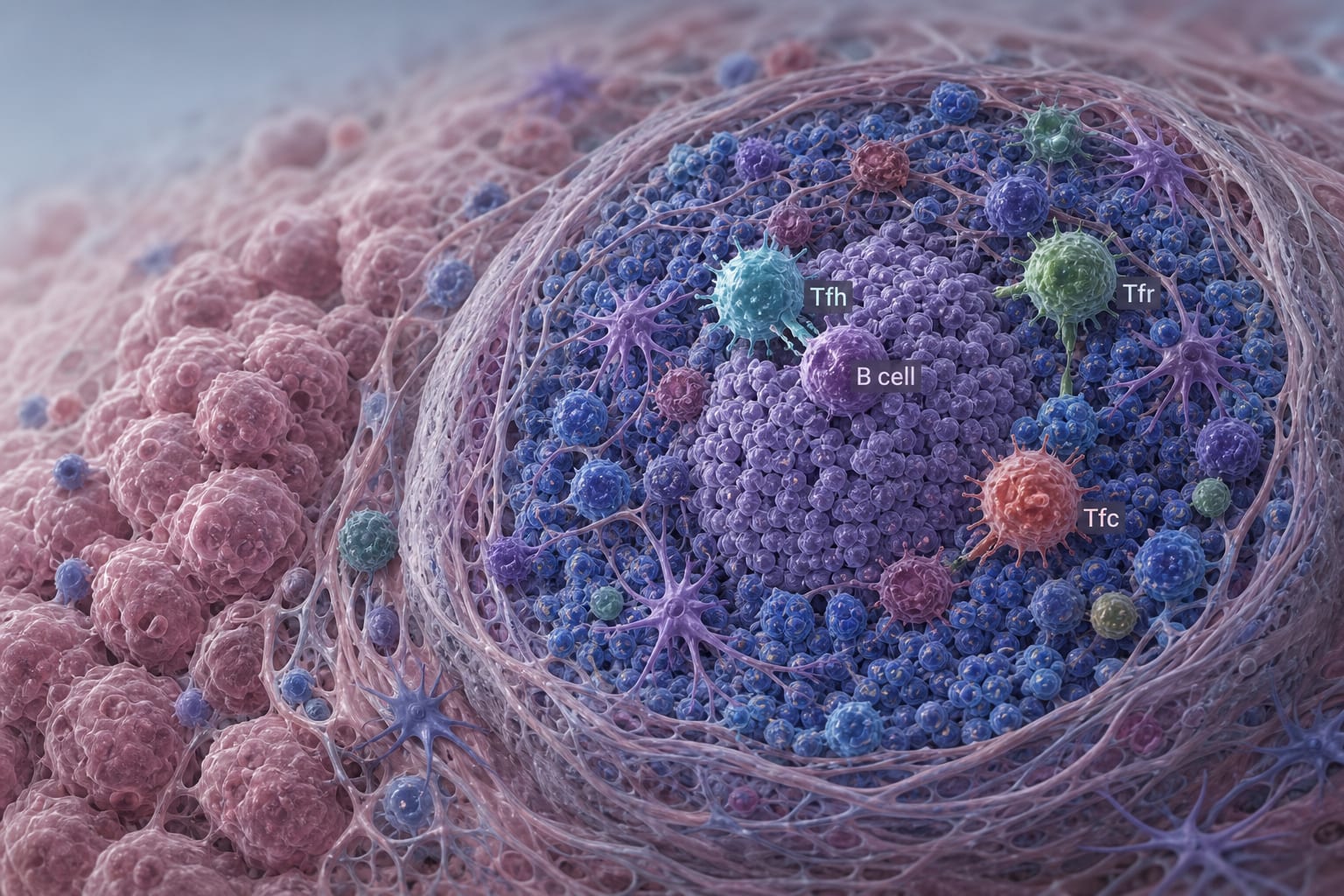
Follicular T cells in the ovarian cancer immune microenvironment: biological insights and translational implications
-
By
-
Xu, Yidan
-
Li, Li
-
May 19, 2026
-
Clinical Scorecard: Follicular T Cells in the Immune Microenvironment of Ovarian Cancer: Biological Insights and Clinical Significance
At a Glance
| Category | Detail |
|---|
| Condition | Ovarian cancer, high-grade serous ovarian cancer (HGSOC) |
| Key Mechanisms | Follicular T cell subsets and tertiary lymphoid structures (TLS) in immune regulation |
| Target Population | Patients with ovarian cancer, HGSOC |
| Care Setting | Oncology and immunotherapy clinics |
Key Highlights
- Follicular T cell subsets play a role in antitumor immunity.
- Dysregulation of the follicular T cell axis may lead to immune suppression.
- Elevated Tfr/Tfh ratio is associated with resistance to immunotherapy.
- Therapeutic strategies include immune checkpoint modulation and chemokine targeting.
- Follicular immune features may be biomarkers for immunotherapy response.
Guideline-Based Recommendations
Diagnosis
- Assess the presence and function of follicular T cell subsets in ovarian cancer.
Management
- Reprogram follicular T cell responses in treatment.
Monitoring & Follow-up
- Evaluate the Tfr/Tfh ratio and TLS maturation as indicators of immune response.
Risks
- Potential for immune suppression and resistance to immunotherapy.
Patient & Prescribing Data
Patients with high-grade serous ovarian cancer (HGSOC)
Focus on therapies that target the follicular T cell axis and TLS.
Clinical Best Practices
- Assess follicular T cell dynamics in treatment planning.
- Utilize biomarkers related to follicular immune features for patient stratification.
Related Resources & Content