Efficacy of Tuina combined with core stability training on lumbar stability and clinical outcomes in patients with lumbar disc herniation: a randomized controlled trial protocol - Scorecard - MDSpire
Advertisement
Efficacy of Tuina combined with core stability training on lumbar stability and clinical outcomes in patients with lumbar disc herniation: a randomized controlled trial protocol
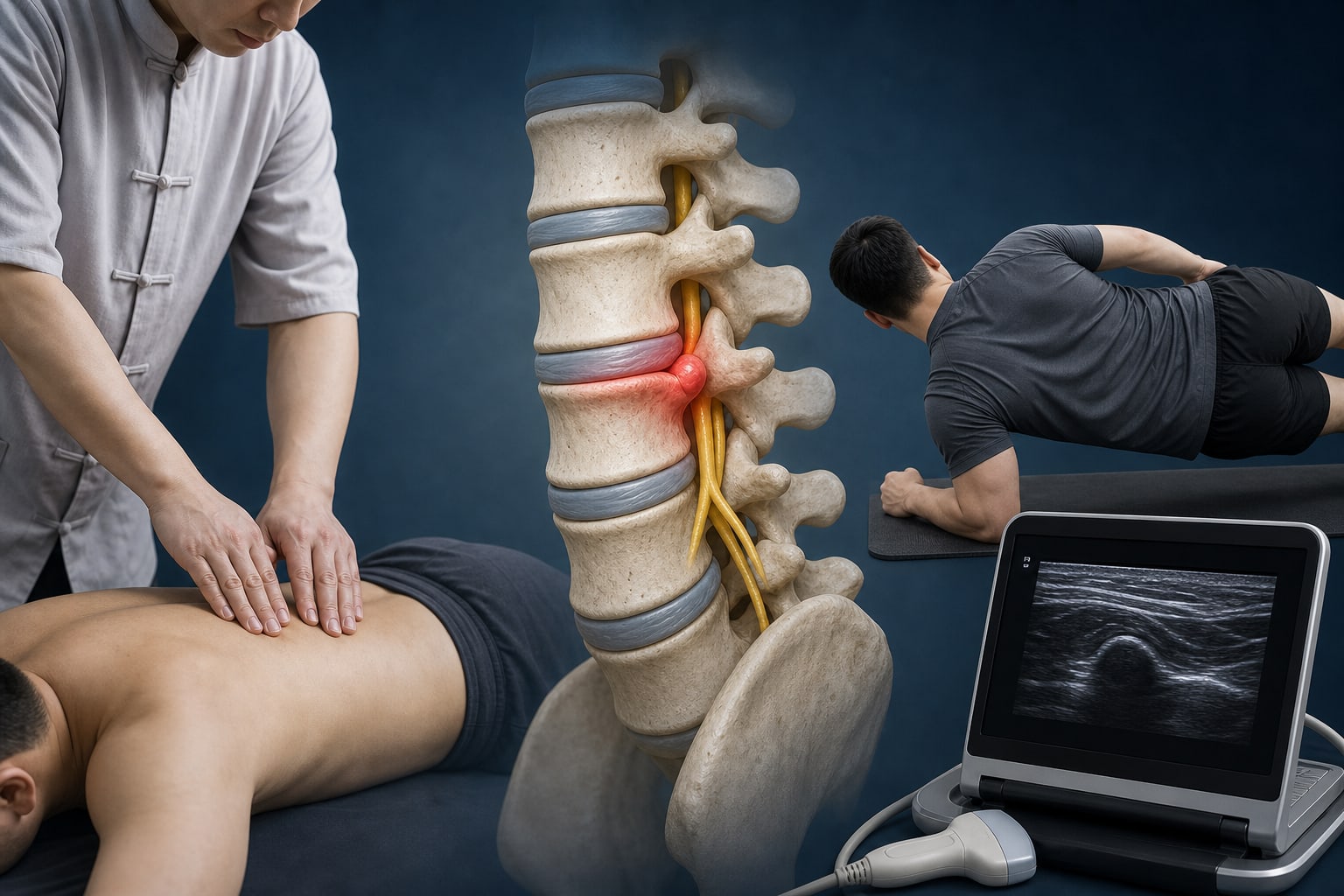
Clinical Scorecard: Effectiveness of Combining Tuina Therapy with Core Stability Exercises on Lumbar Stability and Patient Outcomes in Lumbar Disc Herniation: A Protocol for a Randomized Controlled Trial
At a Glance
Category
Detail
Condition
Lumbar Disc Herniation (LDH)
Key Mechanisms
Combination of Tuina therapy and core stability training to alleviate symptoms and improve function.
Target Population
Patients with lumbar disc herniation, aged 30-55 years.
Care Setting
Single-center randomized controlled trial.
Key Highlights
Study involves 96 patients randomly allocated to three groups: Tuina, core stability training, or combined intervention.
Primary outcome is muscle activation ratio of the transversus abdominis assessed by musculoskeletal ultrasound.
Secondary outcomes include VAS, ODI, JOA score, and SF-36.
Intervention lasts for 8 weeks with three sessions per week, followed by a 1-month follow-up.
Objective outcomes assessed by blinded researchers.
Guideline-Based Recommendations
Diagnosis
Diagnosis of LDH based on clinical presentation and imaging studies.
Management
Nonsurgical treatments recommended as first-line options, including Tuina therapy and exercise-based rehabilitation.
Monitoring & Follow-up
Monitor patient-reported outcomes and objective measures post-intervention.
Risks
Potential adverse effects associated with pharmacological therapy.
Patient & Prescribing Data
Patients with lumbar disc herniation experiencing low back pain and functional impairment.
Tuina therapy may enhance local circulation and reduce inflammation, while core stability training targets neuromuscular function.
Clinical Best Practices
Utilize a combination of Tuina therapy and core stability training for improved outcomes in LDH.
Assess both subjective and objective measures to evaluate treatment efficacy.
High-revision-rate surgeons saw a late revision signal after adopting robotic-assisted total knee arthroplasty, despite no overall reduction in revision rates or failure modes.