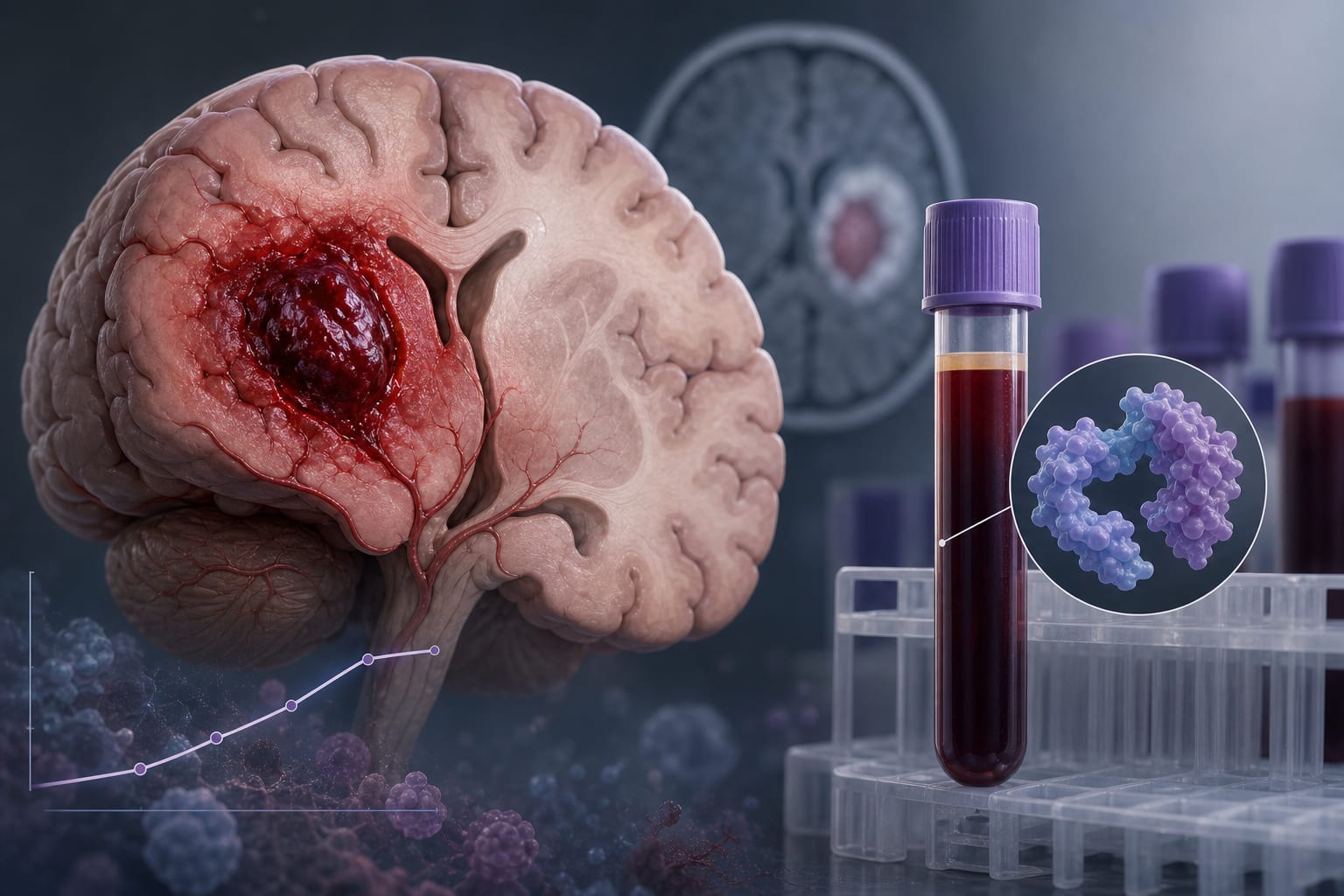
Association between elevated serum amyloid a levels and clinical outcomes in intracerebral haemorrhage: a retrospective study
-
By
-
Jixin He
-
Tongzhang Xu
-
Rong Wu
-
Ying Hu
-
Dan Zhao
-
Wenbo Zhang
-
Fangfang Wang
-
Jie Cao
-
Min Jiang
-
Xiaoping Yin
-
Moxin Wu
-
July 9, 2026
-
Clinical Scorecard: Link Between Increased Serum Amyloid A Levels and Clinical Outcomes Following Intracerebral Hemorrhage: A Retrospective Analysis
At a Glance
| Category | Detail |
|---|
| Condition | Intracerebral Hemorrhage (ICH) |
| Key Mechanisms | Increased Serum Amyloid A (SAA) levels associated with inflammatory response and secondary brain injury. |
| Target Population | Patients diagnosed with acute spontaneous ICH. |
| Care Setting | Hospitalized patients receiving non-surgical treatment for ICH. |
Key Highlights
- SAA levels significantly higher in ICH patients compared to healthy controls (3.1 vs. 2.4 mg/L, p < 0.001).
- Positive correlation between SAA levels and disease severity (NIHSS and GCS scores).
- SAA levels independently associated with poor prognosis in ICH patients.
- Dynamic monitoring indicates day 3 as a critical time point for SAA level changes.
- AUC for SAA levels in predicting hematoma expansion is 0.694.
Guideline-Based Recommendations
Diagnosis
- Measure SAA levels within 24 hours of admission for ICH.
Management
- Focus on preventing secondary brain injury following ICH.
Monitoring & Follow-up
- Monitor SAA levels on days 3 and 7 post-ICH for prognostic assessment.
Risks
- Elevated SAA levels are associated with increased risk of poor clinical outcomes.
Patient & Prescribing Data
554 patients diagnosed with acute spontaneous ICH.
Non-surgical management of haematomas with emphasis on monitoring inflammatory markers.
Clinical Best Practices
- Utilize SAA levels as a prognostic marker in ICH management.
- Implement regular neurological assessments using NIHSS and GCS scores.
Related Resources & Content