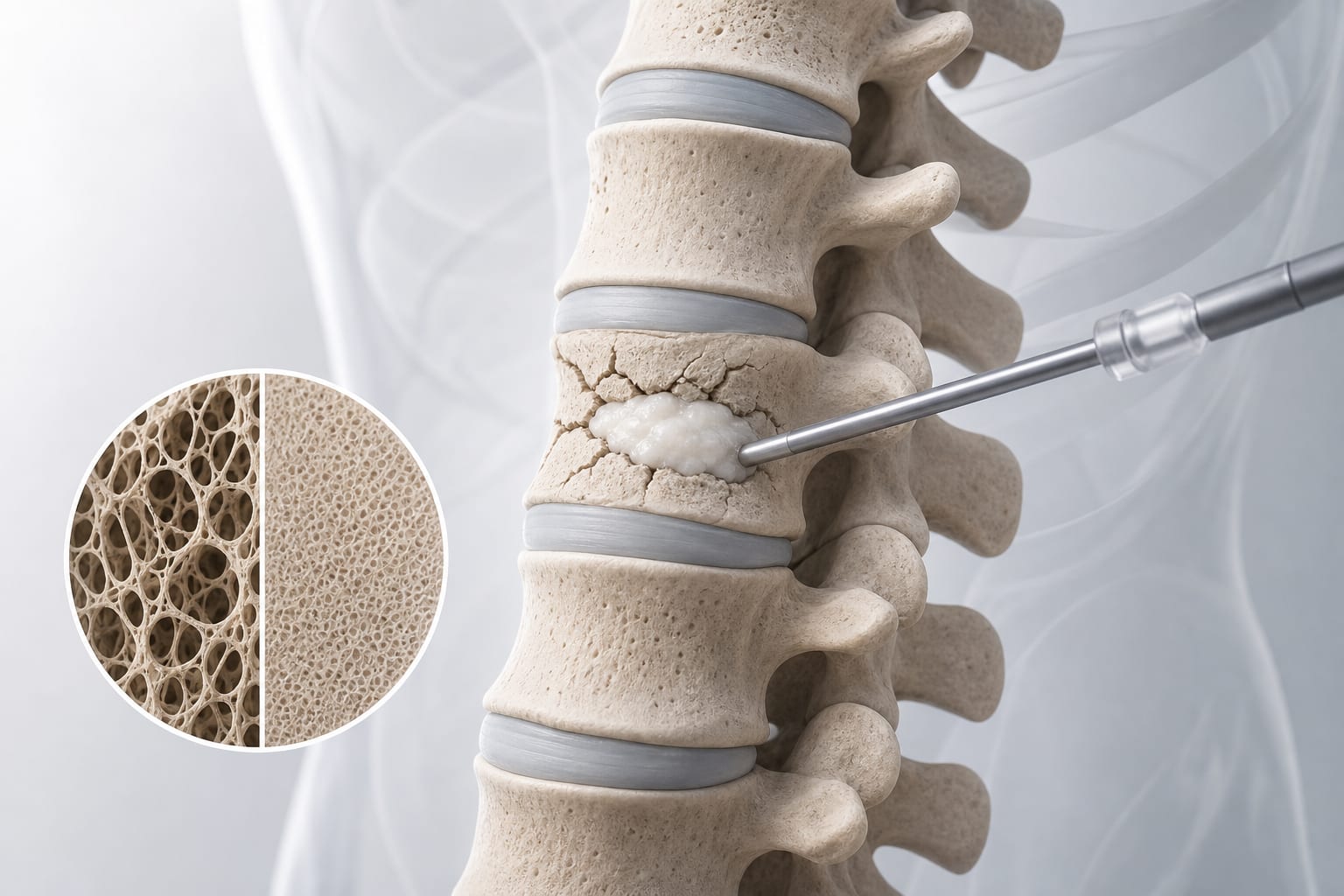
Retrospective study on the treatment of osteoporotic vertebral compression fractures with alfacalcidol and percutaneous kyphoplasty - Scorecard - MDSpire
Clinical Scorecard: Evaluation of Alfacalcidol and Percutaneous Kyphoplasty for Managing Osteoporotic Vertebral Compression Fractures: A Retrospective Analysis
At a Glance
Category
Detail
Condition
Osteoporotic Vertebral Compression Fractures
Key Mechanisms
Combination of percutaneous kyphoplasty and alfacalcidol to improve bone metabolism and functional recovery.
Target Population
Patients with single-level osteoporotic vertebral compression fractures.
Care Setting
Retrospective study evaluating treatment outcomes in a clinical setting.
Key Highlights
Both treatment groups showed significant improvement in bone mineral density, pain relief, and functional recovery.
The alfacalcidol group had greater increases in bone mineral density and reductions in bone turnover markers.
No serious adverse events were observed in either treatment group.
Guideline-Based Recommendations
Diagnosis
Diagnosis of primary or glucocorticoid-induced osteoporosis with T-value ≤−2.5.
Management
Use of percutaneous kyphoplasty combined with alfacalcidol for improved outcomes in OVCF.
Monitoring & Follow-up
Regular assessment of bone mineral density and pain scores postoperatively.
Risks
Increased risk of subsequent fractures and mortality associated with untreated OVCF.
Patient & Prescribing Data
120 patients with osteoporotic vertebral compression fractures.
Alfacalcidol enhances calcium absorption and bone mineralization, supporting vertebral healing.
Clinical Best Practices
Consider alfacalcidol as an adjunctive therapy in patients undergoing PKP for OVCF.
Monitor bone metabolism markers and functional recovery in patients receiving treatment.