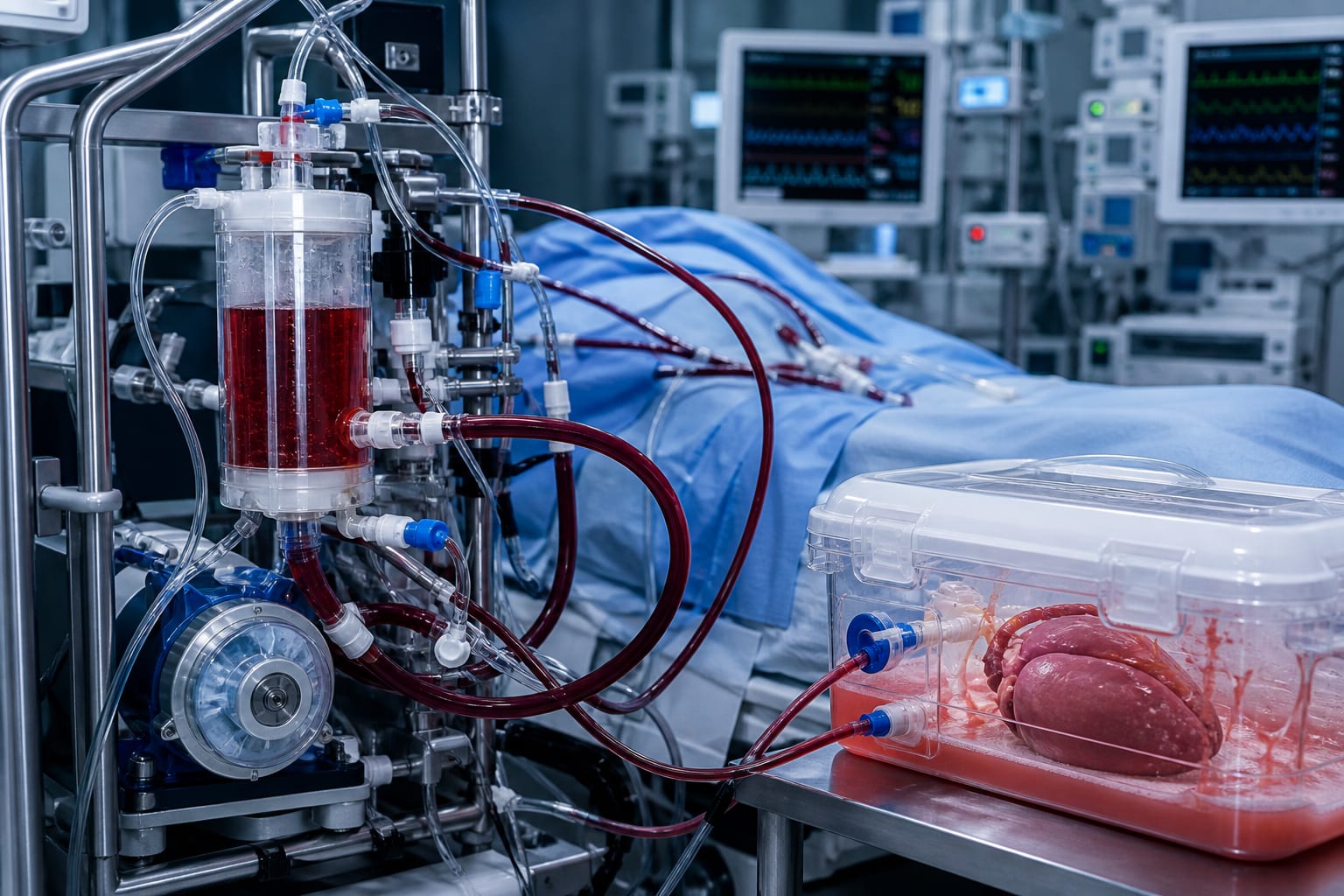
Correspondence to the Editor: “Ethical Considerations and Clinical Consequences of Organ Donation Following ECPR”
Clinical Scorecard: Ethical Considerations and Clinical Consequences of Organ Donation Following ECPR
At a Glance
| Category | Detail |
|---|
| Condition | Organ Donation After ECPR |
| Key Mechanisms | Ethical framework for organ donation, separation of clinical decisions and donation considerations, procedural safeguards in DCDD programs. |
| Target Population | Patients undergoing ECPR and their families. |
| Care Setting | Intensive Care Unit |
Key Highlights
- ECPR should be performed solely for therapeutic purposes.
- Decisions on treatment limitation must remain separate from donation considerations.
- Communication about donation should follow clear understanding of clinical prognosis.
- Procedural safeguards are essential to prevent undue influence on clinical decisions.
- Clarification of the Dead Donor Rule is necessary in the context of DCDD.
Guideline-Based Recommendations
Diagnosis
- Ensure clear communication of clinical situation and prognosis before discussing donation.
Management
- Maintain separation between end-of-life decisions and donation procedures.
Monitoring & Follow-up
- Implement rigorous technical safeguards during normothermic regional perfusion.
Risks
- Address potential pressures related to financial and resource incentives in donation.
Patient & Prescribing Data
Patients eligible for organ donation post-ECPR.
Informed consent from family or legal representatives is crucial before proceeding with donation.
Clinical Best Practices
- Establish robust protocols for DCDD to ensure ethical compliance.
- Sequence communication about prognosis and donation appropriately.
- Conduct ongoing research to validate technical standards in organ donation.
Related Resources & Content