Exploring Gender Variations in Diabetic Gastroparesis Symptoms in the West Bank: Insights from a Cross-Sectional Analysis
By
Diya Asad
Qusai Zreqat
Shahd T. Idais
Marah Hunjul
Bara'ah Huseein
Alaa Ayyad
Hamzeh M. I. Abugharbieh
Haroun Neiroukh
Areen Zuhour
Salsabeel M. Abukhalaf
Nour Al-Atrash
Roa Alzughayyar
Hussein Hallak
June 10, 2026
Clinical Scorecard: Exploring Gender Variations in Diabetic Gastroparesis Symptoms in the West Bank: Insights from a Cross-Sectional Analysis
At a Glance
Category Detail
Condition Diabetic Gastroparesis (DGP) Key Mechanisms Abnormal gastric emptying linked to gender differences, hormonal influences, and neuromuscular dysfunction. Target Population Patients with type 2 diabetes mellitus (T2DM) in the West Bank, Palestine. Care Setting Governmental hospitals in Palestine.
Key Highlights
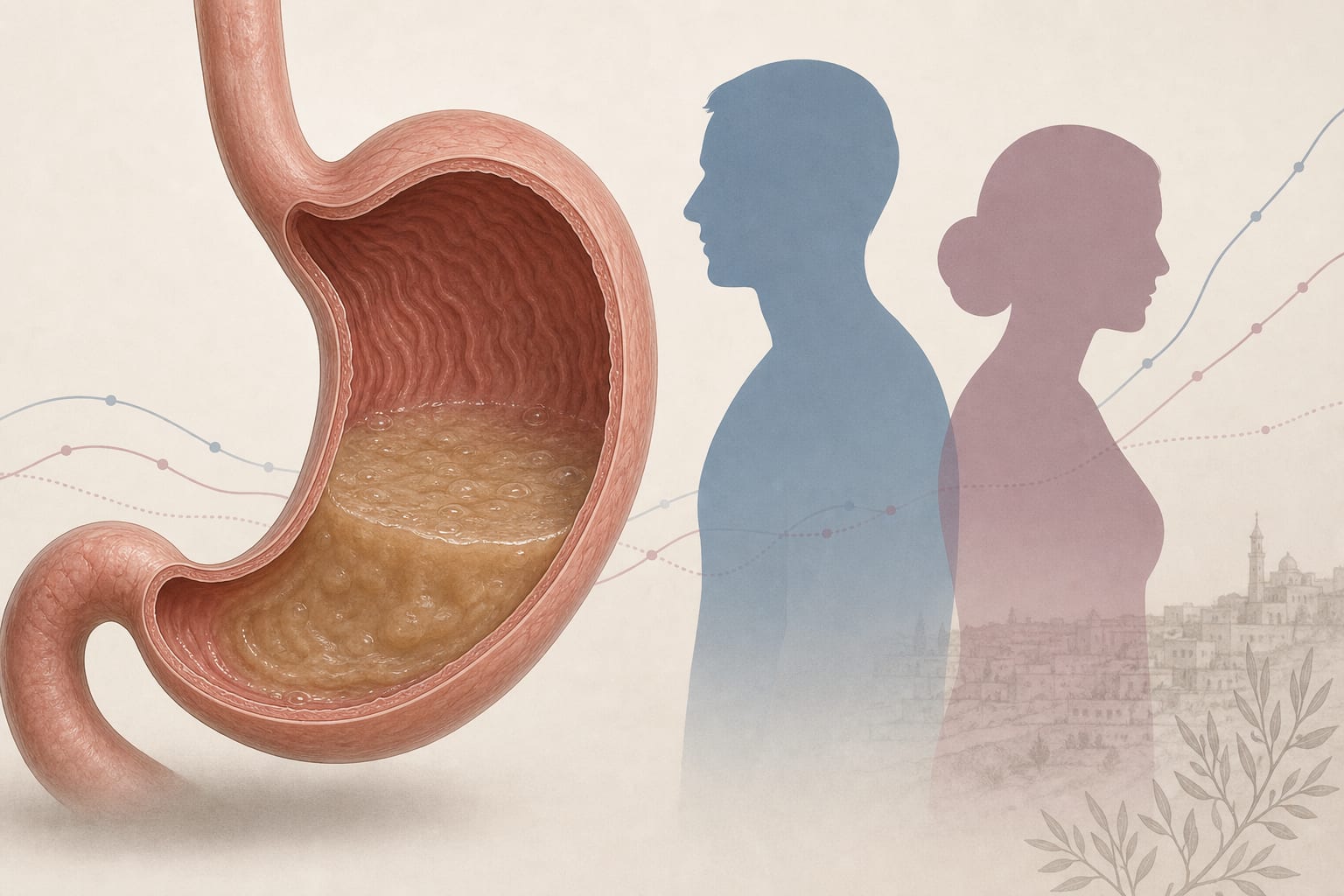
DGP prevalence is 4 times higher in females compared to males. Females reported significantly higher severity scores for all gastroparesis symptoms. Logistic regression identified female gender as the only independent factor associated with severe DGP symptoms. GCSI is utilized as a screening tool for assessing DGP symptoms. Poor glycemic control and obesity were more prevalent in female patients. Guideline-Based Recommendations
Diagnosis
Gastroparesis Cardinal Symptom Index (GCSI) is recommended for symptom assessment. Management
Targeted research is needed for gender-based management plans. Monitoring & Follow-up
Monitor glycemic control and symptom severity in patients with DGP. Risks
Increased healthcare burden and morbidity associated with DGP. Patient & Prescribing Data
Patients with type 2 diabetes mellitus (T2DM) aged 18 years or older.
Management strategies should consider gender differences in symptom prevalence and severity.
Clinical Best Practices
Utilize GCSI for symptom assessment in resource-limited settings. Consider hormonal influences when evaluating DGP symptoms in female patients. Related Resources & Content