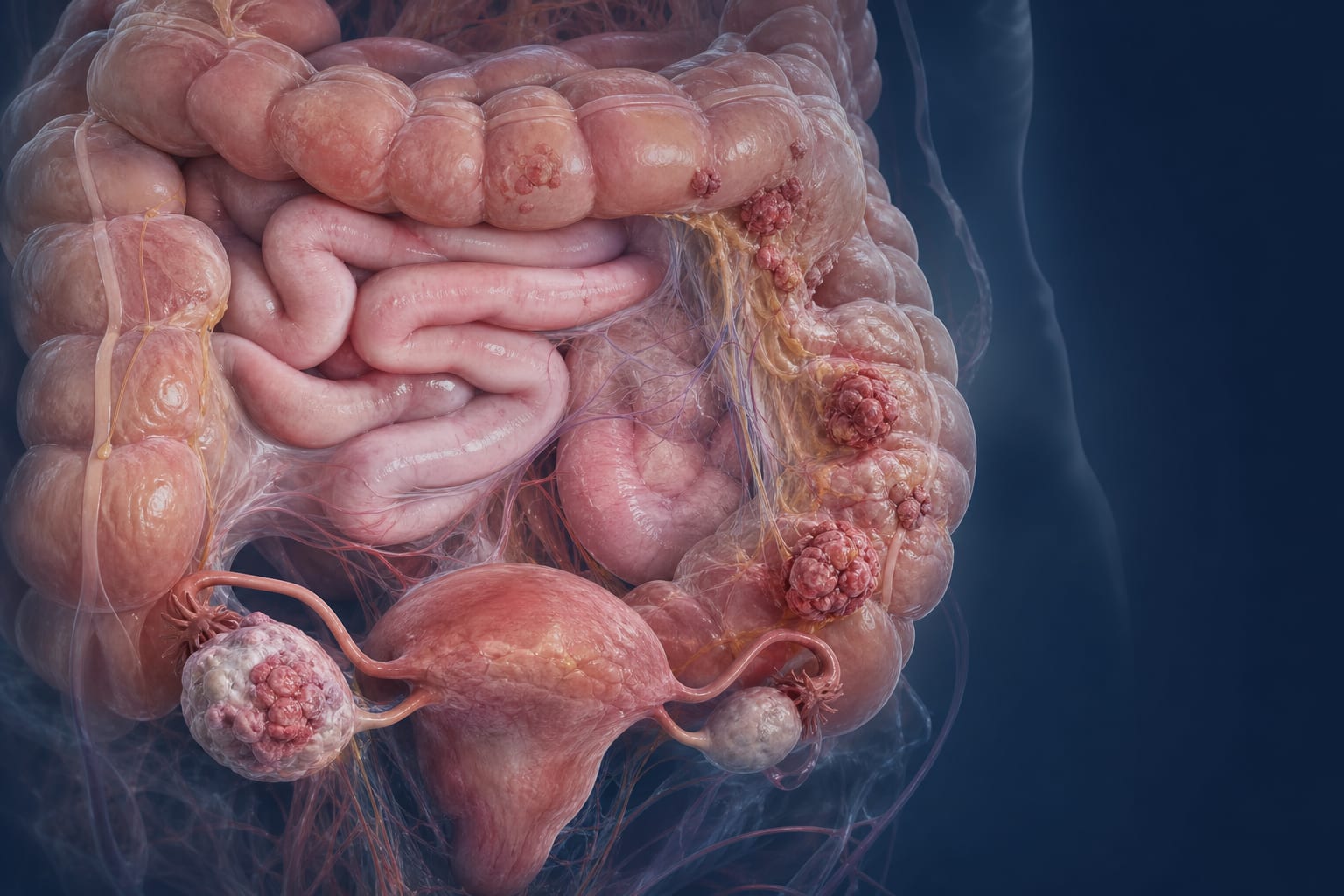
Impact of Comprehensive Lymphadenectomy on Survival Outcomes in Endometrial Cancer: A Meta-Analysis with Subgroup Risk Assessment
-
By
-
Yunlong Fan
-
Jun Zhu
-
Lingling Jiang
-
Jia Xu
-
Jinqun Huang
-
June 10, 2026
Clinical Scorecard: Impact of Comprehensive Lymphadenectomy on Survival Outcomes in Endometrial Cancer: A Meta-Analysis with Subgroup Risk Assessment
At a Glance
| Category | Detail |
|---|
| Condition | |
| Key Mechanisms | Combined pelvic and para-aortic lymphadenectomy (PPaLND) versus pelvic lymphadenectomy alone (PLND) or no lymphadenectomy. |
| Target Population | |
| Care Setting | |
Key Highlights
- PPaLND associated with significant improvement in overall survival compared to no lymphadenectomy (HR = 0.61).
- No significant survival difference observed between PPaLND and PLND in intermediate-to-high-risk subgroups.
Guideline-Based Recommendations
Diagnosis
- Assessment of lymph node involvement is critical for prognostic stratification.
Management
- Consider PPaLND for patients at high risk of recurrence.
Monitoring & Follow-up
- Monitor for postoperative complications.
Risks
- Postoperative complications include chronic lymphedema and vascular or neurologic injuries.
Patient & Prescribing Data
Patients diagnosed with endometrial cancer.
Surgical decision-making should consider potential survival benefits.
Clinical Best Practices
- Utilize a multidisciplinary approach for surgical decision-making.
Related Resources & Content