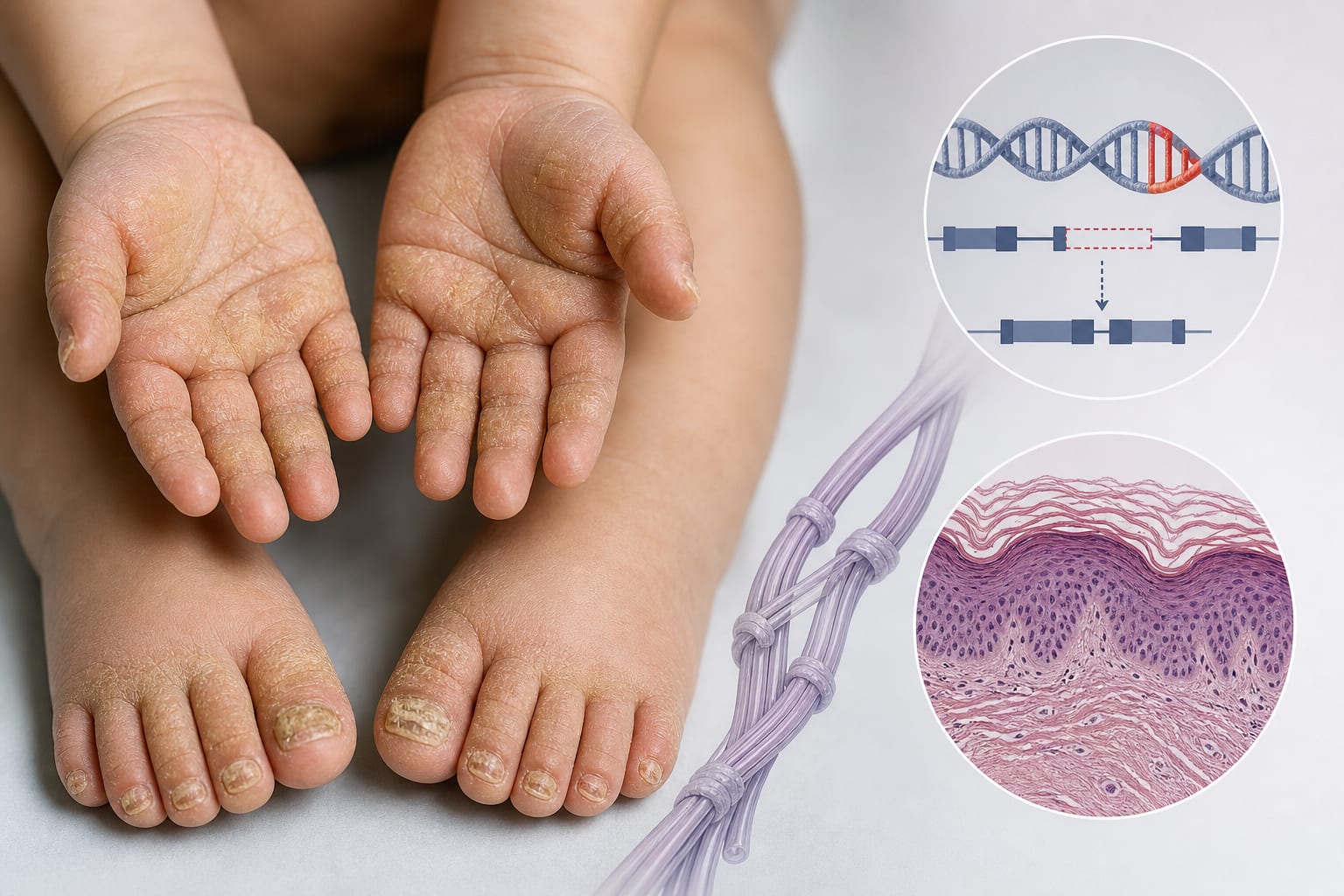
Case Study: Effective Use of Topical Simvastatin in a 2-Year-Old with Keratin 16-Related Palmoplantar Epidermal Differentiation Disorder
By
Qingmei Zhong
Ying Zhang
Zhen Feng
Jinyan Zhang
Borui Chen
July 2, 2026
Clinical Scorecard: Case Study: Effective Use of Topical Simvastatin in a 2-Year-Old with Keratin 16-Related Palmoplantar Epidermal Differentiation Disorder
At a Glance
Category Detail
Condition Keratin 16-Related Palmoplantar Epidermal Differentiation Disorder Key Mechanisms Disruption in keratinocyte cytoskeletal integrity and inflammatory cascades due to dominant-negative or haploinsufficient effects of mutant keratins. Target Population Pediatric patients, specifically a 2-year-old girl with keratin 16-associated disease. Care Setting Dermatology clinic
Key Highlights
Topical 2.5% simvastatin/cholesterol cream applied twice daily for 11 weeks led to substantial improvement. Resolution of painful fissures and improved morphology of nail growth observed. No local or systemic adverse effects reported. Condition characterized by painful palmoplantar hyperkeratosis and nail dystrophy. Genetic analysis confirmed a hemizygous multi-exon deletion in keratin 16. Guideline-Based Recommendations
Diagnosis
Whole-exome sequencing to identify genetic mutations associated with keratin 16. Management
Topical therapies such as simvastatin to achieve local drug concentrations while limiting systemic absorption. Monitoring & Follow-up
Regular assessment of skin and nail condition to evaluate treatment efficacy. Risks
Systemic therapies may carry safety concerns in young children. Patient & Prescribing Data
Children with keratin 16-related palmoplantar epidermal differentiation disorder.
Topical simvastatin may provide an effective and well-tolerated treatment option.
Clinical Best Practices
Consider topical therapies before systemic treatments in young children. Monitor for psychosocial impacts of chronic skin conditions. Related Resources & Content