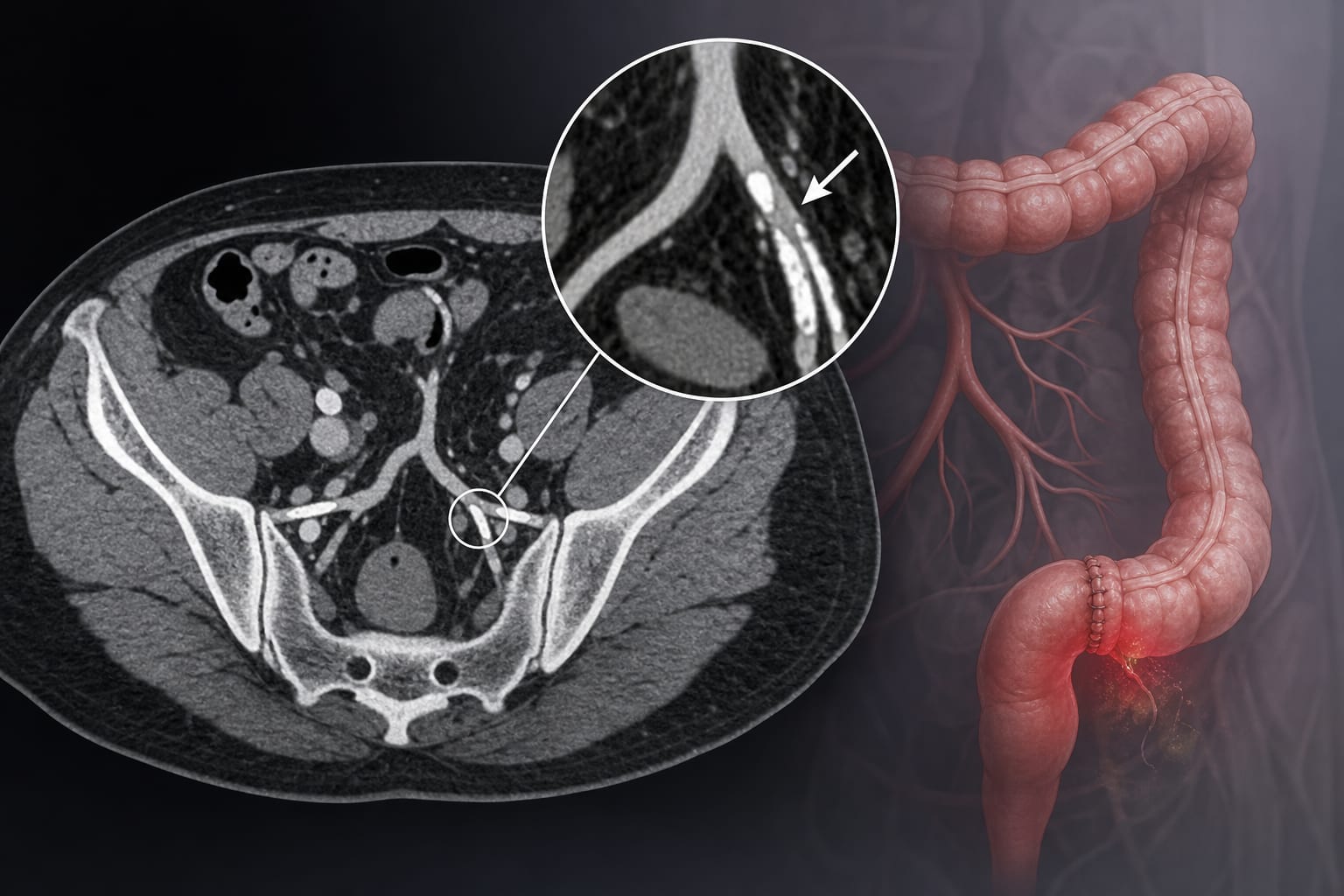
Clinical Scorecard: Holistic Approach to Managing Synchronous Colorectal Liver Metastases in a High-Volume Institution: Analysis Using Propensity Score Matching
At a Glance
Category
Detail
Condition
Synchronous colorectal liver metastases (CLM)
Key Mechanisms
Early detection via improved imaging; tumor burden assessed by size and number; multidisciplinary surgical and systemic chemotherapy integration
Target Population
Adult patients (≥18 years) with synchronous CLM undergoing first curative-intent hepatectomy
Care Setting
High-volume specialized cancer center with multidisciplinary liver tumor board
Key Highlights
Synchronous CLM incidence is increasing due to improved imaging and is associated with worse survival than metachronous metastases.
Centralized treatment in high-volume centers enables comprehensive multidisciplinary care and better clinical outcomes.
Preoperative chemotherapy is indicated for initially unresectable or marginally resectable CLM, with response assessed every two months.
Guideline-Based Recommendations
Diagnosis
Use abdominal ultrasonography, CT or MRI of the abdomen, and chest CT for staging.
Define synchronous CLM as metastases detected within 12 months of primary tumor diagnosis or surgery.
Assess tumor burden using Tumor Burden Score (TBS) based on tumor size and number.
Management
Centralize care in specialized high-volume centers with multidisciplinary teams including surgeons, oncologists, and radiologists.
Classify liver resections as major (≥3 segments) or minor; prefer parenchyma-sparing resections when feasible.
Sequence surgeries as simultaneous, primary tumor first, or liver-first approaches based on multidisciplinary evaluation.
Administer preoperative chemotherapy for initially unresectable or marginally resectable CLM to achieve resectability.
Monitoring & Follow-up
Evaluate chemotherapy response every two months using RECIST criteria.
Monitor postoperative complications using Clavien–Dindo classification; major morbidity defined as grade 3 or higher.
Assess overall survival from date of CLM resection to death.
Risks
Inadequate future liver remnant volume or inability to remove all CLM defines unresectability.
Anticipated R1 resection risk is not an absolute contraindication but tumor-free margins are preferred.
Variability in treatment approaches outside specialized centers may impact outcomes.
Patient & Prescribing Data
Patients with synchronous colorectal liver metastases undergoing curative-intent liver resection.
Preoperative chemotherapy is tailored based on resectability status; surgery is performed promptly upon achieving technical resectability without unnecessary delay.
Clinical Best Practices
Centralize management of synchronous CLM in high-volume centers with multidisciplinary teams.
Use parenchyma-sparing liver surgery to optimize remnant liver volume while maintaining oncologic radicality.
Apply no strict unresectability criteria regarding number, size, or laterality; base decisions on feasibility of complete resection with adequate liver remnant.
Perform regular multidisciplinary assessments to guide timing and sequencing of chemotherapy and surgery.