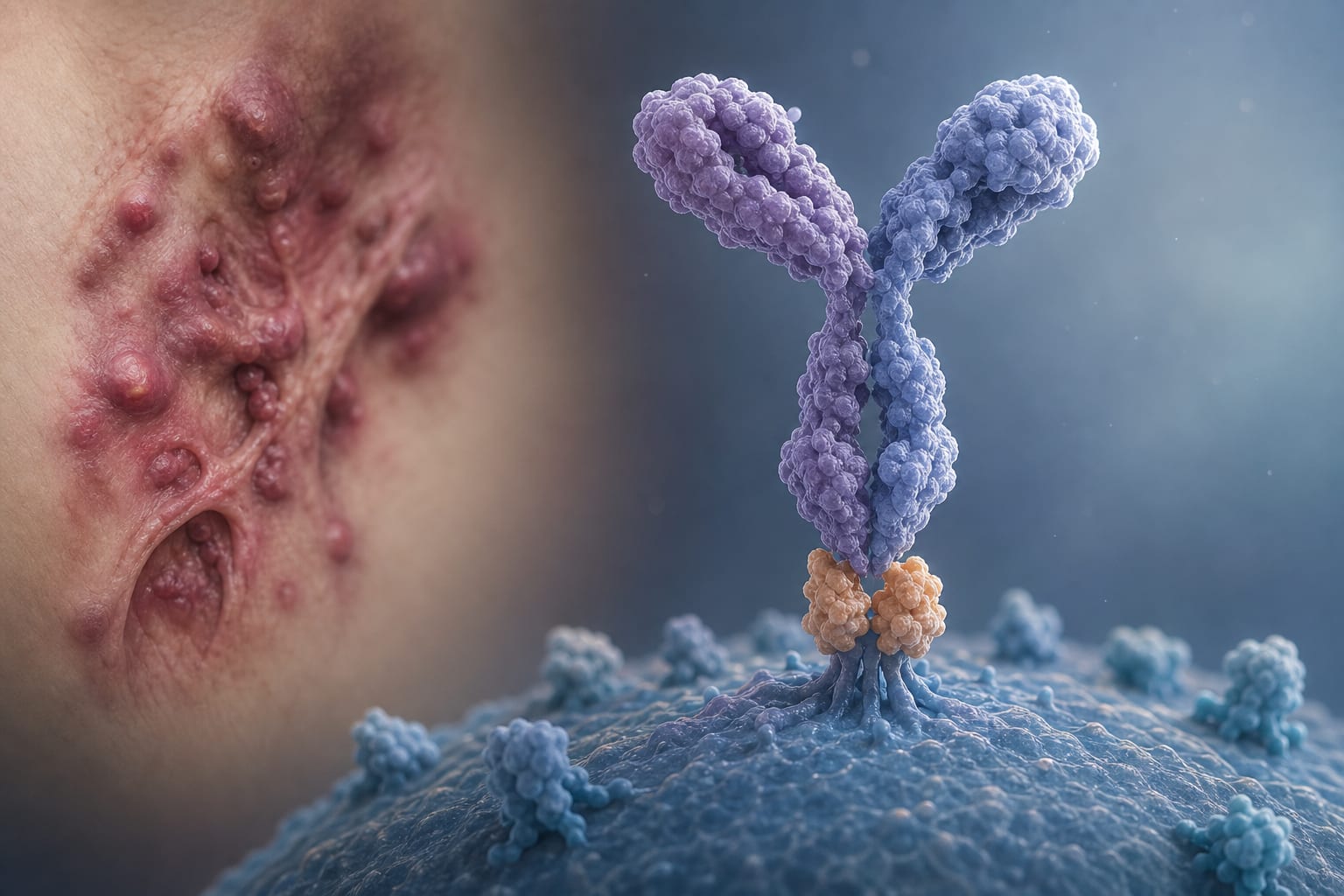
Combination Targeted Treatment Approaches for Hidradenitis Suppurativa: A Comprehensive Review
By
Kenan Kherallah
Claire S. Chung
Raveena Ghanshani
Alexandra Charrow
Julia M. Riley
Christopher J. Sayed
Vivian Y. Shi
Katrina H. Lee
Jennifer L. Hsiao
November 24, 2025
Clinical Scorecard: Combination Targeted Treatment Approaches for Hidradenitis Suppurativa: A Comprehensive Review
At a Glance
Category Detail
Condition Key Mechanisms Concurrent activation of TNF-α, IL-1, IL-17, and JAK/STAT signaling pathways, supporting the rationale for combination therapy. Target Population Care Setting
Key Highlights
DTT may enhance efficacy in recalcitrant HS cases, though evidence is primarily from case reports. Current FDA-approved biologics include adalimumab, secukinumab, and bimekizumab, with emerging data on combination therapies. Further evaluation of DTT is warranted due to high unmet needs in severe HS. Guideline-Based Recommendations
Diagnosis
Management
Monitoring & Follow-up
Regularly assess disease activity and patient-reported outcomes. Monitor specific laboratory parameters such as liver function tests and complete blood counts. Risks
Patient & Prescribing Data
Combination of biologics (e.g., adalimumab, secukinumab) and JAK inhibitors (e.g., upadacitinib) has shown promise in case reports.
Clinical Best Practices
Evaluate patients for dual therapy if single-agent treatment fails, considering specific patient characteristics. Monitor laboratory parameters such as liver function tests and complete blood counts during DTT. Related Resources & Content