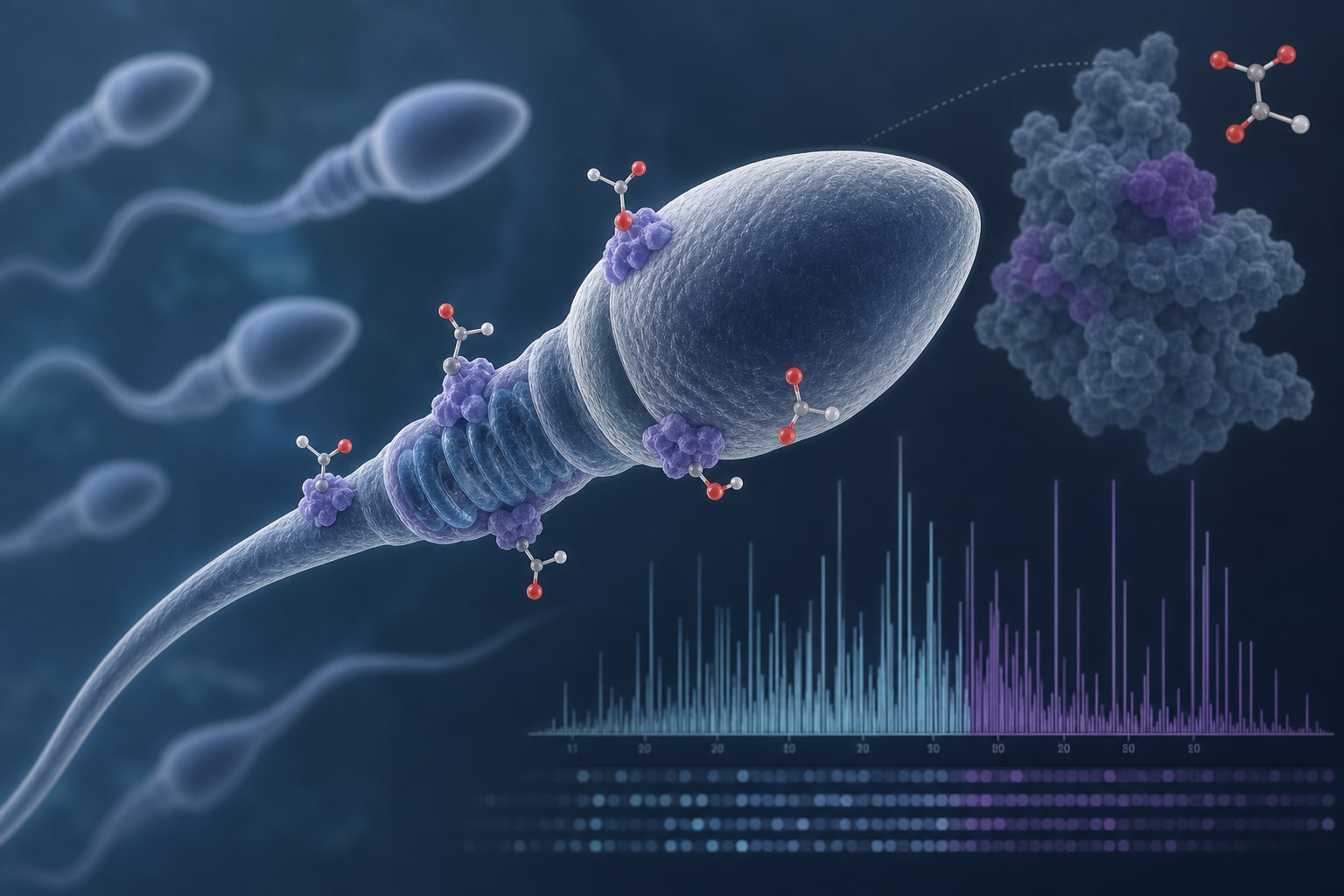
Alterations in the protein lactylation landscape of sperm from patients with varicocele-associated asthenozoospermia
-
By
-
Heran Cao
-
Xiaohua Liu
-
Hua Nie
-
Shenghui Zhu
-
Shujuan Liu
-
Yu Zhou
-
Chunjie Ma
-
Huang Liu
-
Weibing Qin
-
June 23, 2026
-
Clinical Scorecard: Changes in the Lactylation Profile of Sperm in Men with Varicocele-Related Asthenozoospermia
At a Glance
| Category | Detail |
|---|
| Condition | Varicocele-related asthenozoospermia |
| Key Mechanisms | Disrupted lactate metabolism and protein lactylation affecting sperm motility |
| Target Population | Men with varicocele-associated infertility |
| Care Setting | Reproductive health and infertility clinics |
Key Highlights
- Varicocele is a leading cause of male infertility, particularly asthenozoospermia.
- Lactylome analysis identified 2,699 lactylation sites on 1,216 proteins in sperm.
- Differential lactylation was linked to pathways critical for sperm motility.
- Key proteins associated with sperm motility showed significant downregulation in lactylation.
- The study highlights the importance of lactate metabolism in sperm function.
Guideline-Based Recommendations
Diagnosis
- Semen analysis and DNA fragmentation testing are conventional diagnostic approaches.
Management
- Varicocelectomy is a commonly employed intervention for varicocele-related infertility.
Monitoring & Follow-up
- Post-treatment monitoring of semen parameters, particularly motility, is essential.
Risks
- Inconsistent therapeutic efficacy of varicocelectomy due to complex pathophysiology.
Patient & Prescribing Data
Men diagnosed with varicocele and asthenozoospermia.
Understanding molecular alterations in sperm may identify targets for improving sperm function.
Clinical Best Practices
- Focus on molecular alterations in mature spermatozoa to elucidate pathophysiology.
- Employ paired pre- and post-treatment study designs to assess treatment efficacy.
Related Resources & Content