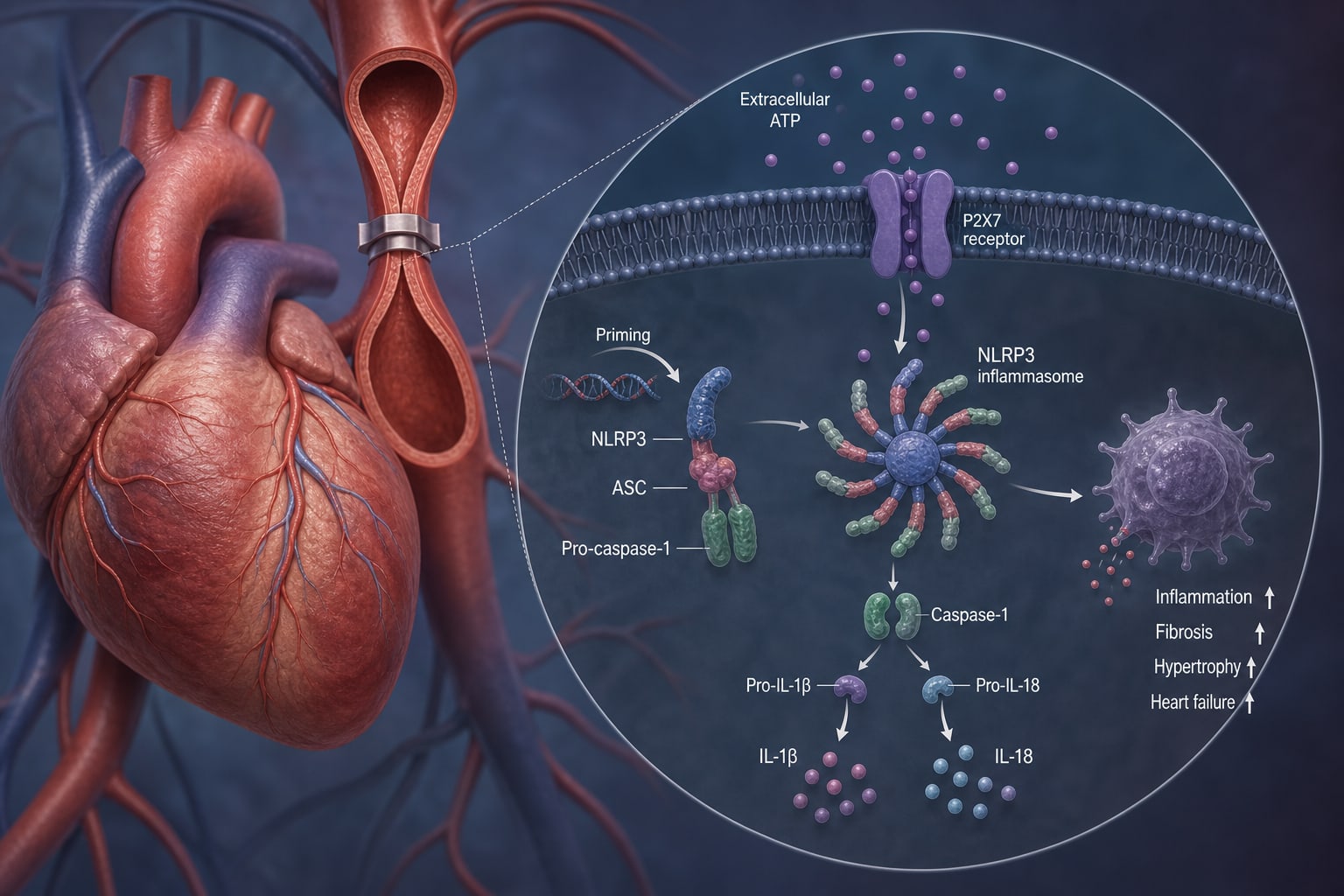
The role of the NLRP3 inflammasome in hypertension-related chronic heart failure and its potential therapeutic targets
-
By
-
Feilong Sun
-
Xinyu Zhao
-
Chunlin Chen
-
Xue Ma
-
Fang Liu
-
July 1, 2026
Clinical Scorecard: The Impact of the NLRP3 Inflammasome on Chronic Heart Failure Associated with Hypertension and Its Possible Therapeutic Targets
At a Glance
| Category | Detail |
|---|
| Condition | Chronic Heart Failure (CHF) associated with Hypertension |
| Key Mechanisms | Extracellular ATP–P2X7 signaling and NLRP3 inflammasome activation |
| Target Population | Patients with hypertension-induced CHF |
| Care Setting | Clinical management of chronic heart failure |
Key Highlights
- Hypertension-induced pressure overload drives chronic heart failure and inflammation.
- NLRP3 inflammasome activation is linked to adverse cardiac remodeling.
- Pharmacologic inhibition of the ATP–P2X7–NLRP3 axis improves cardiac function.
- Inflammatory mediators correlate with worse cardiac performance and outcomes.
- Targeting upstream inflammatory pathways may alter disease progression.
Guideline-Based Recommendations
Diagnosis
- Assess hemodynamic status and echocardiographic findings in CHF.
Management
- Emphasize early and sustained blood-pressure control combined with heart failure therapy.
Monitoring & Follow-up
- Monitor inflammatory markers and cardiac function over time.
Risks
- Patients may experience recurrent symptoms and ongoing structural remodeling despite treatment.
Patient & Prescribing Data
Patients with hypertension-related chronic heart failure, particularly those with preserved ejection fraction.
Consider targeting the ATP–P2X7–NLRP3 axis for therapeutic intervention.
Clinical Best Practices
- Implement combination treatment and timely intensification to delay remodeling.
- Utilize risk stratification to tailor treatment approaches.
Related Resources & Content