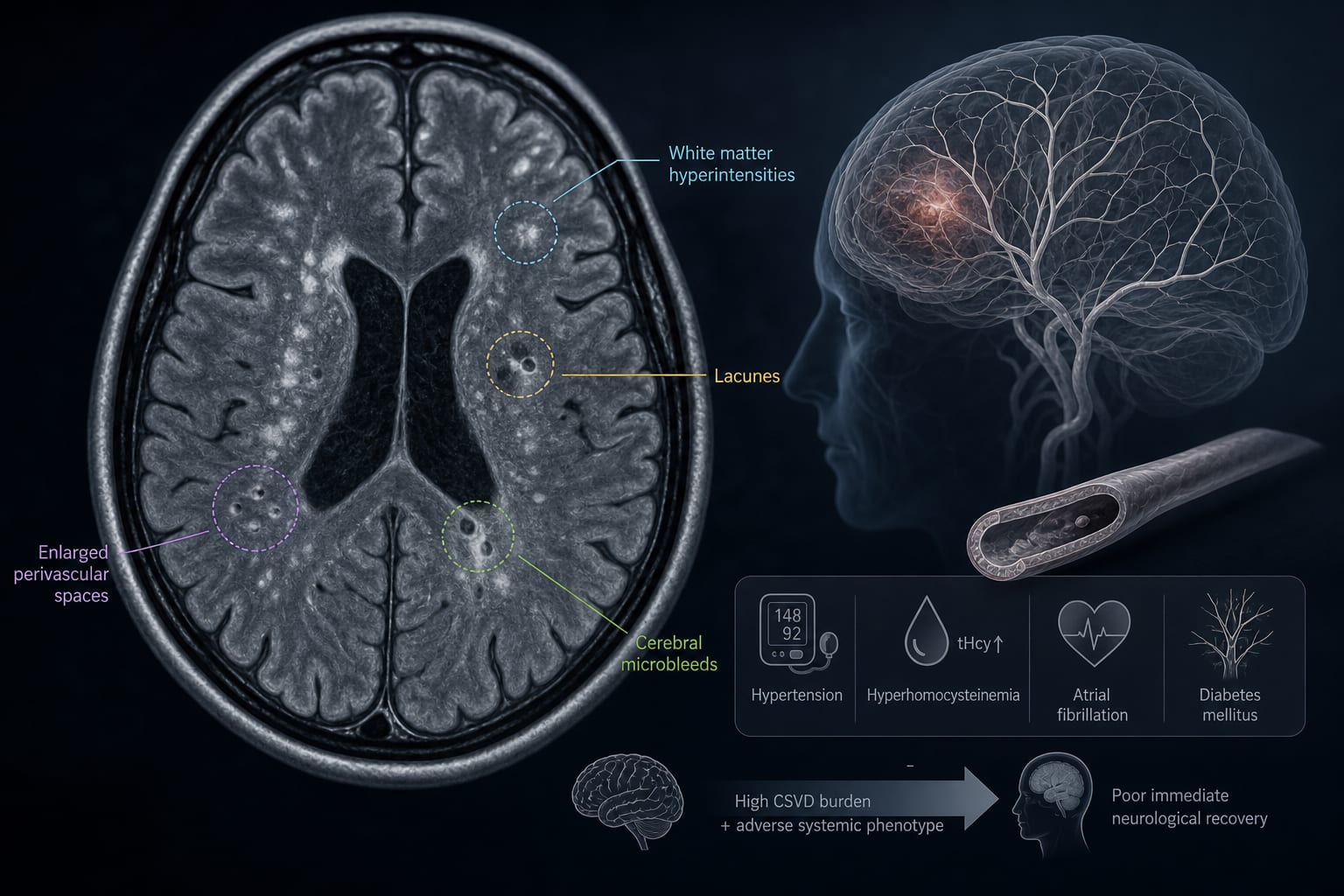
Impact of cerebral small vessel disease burden and systemic clinical phenotypes on short-term neurological outcomes after acute ischemic stroke - Scorecard - MDSpire
Advertisement
Impact of cerebral small vessel disease burden and systemic clinical phenotypes on short-term neurological outcomes after acute ischemic stroke
Clinical Scorecard: Influence of Cerebral Small Vessel Disease Severity and Systemic Clinical Characteristics on Immediate Neurological Recovery Following Acute Ischemic Stroke
At a Glance
Category
Detail
Condition
Key Mechanisms
Target Population
Patients with acute ischemic stroke admitted to Dongzhimen Hospital, Beijing University of Chinese Medicine.
Care Setting
Hospital setting, specifically a stroke unit with a focus on acute care.
Key Highlights
Higher total CSVD burden is associated with unfavorable neurological outcomes, particularly in patients with hyperhomocysteinemia and specific Traditional Chinese Medicine phenotypes.
Guideline-Based Recommendations
Diagnosis
Management
Monitoring & Follow-up
Monitor NIHSS scores at discharge and establish follow-up protocols based on score changes.
Risks
Patient & Prescribing Data
Patients with unfavorable outcomes had a higher total CSVD burden and specific systemic characteristics, including hyperhomocysteinemia.
Clinical Best Practices
Utilize MRI to evaluate CSVD markers in AIS patients and incorporate systemic clinical assessments in evaluating stroke outcomes, ensuring integration into clinical workflows.