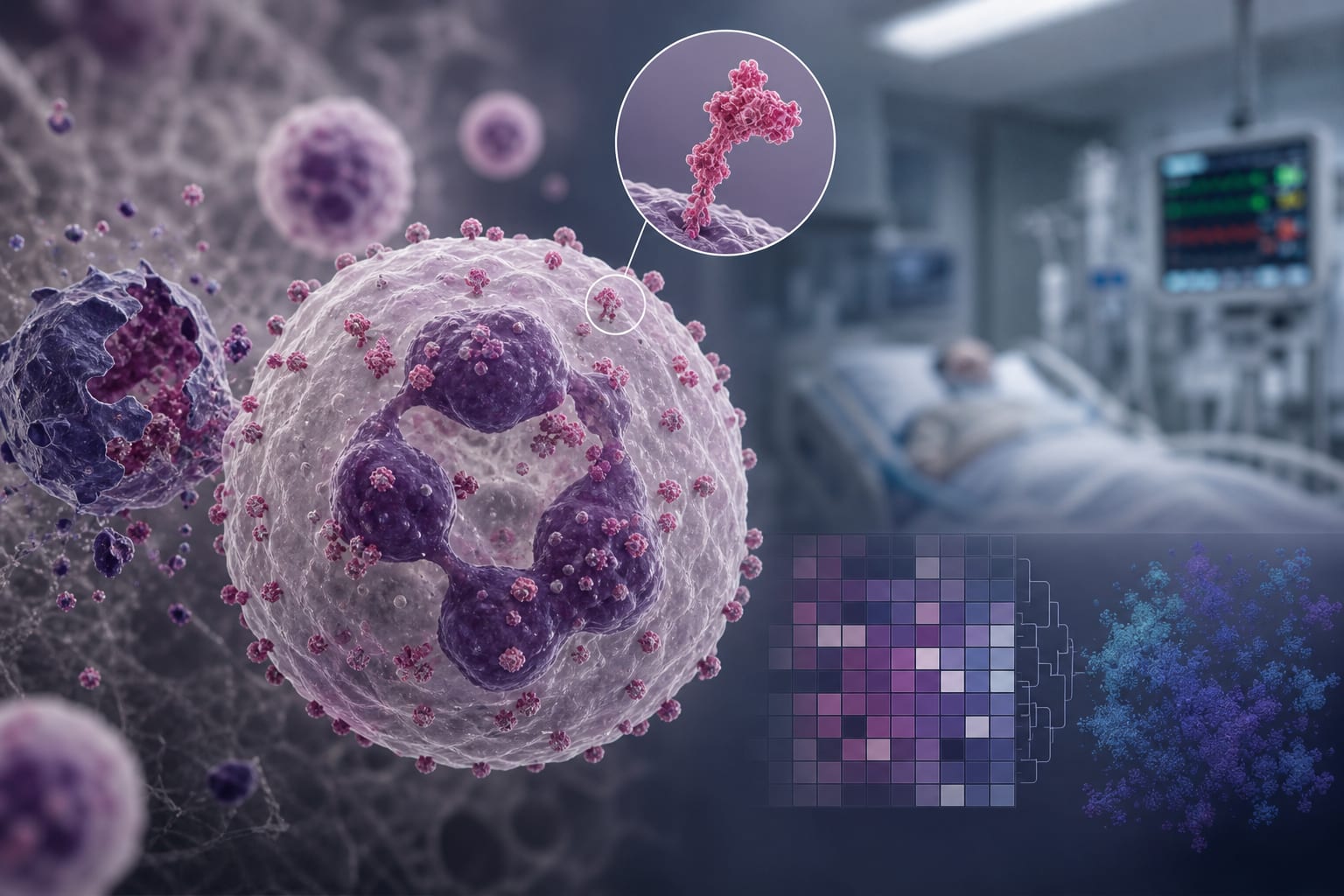
Elevated CD177 Expression on Neutrophils Associated with Sepsis Development and Inflammation Mediated by Necroptosis
-
By
-
Haibo Liu
-
Xiangshu Cheng
-
Jun Li
-
Wei Wei
-
Yijia Yuan
-
Wenjuan Wang
-
Wei Wang
-
Fang Liu
-
Jin Zheng
-
July 3, 2026
Clinical Scorecard: Elevated CD177 Expression on Neutrophils Associated with Sepsis Development and Inflammation Mediated by Necroptosis
At a Glance
| Category | Detail |
|---|
| Condition | Sepsis |
| Key Mechanisms | Necroptosis, inflammatory pathways (IL-6/STAT3, TNF-α/NF-κB) |
| Target Population | Patients with sepsis |
| Care Setting | Critical care |
Key Highlights
- Six-gene necroptosis signature correlates with sepsis severity and outcomes.
- CD177+ neutrophils are enriched in non-surviving sepsis patients.
- Machine learning models show robust diagnostic performance for sepsis.
Guideline-Based Recommendations
Diagnosis
- Utilize a six-gene necroptosis signature for patient stratification.
Management
- Consider pharmacological intervention targeting necroptosis pathways.
Monitoring & Follow-up
- Monitor CD177+ neutrophil levels in sepsis patients.
Risks
- Inhibition of necroptosis may exacerbate liver injury in some contexts.
Patient & Prescribing Data
Patients diagnosed with sepsis
Necrostatin-1 shows potential in reducing pro-inflammatory cytokines.
Clinical Best Practices
- Integrate single-cell RNA sequencing for understanding cellular heterogeneity in sepsis.
- Employ machine learning for analyzing complex biological datasets.
Related Resources & Content