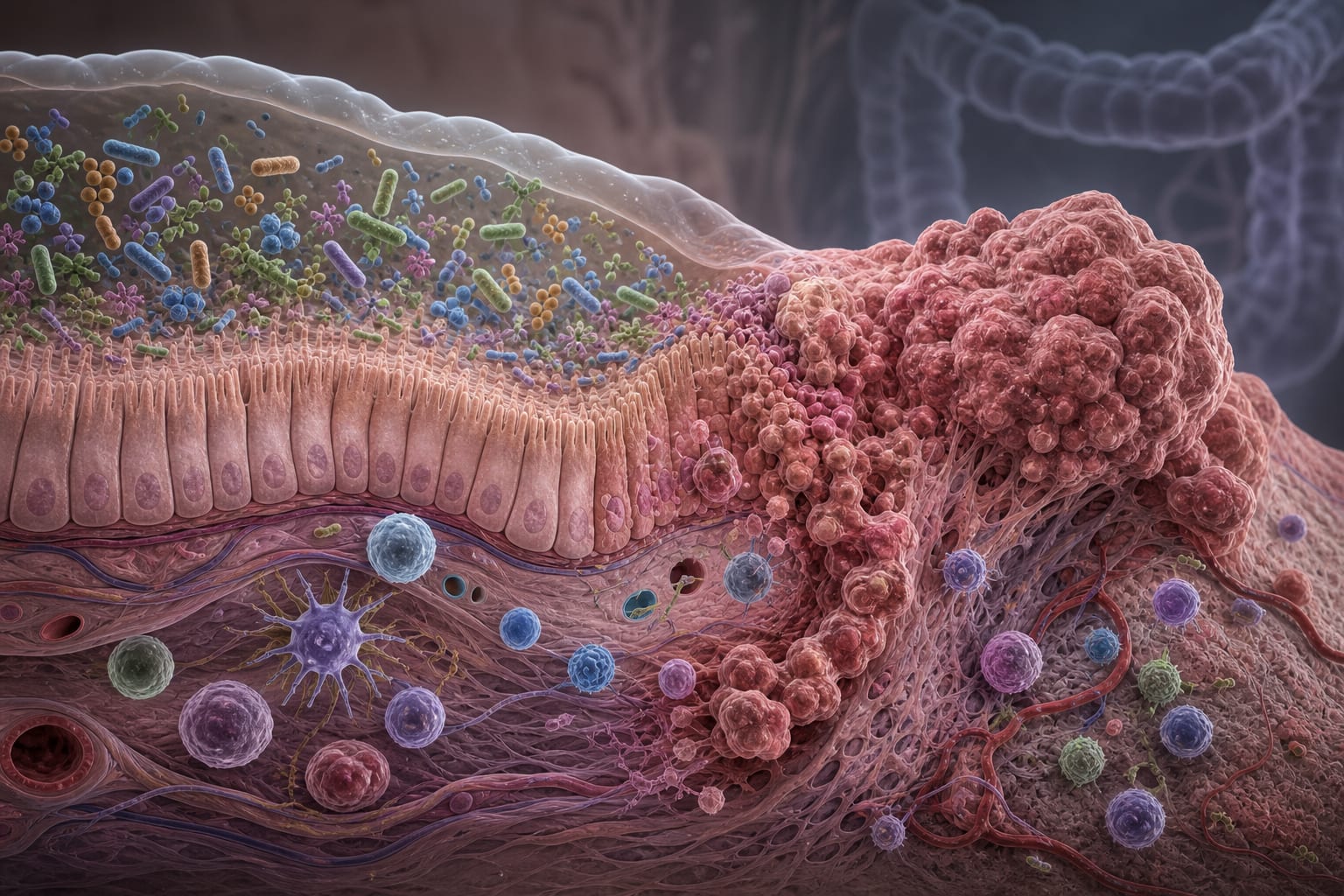
Dendritic cells in cancer immunotherapy: functional barriers, reprogramming strategies and translational challenges
-
By
-
Ningping Xiao
-
Chao Chen
-
Xiuyu Yang
-
Jiajia Hao
-
Mian Xie
-
Jiangtao Wang
-
Jiayu Xiang
-
Chang Liu
-
Xiulin Jiang
-
Siwei Huang
-
Zijia Wang
-
Yi Jin
-
July 3, 2026
-
Clinical Scorecard: Dendritic Cells in Cancer Immunotherapy: Overcoming Functional Limitations, Reprogramming Approaches, and Clinical Hurdles
At a Glance
| Category | Detail |
|---|
| Condition | Cancer Immunotherapy |
| Key Mechanisms | Antigen presentation and T cell activation by dendritic cells (DCs) are central to effective antitumor immunity. |
| Target Population | Patients with cancer undergoing immunotherapy. |
| Care Setting | Clinical oncology and immunotherapy research. |
Key Highlights
- Dendritic cells are crucial for capturing and presenting tumor antigens to T cells.
- APC dysfunction in the tumor microenvironment limits effective immune responses.
- Therapeutic strategies include DC vaccines, mRNA platforms, and innate immune agonists.
- Restoring APC function is essential for enhancing antitumor immunity.
- Combination therapies may improve the efficacy of immunotherapy.
Guideline-Based Recommendations
Diagnosis
- Assess the tumor microenvironment for APC function and T cell infiltration.
Management
- Utilize dendritic cell vaccines and other APC-targeted therapies.
Monitoring & Follow-up
- Evaluate immune responses and tumor antigen presentation post-therapy.
Risks
- Consider potential for immunosuppression and tumor heterogeneity.
Patient & Prescribing Data
Cancer patients receiving immunotherapy.
Focus on strategies that enhance antigen presentation and T cell activation.
Clinical Best Practices
- Implement combination therapies to enhance immune responses.
- Monitor for immunosuppressive factors in the tumor microenvironment.
- Explore innovative delivery systems for tumor antigens.
Related Resources & Content