Indocyanine green fluorescence angiography in laparoscopic sigmoid and rectal cancer surgery: no reduction in anastomotic leakage but a lower incidence of anastomotic strictures. A prospective single-center study - Scorecard - MDSpire
Advertisement
Indocyanine green fluorescence angiography in laparoscopic sigmoid and rectal cancer surgery: no reduction in anastomotic leakage but a lower incidence of anastomotic strictures. A prospective single-center study
Clinical Scorecard: The Role of Indocyanine Green Fluorescence Angiography in Laparoscopic Surgery for Sigmoid and Rectal Cancer: No Impact on Anastomotic Leakage but Reduced Incidence of Strictures in a Prospective Single-Center Study
At a Glance
Category
Detail
Condition
Anastomotic Leakage and Strictures in Colorectal Surgery
Key Mechanisms
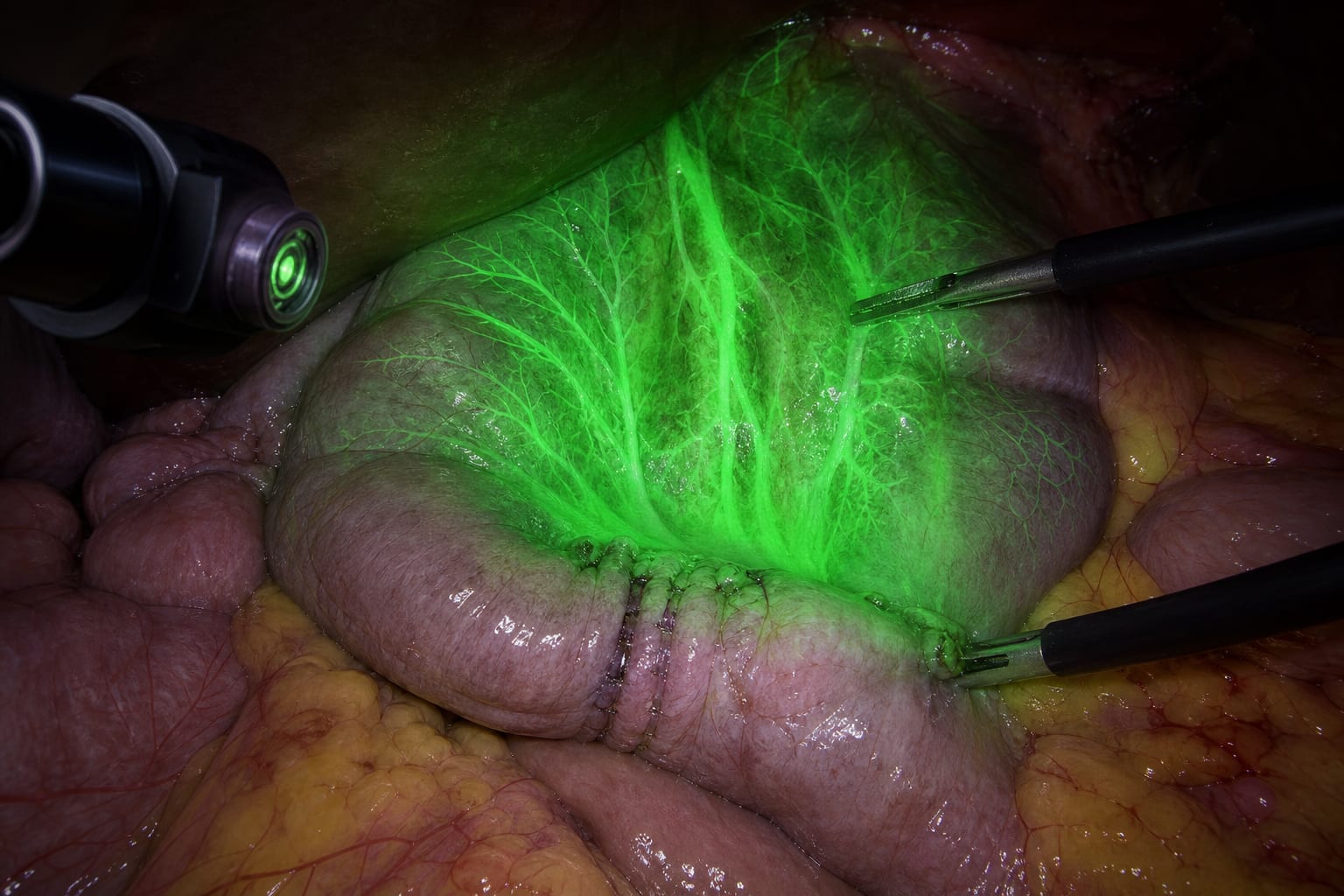
Intraoperative assessment of bowel perfusion using indocyanine green fluorescence angiography (ICG-FA)
Target Population
Patients undergoing laparoscopic sigmoid or rectal cancer resection
Care Setting
Tertiary-care hospital
Key Highlights
No significant difference in anastomotic leakage rates between ICG-FA and control groups (14.7% vs. 12.7%)
ICG-FA group had no anastomotic strictures, while 11.4% of control group developed strictures
Study included 113 patients with 34 in the ICG-FA group and 79 in the control group
Other postoperative outcomes were similar between both groups
Guideline-Based Recommendations
Diagnosis
Assess bowel perfusion intraoperatively using ICG-FA
Management
Consider ICG-FA in laparoscopic sigmoid or rectal cancer resections
Monitoring & Follow-up
Monitor for anastomotic leakage and strictures postoperatively
Risks
Anastomotic leakage is associated with increased postoperative complications and longer hospital stays
Patient & Prescribing Data
Adults aged 18 years or older with resectable sigmoid colon or rectal adenocarcinoma