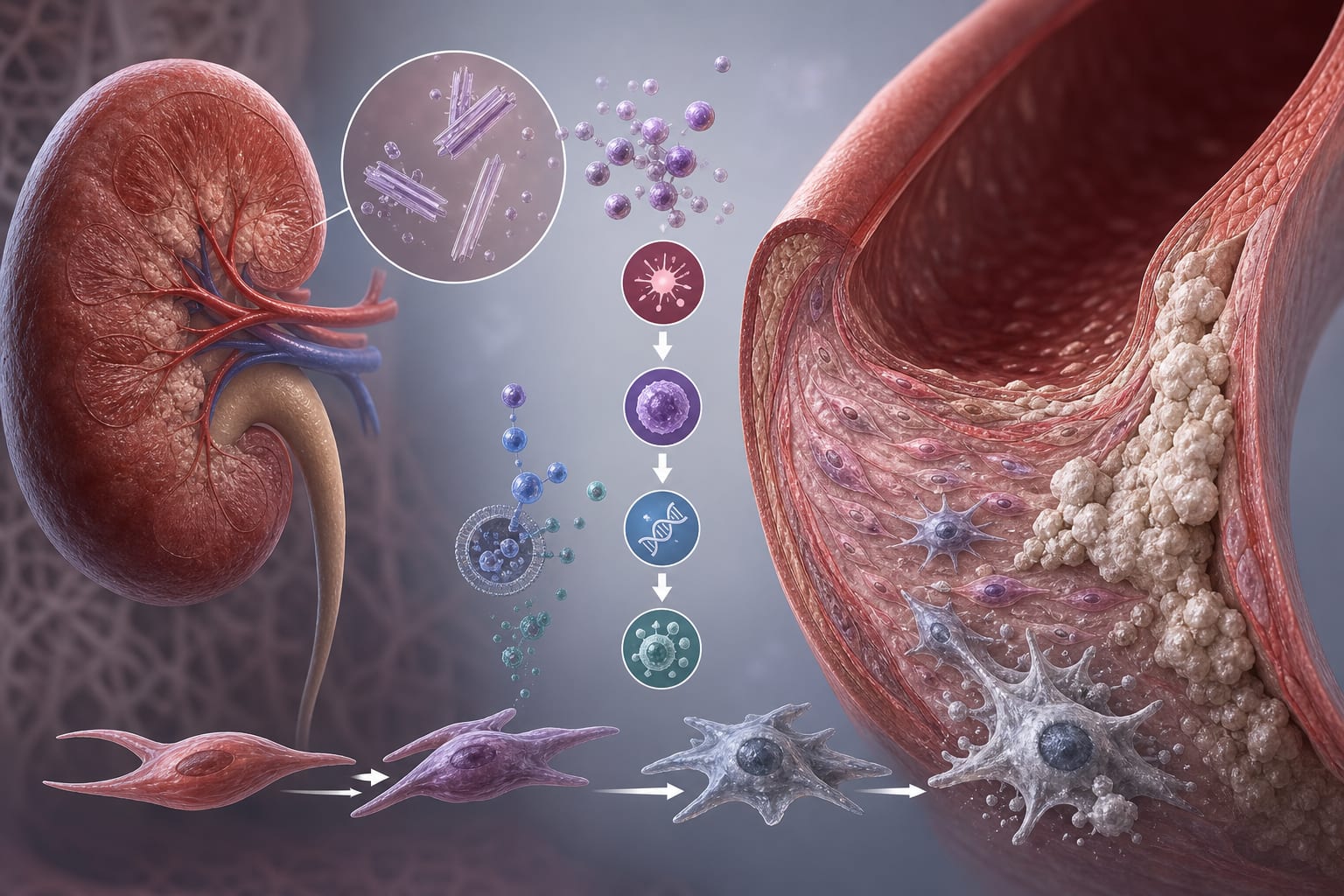
Uric acid–associated mechanisms of coronary artery calcification in diabetic kidney disease: evidence, hypotheses, and translational perspectives
By
Shuangqing Li
Yan Liu
June 11, 2026
Clinical Scorecard: Mechanisms Linking Uric Acid to Coronary Artery Calcification in Diabetic Kidney Disease: Insights, Theories, and Clinical Implications
At a Glance
Category Detail
Condition Key Mechanisms Uric acid (UA) is associated with renal metabolic stress, mitochondrial dysfunction, oxidative injury, and inflammatory pathway activation. Target Population Care Setting
Key Highlights
CAC is a strong predictor of cardiovascular morbidity and mortality. Uric acid is linked to accelerated CAC progression in DKD. Hyperuricemia may precede measurable decline in GFR during DKD progression. Guideline-Based Recommendations
Diagnosis
Management
Monitor for coronary artery calcification in patients with DKD. Monitoring & Follow-up
Risks
Patient & Prescribing Data
Patients with diabetic kidney disease (DKD) experiencing hyperuricemia.
Elevated UA may require management to mitigate CAC progression.
Clinical Best Practices
Related Resources & Content