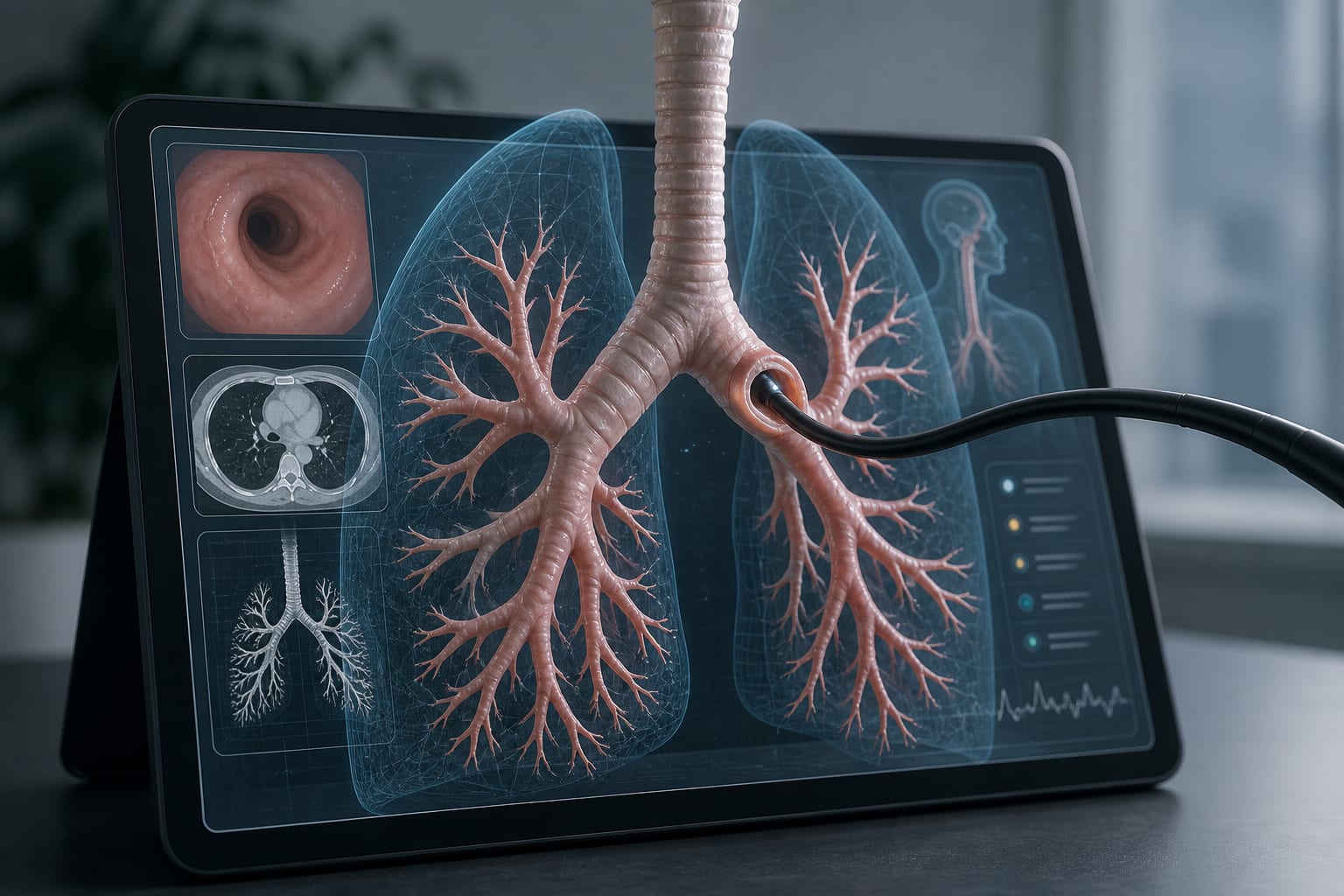
Clinical Scorecard: Utilizing Digital Twin Technology for Risk Communication in Adults Undergoing Elective Bronchoscopy: A Multicenter Randomized Controlled Study
At a Glance
Category
Detail
Condition
Elective Bronchoscopy
Key Mechanisms
Digital technology enhances informed consent through multimedia and interactive methods.
Target Population
Adults undergoing elective bronchoscopy
Care Setting
Multicenter clinical settings
Key Highlights
Informed consent is critical for elective bronchoscopy due to patient anxiety and discomfort.
Digital interventions may improve comprehension but do not consistently reduce anxiety.
Multimedia consent methods can enhance patient satisfaction without altering anxiety levels.
Detailed risk disclosure can heighten periprocedural anxiety in some cases.
Virtual reality and music interventions have shown mixed results in anxiety reduction.
Guideline-Based Recommendations
Diagnosis
Assess patient understanding and anxiety levels prior to bronchoscopy.
Management
Utilize multimedia and interactive digital tools for informed consent.
Monitoring & Follow-up
Evaluate patient satisfaction and anxiety post-procedure.
Risks
Be aware that detailed risk information may increase anxiety.
Patient & Prescribing Data
Adults scheduled for elective bronchoscopy procedures.
Digital consent methods may improve comprehension but require careful implementation to avoid increasing anxiety.
Clinical Best Practices
Combine written and verbal communication for informed consent.
Tailor risk communication to individual patient needs and health literacy levels.
Incorporate multimedia tools to enhance understanding and retention of information.