A novel ventricular septal reconstruction device for post-myocardial infarction ventricular septal rupture: preclinical and first-in-human study results - Scorecard - MDSpire
Coming Soon: Introducing MDSpire News. Learn more
Conexiant’s news site is now MDSpire News. Learn more

Innovative Device for Ventricular Septal Reconstruction Following Post-Myocardial Infarction Rupture: Findings from Preclinical and Initial Human Trials

  • By

  • Changjing Huang

  • Nan Cai

  • Youqian Li

  • Yao Yao

  • Zexun Zhu

  • Weike Wu

  • Kaibing Ren

  • Siwei Wu

  • Jingfeng Liu

  • Jingyuan Hou

  • Haifeng Hong

  • Hanlin Li

  • Zhihui Hu

  • Zhixiong Zhong

  • Wei Zhong

  • September 9, 2026

Share

Clinical Scorecard: Innovative Device for Ventricular Septal Reconstruction Following Post-Myocardial Infarction Rupture: Findings from Preclinical and Initial Human Trials

At a Glance

CategoryDetail
ConditionPost-myocardial infarction ventricular septal rupture (PIVSR)
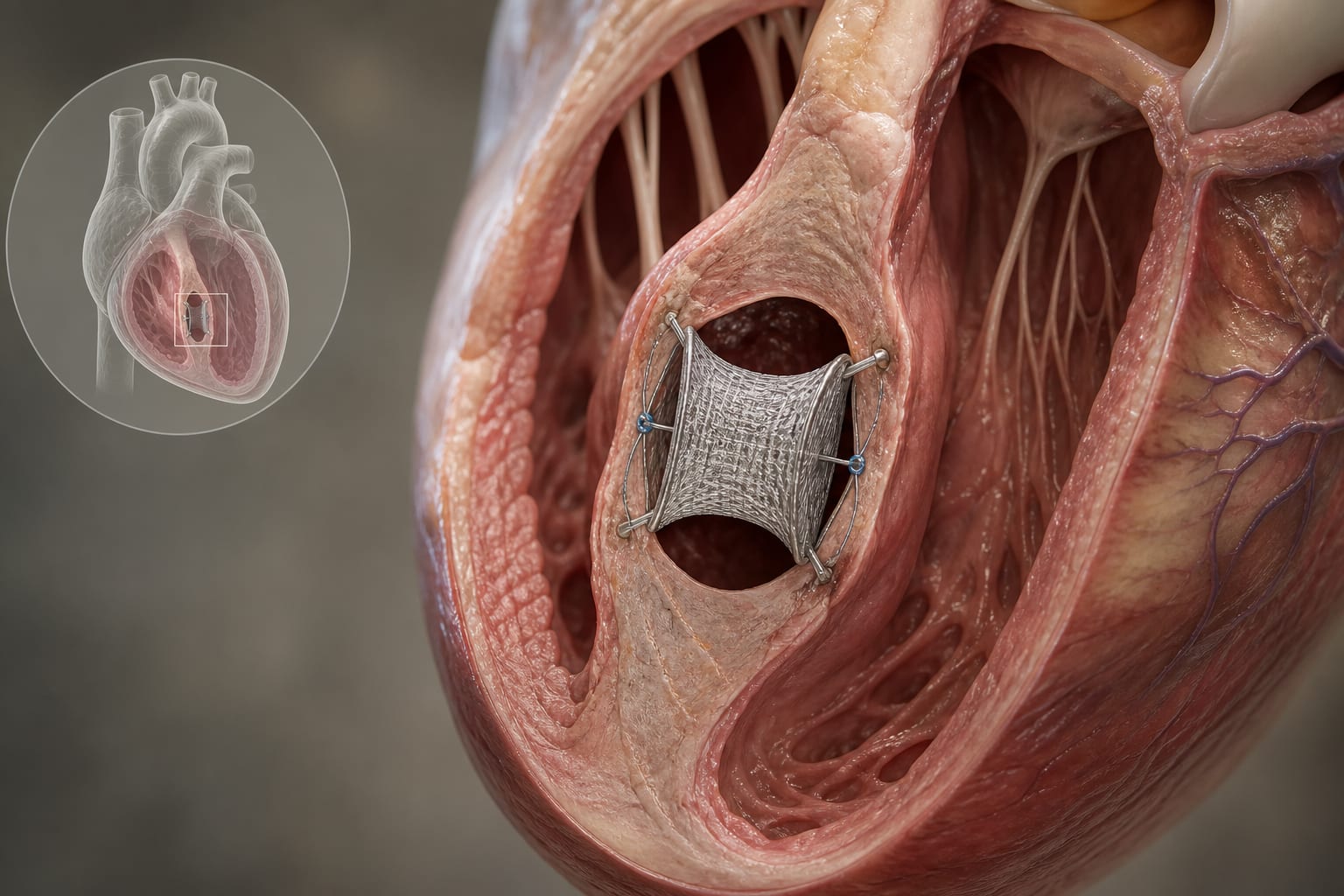
Key MechanismsUtilization of a dedicated Ventricular Septal Reconstruction Device (VSRD) designed for effective closure of PIVSR.
Target PopulationPatients with post-myocardial infarction ventricular septal rupture, particularly those at high surgical risk.
Care SettingPreclinical animal studies and first-in-human clinical trials.

Key Highlights

  • PIVSR has a poor prognosis with survival rates of 6% at 1 month and below 3% at 1 year with pharmacotherapy.
  • The VSRD showed procedural feasibility and acceptable short-term safety in both animal and human studies.
  • Residual shunts remained ≤2 mm in all four patients during follow-up after VSRD implantation.
  • No structural device malfunction or delivery-system failure was documented in animal studies.

Guideline-Based Recommendations

Diagnosis

  • Diagnosis of PIVSR should be confirmed through imaging techniques such as echocardiography and angiography.

Management

  • Consideration of transcatheter closure with VSRD for patients unsuitable for surgery or with complex defects.

Monitoring & Follow-up

  • Follow-up assessments should include echocardiography to evaluate residual shunts and tissue response.

Risks

  • High mortality associated with surgical intervention and potential complications from existing treatment options.

Patient & Prescribing Data

Patients with PIVSR, particularly those at high surgical risk or with unsuitable anatomy for conventional devices.

The VSRD may offer a less invasive alternative to traditional surgical repair methods.

Clinical Best Practices

  • Utilize imaging guidance for device placement in PIVSR cases.
  • Monitor for residual shunts and adverse events post-implantation.

Related Resources & Content

Original Source(s)

Related Content