Evaluation of Femoral Head Hounsfield Unit Values as Predictors in Hip Fracture Types
-
By
-
Wenjie Qin
-
Jiangyun Liao
-
Jianwen Cheng
-
July 2, 2026
Clinical Scorecard: Evaluation of Femoral Head Hounsfield Unit Values as Predictors in Hip Fracture Types
At a Glance
| Category | Detail |
|---|
| Condition | Hip Fractures |
| Key Mechanisms | CT Hounsfield Unit (HU) values as indicators of fracture type and stability |
| Target Population | Patients aged ≥65 years with femoral neck or intertrochanteric fractures |
| Care Setting | Retrospective analysis in a clinical imaging context |
Key Highlights
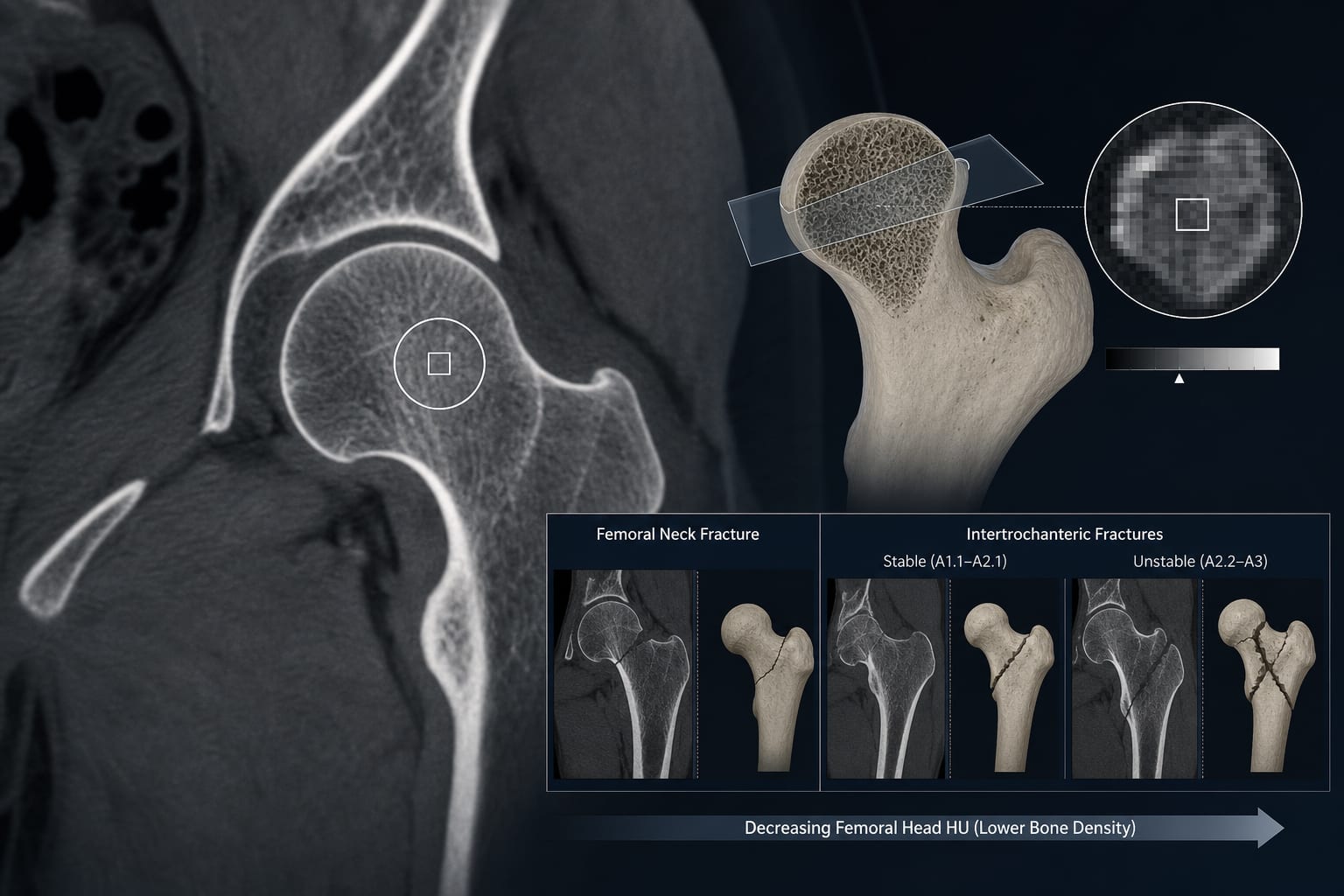
- HU values could not distinguish femoral neck fractures from intertrochanteric fractures.
- Unstable intertrochanteric fractures had significantly lower HU values than stable ones.
- Male patients exhibited significantly higher HU values than females.
- HU values showed high specificity (91.89%) but low sensitivity (17.5%) for predicting fracture stability.
- Moderate overall diagnostic performance with an AUC of 0.6764.
Guideline-Based Recommendations
Diagnosis
- Use CT to measure HU values for assessing fracture type and stability.
Management
- Consider HU values in preoperative evaluations to identify high-risk patients.
Monitoring & Follow-up
- Monitor HU values as part of the assessment for fracture healing and stability.
Risks
- High mortality and disability rates associated with hip fractures, particularly in the elderly.
Patient & Prescribing Data
Elderly patients with hip fractures
HU values may guide treatment decisions based on fracture stability.
Clinical Best Practices
- Perform CT scans for all elderly patients with suspected hip fractures.
- Utilize HU measurements from the unaffected contralateral femoral head for accuracy.
Related Resources & Content