Clinical Scorecard: Biomarker Indicators of Neurodegeneration in Former Rugby Players During Mid-Life
At a Glance
Category
Detail
Condition
Neurodegenerative diseases associated with repetitive head impacts and traumatic brain injury
Key Mechanisms
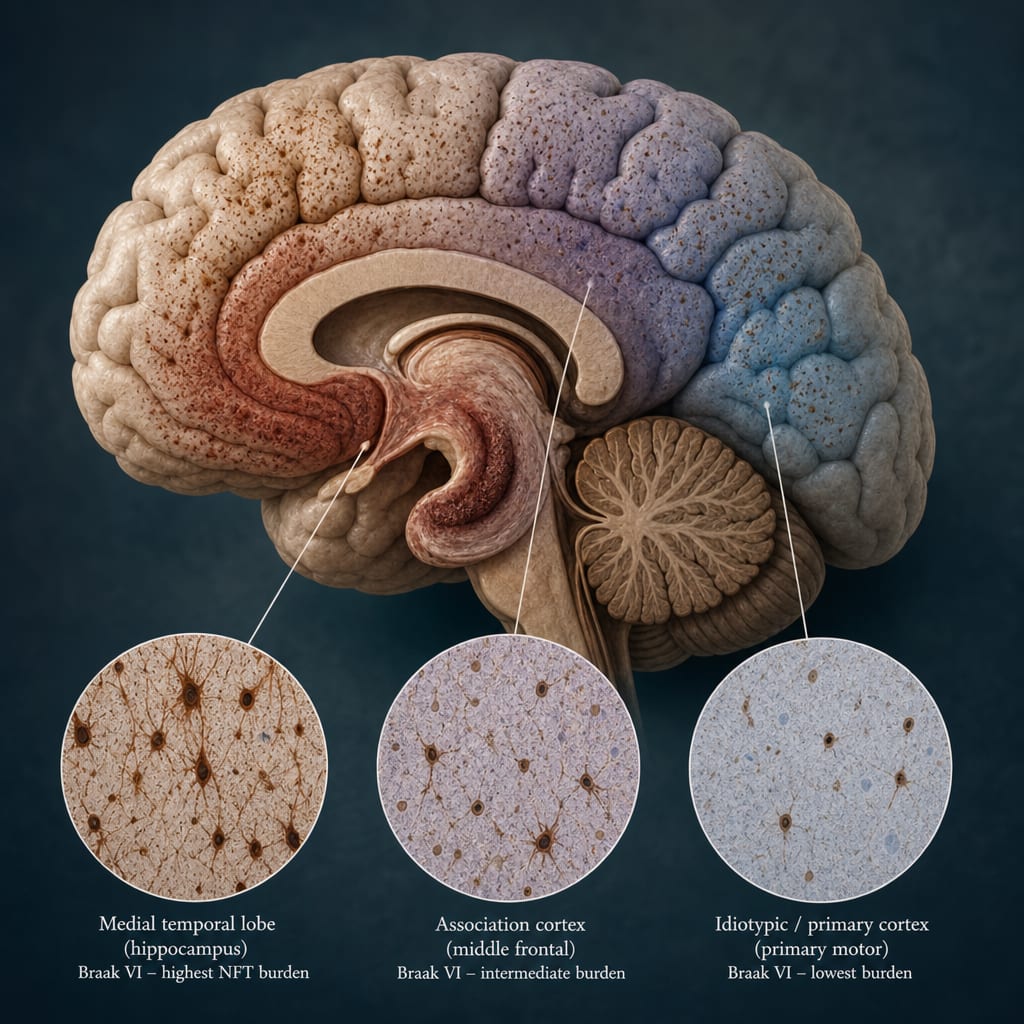
Elevated plasma phospho-tau217 indicating amyloid-dependent tau pathology; neurofilament light and glial fibrillary acidic protein as markers of neurodegeneration; brain volume reductions in frontal/cingulate cortex and hippocampus
Target Population
Mid-life elite retired rugby players with significant repetitive head impact exposure
Care Setting
Specialized neurological and neuropsychological assessment clinics with advanced biomarker and imaging capabilities
Key Highlights
Former elite rugby players show elevated plasma phospho-tau217 and neurofilament light compared to controls, indicating neurodegenerative changes.
Reduced frontal/cingulate cortex and hippocampal volumes correlate with biomarker elevations and longer rugby career duration.
12% of ex-players met criteria for traumatic encephalopathy syndrome without dementia; elevated phospho-tau217 associated with this syndrome.
Guideline-Based Recommendations
Diagnosis
Use ultrasensitive plasma biomarkers (phospho-tau217, neurofilament light, amyloid-β42/40) for early detection of neurodegenerative pathology in individuals with history of repetitive head impacts.
Perform 3T MRI with voxel-based morphometry and diffusion tensor imaging to assess brain volume changes and white matter integrity.
Apply National Institute for Neurological Disorders and Stroke criteria to ascertain traumatic encephalopathy syndrome.
Management
Monitor neuropsychiatric symptoms such as anxiety and depression in individuals with elevated neurofilament light.
Consider longitudinal biomarker and imaging assessments to track progression in at-risk former athletes.
Monitoring & Follow-up
Regular neuropsychological assessments to detect cognitive and psychiatric changes in mid-life former rugby players.
Serial plasma biomarker measurements to identify early neurodegenerative changes before clinical dementia onset.
Risks
Repetitive head impacts and concussion exposure increase risk of neurodegenerative disease including chronic traumatic encephalopathy and Alzheimer's disease-related pathology.
Longer career duration correlates with greater brain volume loss and biomarker abnormalities.
Patient & Prescribing Data
Mid-life former elite rugby players with history of repetitive head impacts
No dementia was observed despite biomarker abnormalities; management focuses on early detection, symptom monitoring, and supportive care rather than disease-modifying treatments at this stage.
Clinical Best Practices
Incorporate plasma biomarker testing (phospho-tau217, neurofilament light) alongside neuroimaging for comprehensive evaluation of former contact sport athletes.
Use age- and sex-matched controls and Alzheimer's disease cohorts to contextualize biomarker results.
Assess neuropsychiatric symptoms in conjunction with biomarker elevations to guide holistic patient care.
by Neil S N Graham, Karl A Zimmerman, Jessica Hain, Erin Rooney, Ying Lee, Martina Del Giovane, Thomas Parker, Mathew G Wilson, Paresh Malhotra, Michael C B David, Magdalena Kolanko, Maneesh Patel, Elena Veleva, Owen Swann, Amanda Heslegrave, Henrik Zetterberg, Daniel Friedland, Richard Sylvester, David J Sharp