Influencing factors of peripheral blood indicators on 30-day mortality risk in children with hemophagocytic lymphohistiocytosis based on weighted quantile sum regression: a single-center retrospective cohort study - Scorecard - MDSpire
Advertisement
Influencing factors of peripheral blood indicators on 30-day mortality risk in children with hemophagocytic lymphohistiocytosis based on weighted quantile sum regression: a single-center retrospective cohort study
Clinical Scorecard: Factors Affecting Peripheral Blood Metrics and Their Impact on 30-Day Mortality in Pediatric Hemophagocytic Lymphohistiocytosis: Insights from a Single-Center Retrospective Cohort Analysis Using Weighted Quantile Sum Regression
At a Glance
Category
Detail
Condition
Hemophagocytic lymphohistiocytosis (HLH)
Key Mechanisms
Immune dysregulation leading to overactivation of macrophages and cytokine storm.
Target Population
Pediatric patients diagnosed with HLH
Care Setting
Retrospective cohort analysis in a clinical setting
Key Highlights
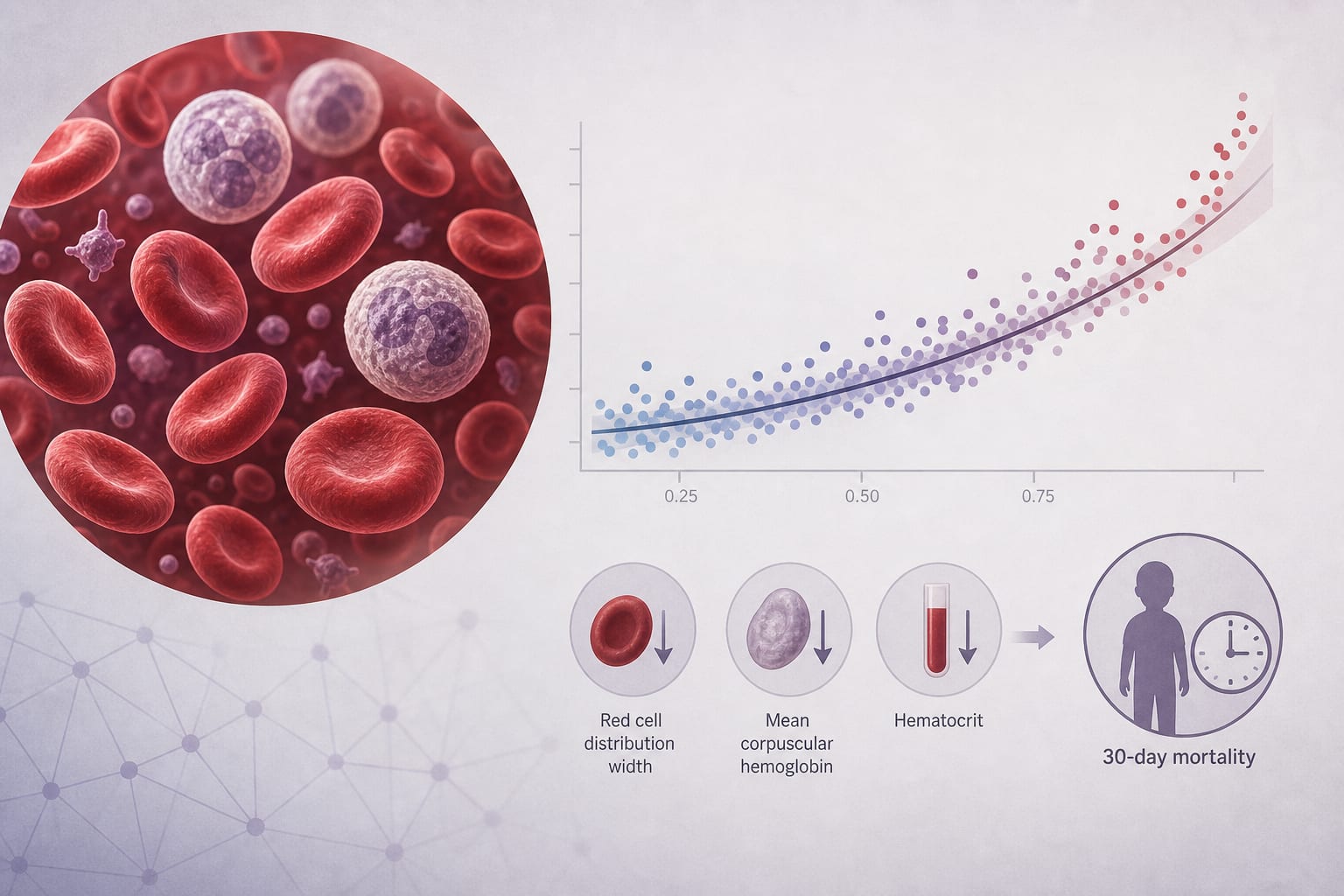
Significant association of RDW, MCH, HCT, and Hb with early mortality risk.
WQS regression model indicated a protective effect of improved peripheral blood parameters.
MCH and HCT were identified as core parameters with the highest predictive weights.
Combined predictive model showed improved efficacy with an AUC of 0.728.
DCA confirmed clinical net benefit of the combined model over single parameters.
Guideline-Based Recommendations
Diagnosis
Utilize peripheral blood parameters for early identification of mortality risk.
Management
Consider the joint effects of peripheral blood metrics in treatment planning.
Monitoring & Follow-up
Regularly assess RDW, MCH, HCT, and Hb levels in pediatric HLH patients.
Risks
Monitor for severe coagulopathy, CNS involvement, and refractory infections.
Patient & Prescribing Data
133 pediatric HLH patients
Early identification of high-risk patients through peripheral blood metrics.
Clinical Best Practices
Incorporate WQS regression for evaluating joint effects of clinical variables.
Focus on MCH and HCT as key indicators in pediatric HLH management.