Clinical phenotypes and genetic analysis of 30 children with Gitelman syndrome - Scorecard - MDSpire

Clinical phenotypes and genetic analysis of 30 children with Gitelman syndrome

  • By

  • Wenyan Wang

  • Fei Zhao

  • Guixia Ding

  • Songming Huang

  • Xueqin Cheng

  • June 23, 2026

  • 0 min

Share

Clinical Scorecard: Genetic and Clinical Characterization of 30 Pediatric Cases with Gitelman Syndrome

At a Glance

CategoryDetail
ConditionGitelman Syndrome
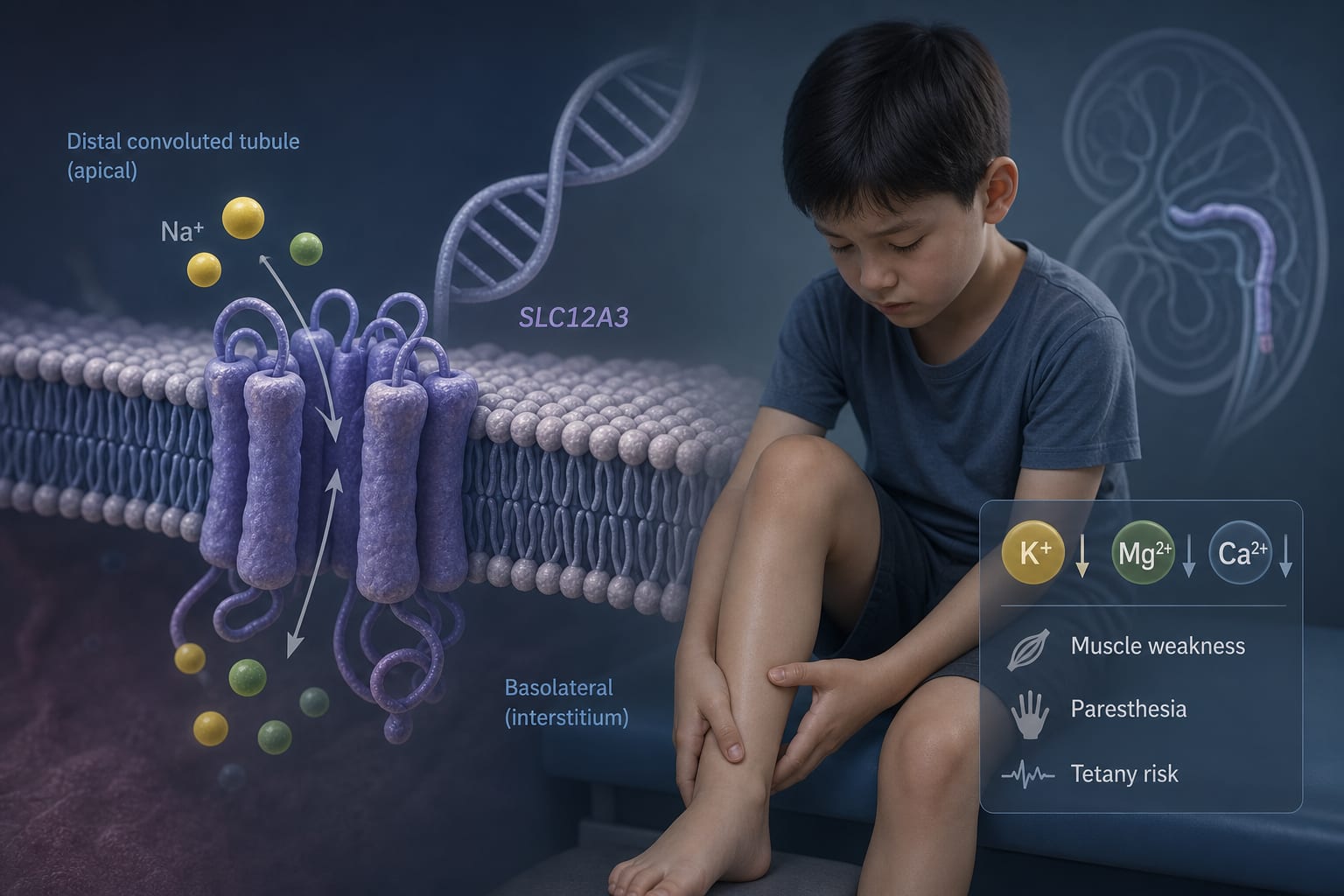
Key MechanismsAutosomal recessive salt-losing tubulopathy caused by mutations in the SLC12A3 gene.
Target PopulationPediatric patients with genetically confirmed Gitelman syndrome.
Care SettingChildren's Hospital of Nanjing Medical University

Key Highlights

  • Mean onset age of 7.9 years with significant clinical heterogeneity.
  • Common symptoms include muscle weakness (50%) and limb numbness (40%).
  • All patients presented with hypokalemia; 90% had hypomagnesemia.
  • Severe hypokalemia (<2.5 mmol/L) linked to tetany and dyslipidemia.
  • Identified 55 SLC12A3 variants, including 6 novel mutations.

Guideline-Based Recommendations

Diagnosis

  • Clinical symptoms and biochemical indicators consistent with pediatric GS.
  • Genetic testing for pathogenic variants in the SLC12A3 gene.

Management

  • Early screening and long-term follow-up are essential for optimal management.

Monitoring & Follow-up

  • Regular monitoring of serum potassium and magnesium levels.

Risks

  • Chronic electrolyte disturbances can lead to growth retardation and other complications.

Patient & Prescribing Data

Pediatric patients with Gitelman syndrome.

Management strategies should be individualized based on clinical presentation and genetic findings.

Clinical Best Practices

  • Consider genotype-phenotype correlations in management.
  • Address potential long-term complications associated with electrolyte imbalances.

Related Resources & Content

Original Source(s)

Related Content