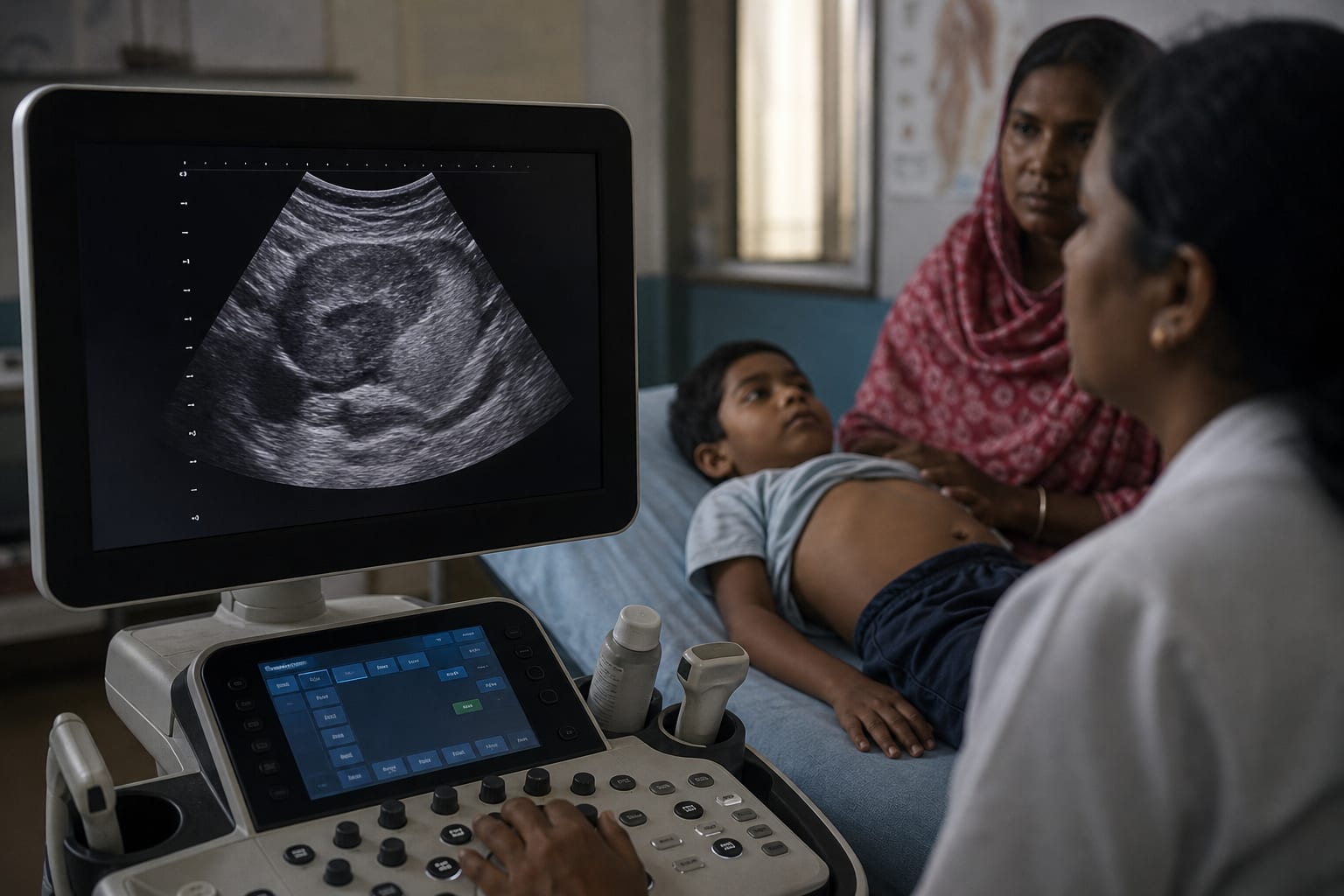
Diagnostic approaches and outcomes for paediatric abdominal tuberculosis in a high-burden setting: findings from a prospective cohort study
-
By
-
Nadira Musabbir
-
Fahmida Begum
-
Md Wahiduzzaman Mazumder
-
Md Rukunuzzaman
-
Subarna Rani Das
-
November 17, 2026
Clinical Scorecard: Diagnostic approaches and outcomes for paediatric abdominal tuberculosis in a high-burden setting
At a Glance
Category | Detail |
|---|---|
Condition | Paediatric abdominal tuberculosis, including intestinal, extraintestinal and mixed disease |
Key Mechanisms | Diagnosis integrates clinical assessment with imaging, microbiology, histopathology, biochemical testing and, in some cases, response to anti-tubercular therapy; diagnostic yield varies by anatomical subtype. |
Target Population | Children evaluated for suspected abdominal TB at a tertiary paediatric referral centre in Dhaka, Bangladesh |
Care Setting | Prospective cohort at a tertiary paediatric referral centre in a TB-endemic setting, with one-year follow-up |
Key Highlights
Of 80 children enrolled with suspected abdominal TB, 60 met the study diagnostic criteria.
Intestinal TB was identified in 35 children (58.3%), extraintestinal TB in 17 (28.3%) and mixed TB in 8 (13.3%).
Concomitant pulmonary TB was present in 9 children (15%).
All children received six months of anti-tubercular therapy; complete treatment response occurred in 59 (98.3%).
Drug-induced hepatitis occurred in 5 children (8.3%); 1 child (1.7%) died after surgically managed intestinal perforation.
Guideline-Based Recommendations
Diagnosis
The study defined diagnosis as compatible clinical features plus supportive colonoscopic or imaging findings or a positive Mantoux test, together with microbiological, histological, biochemical evidence, or therapeutic response to anti-tubercular therapy.
Ascitic fluid ADA >39 IU/L was used as biochemical support in the study’s diagnostic criteria.
Diagnostic modalities varied by subtype: biochemical confirmation was confined to peritoneal TB, while mixed TB commonly had combined microbiological and histological confirmation.
Management
All included patients received anti-tubercular therapy for six months.
The authors state that therapeutic clinical response may be considered as part of diagnostic assessment.
Monitoring & Follow-up
All 60 children completed one-year follow-up.
Drug-induced hepatitis was reported in 5 children (8.3%).
Risks
Clinical manifestations were non-specific, and the authors describe poor sensitivity of several available tests as a diagnostic challenge.
Microbiological confirmation alone was limited; the authors suggest this may relate to paediatric abdominal TB being paucibacillary.
One child died after surgically managed intestinal perforation.
Patient & Prescribing Data
The cohort included 60 children diagnosed with abdominal TB at a tertiary paediatric referral centre in Dhaka, Bangladesh; 35 had intestinal, 17 extraintestinal and 8 mixed TB.
All patients received six months of anti-tubercular therapy. Complete treatment response was recorded in 59 (98.3%); drug-induced hepatitis occurred in 5 (8.3%).
Clinical Best Practices
The authors conclude that early recognition in TB-endemic settings requires a high index of suspicion, multiple complementary diagnostic assessments, and consideration of therapeutic clinical response.
In this cohort, diagnostic approaches and yields differed by anatomical subtype.
To assess concomitant pulmonary TB, chest radiography was performed for every child; sputum analysis and chest CT were undertaken in selected cases.
Related Resources & Content
WHO, WHO consolidated guidelines on tuberculosis: module 3: diagnosis, 2nd ed., 2026
Systematic review authors, Tropical Medicine & International Health, 2026 — A systematic review and meta-analysis of the diagnostic accuracy of ultrasound in the diagnosis of paediatric tuberculosis
Study authors, Surgical Endoscopy, 2022 — Utilizing Mini-Laparoscopy for Diagnosing Abdominal Tuberculosis: Insights from a Retrospective Analysis of 29 Cases
Open Forum Infectious Diseases — Evaluating the Efficacy of Tongue Swabs for Diagnosing Tuberculosis in Hospitalized Children Aged Under 5
Open Forum Infectious Diseases — Assessment of Stool Sample Efficacy for Diagnosing Pediatric Pulmonary Tuberculosis in Standard Clinical Practice: A Cohort Analysis from Pakistan
Infection — Variability in Clinical Presentation and Treatment Outcomes of Extrapulmonary Tuberculosis in a Low-Incidence Area: Findings from a Prospective Cohort Analysis
WHO consolidated guidelines on tuberculosis: module 3: diagnosis, 2nd ed.
A systematic review and meta-analysis of the diagnostic accuracy of ultrasound in the diagnosis of paediatric tuberculosis
WHO consolidated guidelines on tuberculosis: module 3: diagnosis, 2nd ed.
A systematic review and meta-analysis of the diagnostic accuracy of ultrasound in the diagnosis of paediatric tuberculosis
A review of tuberculosis diagnostic guidelines: identification of areas of consensus and divergence to support diagnostic access decision-making
Based on findings from:
Unravelling paediatric abdominal tuberculosis in a tuberculosis endemic country: diagnostic pathways and outcomes from a prospective cohort study
Nadira Musabbir, Fahmida Begum, Md Wahiduzzaman Mazumder, Md Rukunuzzaman, Subarna Rani Das. Bmj Paediatrics Open, 2026.
https://bmjpaedsopen.bmj.com/content/10/1/e005238
This content is an AI-generated, fully rewritten summary based on a published scholarly article. It does not reproduce the original text and is not a substitute for the original publication. Readers are encouraged to consult the source for full context, data, and methodology.