Clinical Scorecard: Management Strategies for High-Grade Astrocytoma Exhibiting Piloid Characteristics: A Case Study
At a Glance
Category
Detail
Condition
High-Grade Astrocytoma with Piloid Features (HGAP)
Key Mechanisms
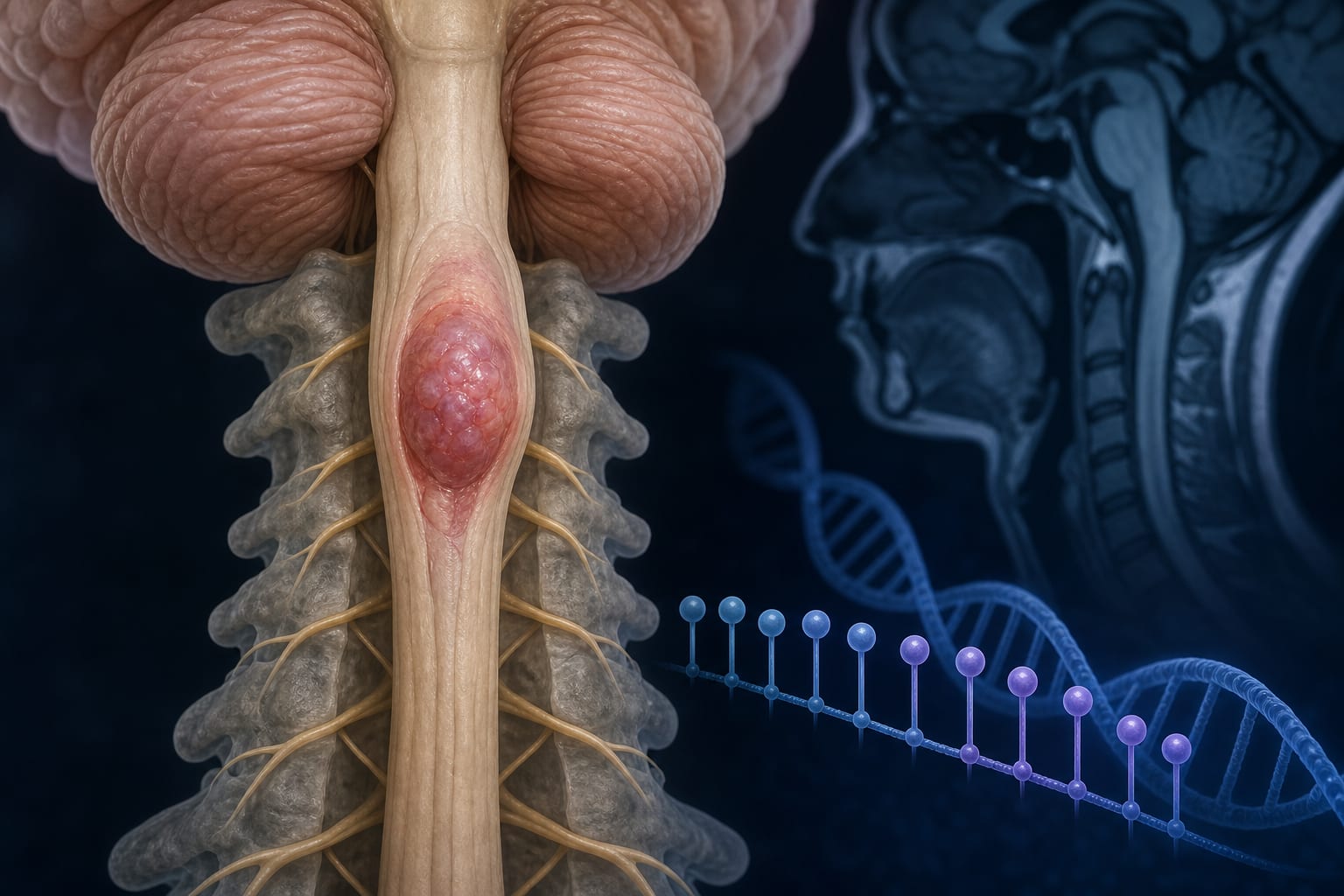
Distinct tumor DNA methylation profiling characteristics; associated with specific genetic alterations such as homozygous deletion of CDKN2A/B and KIAA1549-BRAF gene fusion.
Target Population
Adults, predominantly aged 35-88 years.
Care Setting
Oncology and neurosurgery departments.
Key Highlights
HGAP is a rare and aggressive brain tumor classified in the 2021 WHO Classification.
Commonly arises in the posterior cranial fossa, particularly the cerebellum and brainstem.
Histopathological features include significant nuclear atypia and microvascular proliferation.
Treatment typically involves surgical resection followed by radiotherapy and temozolomide chemotherapy.
Clinical manifestations include headache, dizziness, and sensory disturbances.
Guideline-Based Recommendations
Diagnosis
Diagnosis confirmed through histopathological analysis and DNA methylation profiling.
Management
Surgical resection followed by adjuvant radiotherapy and concomitant temozolomide chemotherapy.
Monitoring & Follow-up
Follow-up MRI to assess for radiological progression or reduction in tumor enhancement.
Risks
Potential for radiological progression in the early postoperative period.
Patient & Prescribing Data
Adults with high-grade astrocytoma with piloid features.
Concurrent chemotherapy with temozolomide 75 mg/m² per day during radiotherapy.
Clinical Best Practices
Utilize three-dimensional intensity-modulated radiotherapy (3D-IMRT) for treatment planning.
Monitor Karnofsky Performance Status (KPS) for assessing patient functional status post-treatment.
Conduct regular imaging follow-ups to evaluate treatment response.