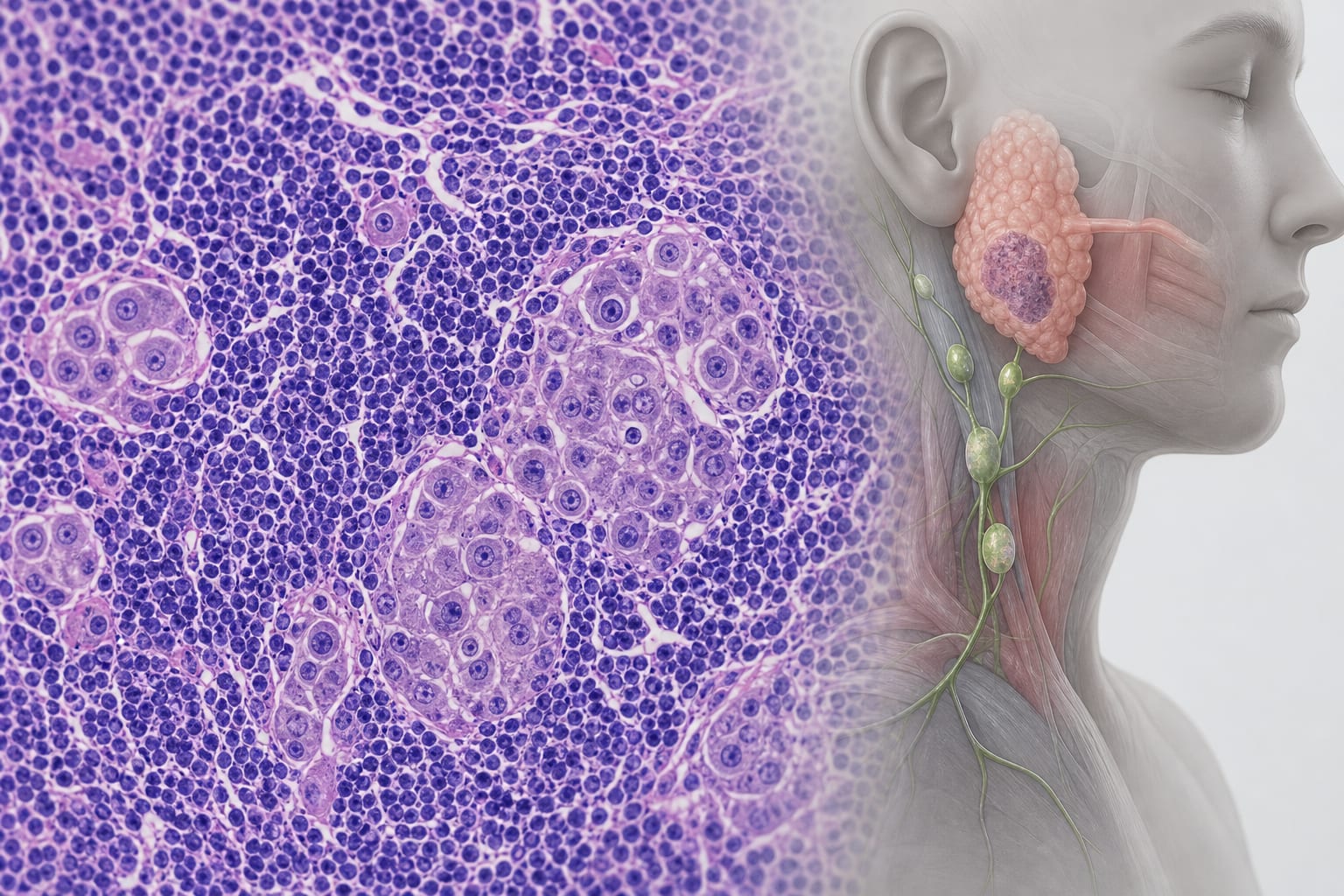
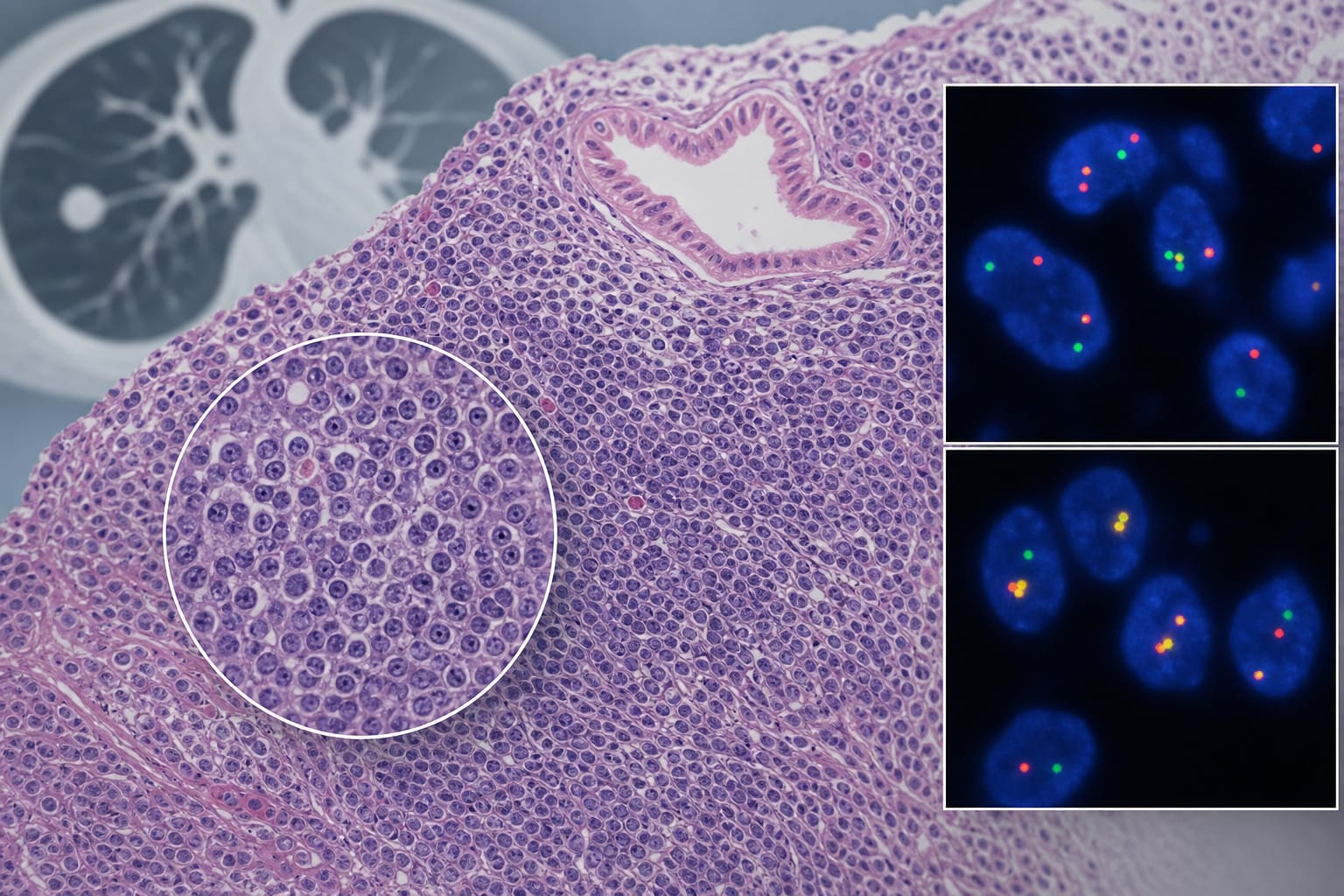
Case Report: Epidemiology, clinical features and progress in disease management for lymphoepithelial carcinoma of salivary glands: report of 3 cases
By
Shunyi Huang
Cenwen Liu
Xueying Zeng
Zihan Huang
Feng Lin
Yongyuan Chen
Guanxiang Zhuo
Jiahui Lin
Dawei Lin
Qinqin Chen
Xinxin Chen
Yunyun Mei
Qing Guan
July 17, 2026
Clinical Scorecard: Clinical Insights and Management Advances in Lymphoepithelial Carcinoma of Salivary Glands: A Report on Three Cases
At a Glance
Category Detail
Condition Lymphoepithelial carcinoma of salivary glands Key Mechanisms Associated with Epstein-Barr virus (EBV); presents as a malignant tumor in salivary glands. Target Population Patients diagnosed with lymphoepithelial carcinoma of salivary glands. Care Setting Clinical management of rare malignant tumors in head and neck oncology.
Key Highlights
Lymphoepithelial carcinoma accounts for approximately 0.4% of malignant salivary gland tumors. Surgical resection is the first-line treatment for early lesions. Combination therapy including surgery and radiotherapy is the current standard for advanced cases. Two out of three cases showed no recurrence after 15 months of follow-up. Targeted therapy and immunotherapy may be future treatment options. Guideline-Based Recommendations
Diagnosis
Preoperative fine-needle aspiration cytology (FNAC) is used for pathological diagnosis. Imaging techniques such as ultrasound, CT, MRI, and PET-CT assist in assessing tumor characteristics and metastasis. Management
Surgical resection is the primary treatment for early lymphoepithelial carcinoma. Patients with locally advanced or metastatic disease may require combined treatments including radiotherapy and chemotherapy. Monitoring & Follow-up
Follow-up imaging and clinical evaluations are necessary to monitor for recurrence or metastasis. Risks
Cervical lymph node metastasis is common in lymphoepithelial carcinoma cases. Patient & Prescribing Data
Patients with lymphoepithelial carcinoma of salivary glands, including those with metastasis.
Postoperative radiotherapy is often utilized, especially in cases with lymph node involvement.
Clinical Best Practices
Accurate diagnosis through FNAC and imaging is crucial for effective treatment planning. Individualized treatment plans should be developed based on the stage of the disease. Related Resources & Content