Clinical Case Study: Positioning of Thoracic Paravertebral Catheters for Continuous Postoperative Pain Relief
-
By
-
Marco Rispoli
-
Moana Rossella Nespoli
-
Dario Maria Mattiacci
-
Domenico Santonastaso
-
Maria Caterina Pace
-
Francesco Coppolino
-
June 12, 2026
Clinical Scorecard: Clinical Case Study: Positioning of Thoracic Paravertebral Catheters for Continuous Postoperative Pain Relief
At a Glance
| Category | Detail |
|---|
| Condition | Postoperative pain management in thoracic surgery |
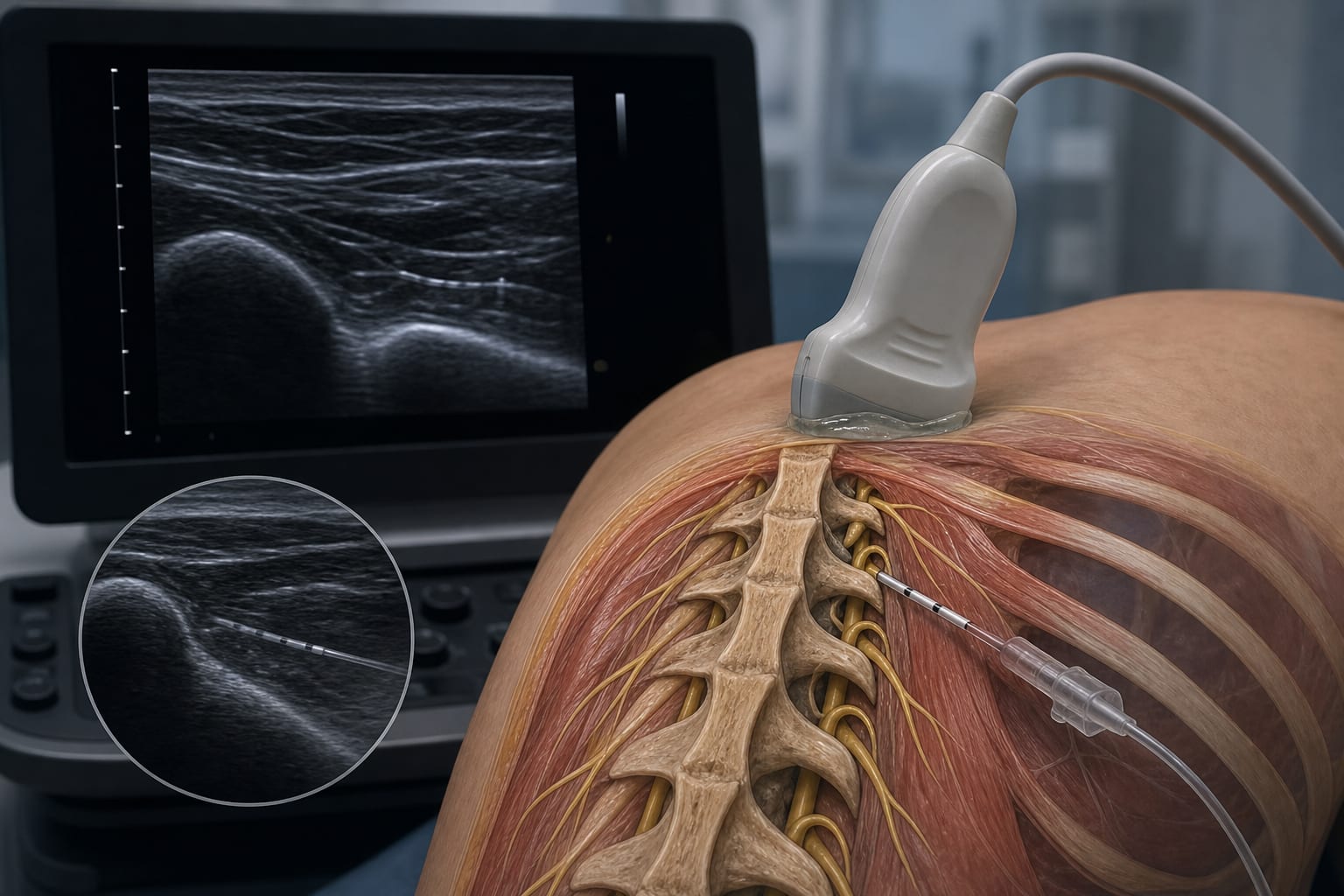
| Key Mechanisms | Ultrasound-guided thoracic paravertebral block (PVTB) for analgesia |
| Target Population | Patients undergoing video-assisted thoracic surgery (VATS) |
| Care Setting | Intraoperative and postoperative care |
Key Highlights
- Ultrasound-guided PVTB provides unilateral, segmental analgesia.
- Continuous PVTB is preferred for prolonged pain relief post-surgery.
- Saline 'bubble test' effectively confirms catheter positioning.
- Patient experienced effective pain relief with NRS scores below 3.
- Technique offers a reliable alternative to epidural analgesia.
Guideline-Based Recommendations
Diagnosis
- Assess patient history and physical examination for suitability.
Management
- Utilize ultrasound-guided techniques for catheter placement.
Monitoring & Follow-up
- Monitor pain levels and adjust analgesia as needed.
Risks
- Potential for catheter malpositioning, especially in obese patients.
Patient & Prescribing Data
50-year-old male with Class I obesity and COPD.
Continuous ropivacaine infusion provided effective postoperative pain control.
Clinical Best Practices
- Perform ultrasound-guided catheter placement for accuracy.
- Use hydrodissection and bubble test to confirm catheter position.
- Administer local anesthetic bolus to enhance analgesia.
Related Resources & Content