Exposure to multiple metallic elements and risk of thyroid tumors: insights from elemental profiling, diet, and molecular characteristics plasma levels of metallic elements - Scorecard - MDSpire

Exposure to multiple metallic elements and risk of thyroid tumors: insights from elemental profiling, diet, and molecular characteristics plasma levels of metallic elements

  • By

  • Chao Zhai

  • Jianyun Sheng

  • Liang Chen

  • Long Jia

  • Chaoyang Wang

  • Tuo Han

  • Peina He

  • Shushen Ji

  • Mengxin Zhao

  • Dong Xiao

  • June 18, 2026

  • 0 min

Share

Clinical Scorecard: Association Between Multiple Metallic Element Exposure and Thyroid Tumor Risk: Analysis of Elemental Profiling, Dietary Influences, and Plasma Molecular Characteristics

At a Glance

CategoryDetail
ConditionThyroid Tumors
Key MechanismsEnvironmental exposures to metallic elements and dietary influences on thyroid disease risk.
Target PopulationPatients with thyroid diseases, including papillary thyroid carcinoma and nodular goiter.
Care SettingHospital-based case-control study.

Key Highlights

  • Significant alterations in plasma elemental profiles in patients with thyroid disease compared to healthy controls.
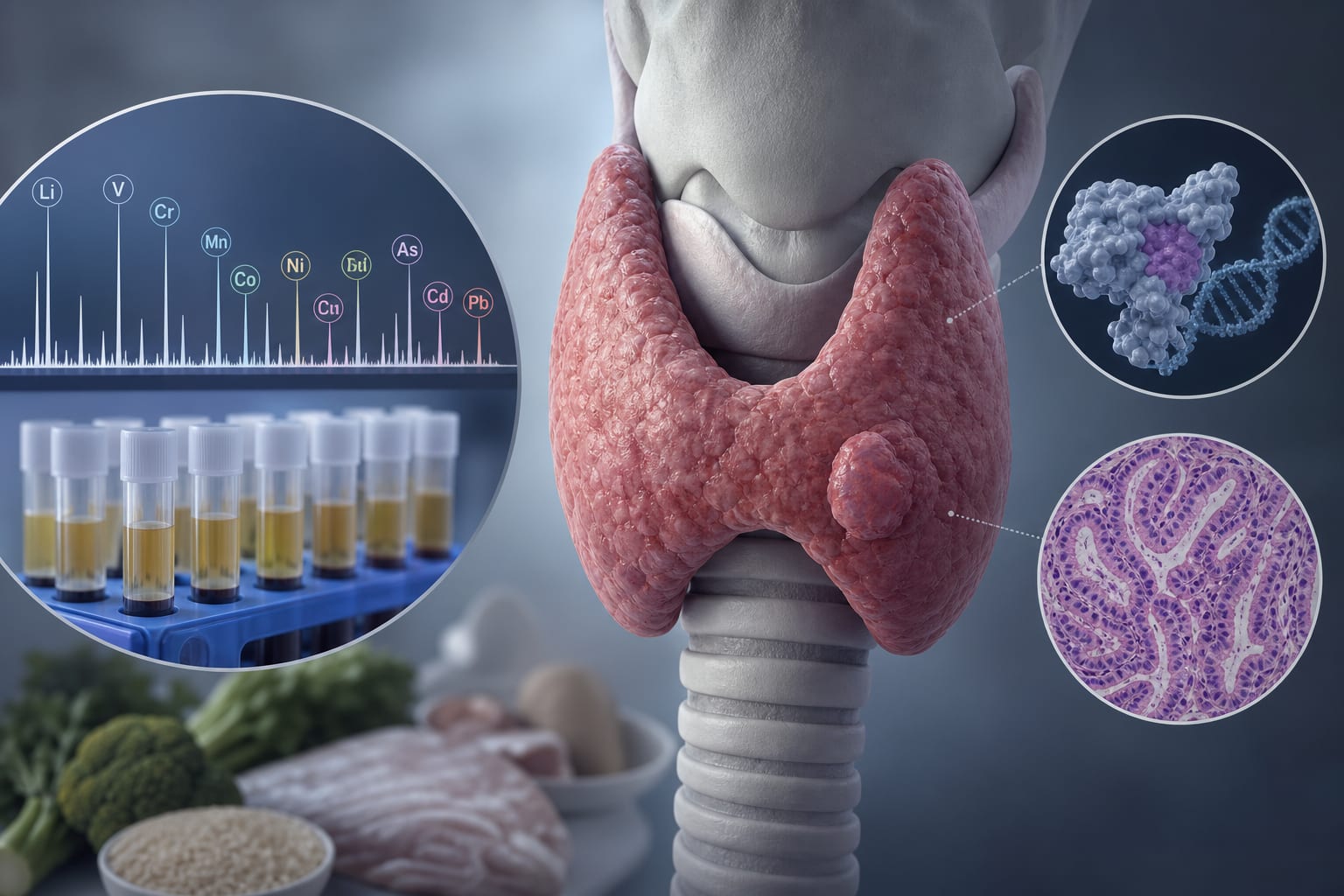
  • Dietary habits significantly influence plasma elemental concentrations.
  • BRAF V600E mutation identified in 51% of papillary thyroid carcinoma cases.
  • Specific elemental profiles correlated with abnormal thyroid hormone levels.
  • Need for systematic comparative investigations of metal profiles in benign and malignant thyroid disorders.

Guideline-Based Recommendations

Diagnosis

  • Utilize plasma metal levels for assessing thyroid disease risk.

Management

  • Consider dietary influences when evaluating patients with thyroid tumors.

Monitoring & Follow-up

  • Regularly assess plasma elemental concentrations in patients with thyroid disease.

Risks

  • Potential toxic effects of heavy metals on thyroid function.

Patient & Prescribing Data

Patients with papillary thyroid carcinoma and nodular goiter.

Dietary modifications may be necessary to manage elemental exposure.

Clinical Best Practices

  • Conduct comprehensive assessments of dietary habits in patients with thyroid disease.
  • Monitor for potential heavy metal exposure in patients with abnormal thyroid hormone levels.

Related Resources & Content

Original Source(s)

Related Content