Transfusion Strategies for Components and Whole Blood in Trauma Centers Across the United States
-
By
-
Pawan Acharya
-
Russell Griffin
-
Molly P. Jarman
-
Chandler A. Annesi
-
Jan O. Jansen
-
Jeffrey D. Kerby
-
John B. Holcomb
-
Zain G. Hashmi
-
September 4, 2026
Clinical Scorecard: Transfusion Strategies for Components and Whole Blood in Trauma Centers Across the United States
At a Glance
| Category | Detail |
|---|
| Condition | Hemorrhagic Shock |
| Key Mechanisms | Balanced component transfusion and whole blood resuscitation are central to managing severe bleeding. |
| Target Population | Trauma patients aged 16 years or older with evidence of hemorrhagic shock. |
| Care Setting | Trauma centers across the United States. |
Key Highlights
- Balanced component transfusion (1:1:1 ratio of plasma, platelets, and RBCs) is associated with better outcomes.
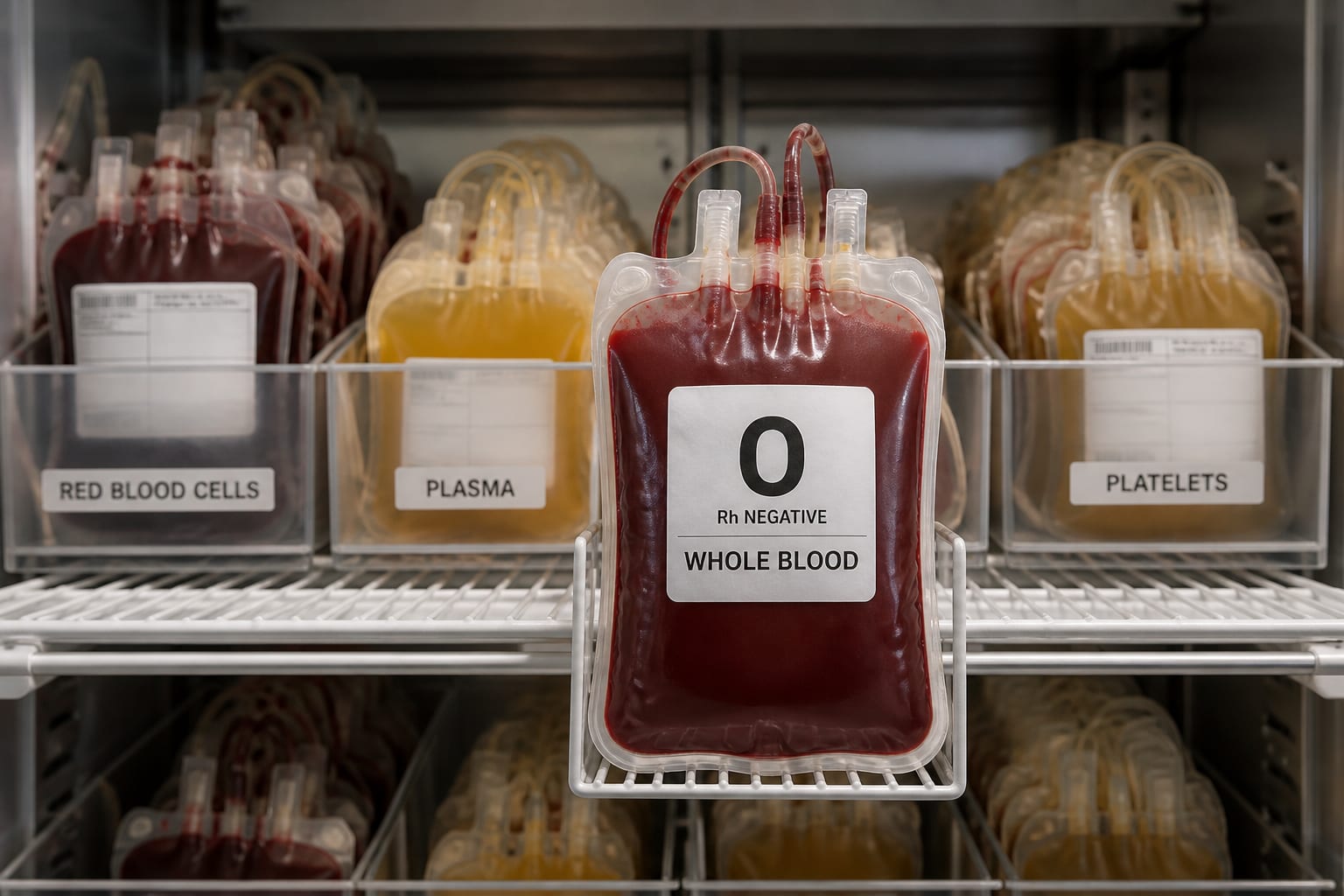
- Cold-stored, low-titer group O whole blood is gaining acceptance for initial resuscitation.
- National implementation of balanced transfusion and WB programs varies significantly among trauma centers.
- Eligibility for the study included trauma patients requiring at least 1000 mL of blood products within 4 hours of arrival.
- Hospital-level factors influence the adoption of transfusion practices.
Guideline-Based Recommendations
Diagnosis
- Hemorrhagic shock defined by specific physiological criteria including low systolic blood pressure and high heart rate.
Management
- Use balanced component transfusion or whole blood for resuscitation in trauma patients.
Monitoring & Follow-up
- Assess transfusion amounts and ratios within the first 4 hours of patient arrival.
Risks
- Variation in transfusion practices may affect trauma system performance and patient outcomes.
Patient & Prescribing Data
Trauma patients aged 16 years or older with signs of hemorrhagic shock.
At least 1000 mL of blood products should be administered within the first 4 hours.
Clinical Best Practices
- Implement balanced component transfusion strategies in trauma care.
- Consider whole blood as a viable option for initial resuscitation in hemorrhagic shock.
Related Resources & Content