Risk factors for postoperative adverse outcomes in patients with high anal fistula undergoing modified TROPIS procedure combined with Parks’ fistulotomy with seton: a retrospective study - Scorecard - MDSpire
Advertisement
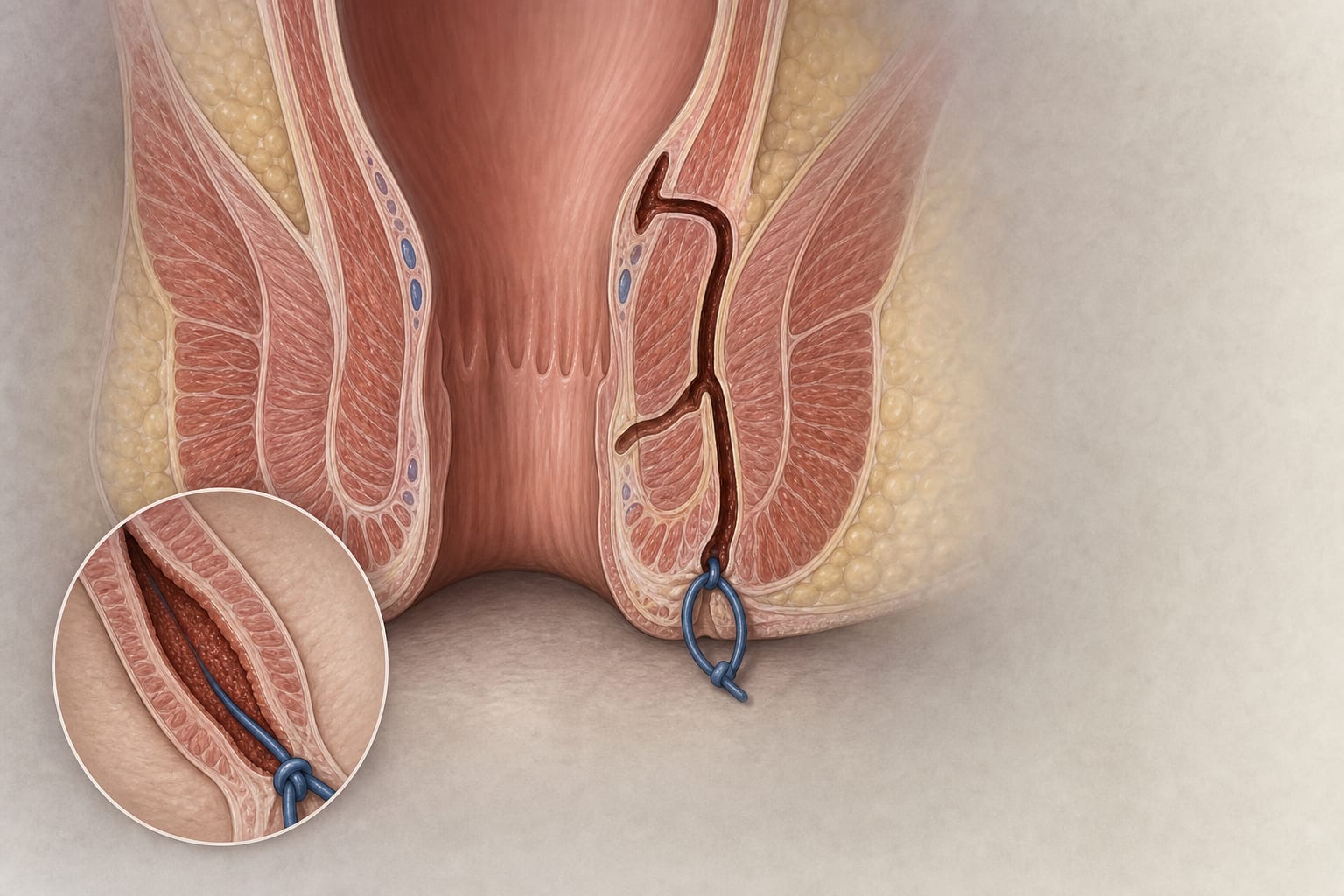
Identifying Risk Factors for Postoperative Complications in High Anal Fistula Patients Undergoing Modified TROPIS with Parks’ Fistulotomy and Seton: A Retrospective Analysis
Clinical Scorecard: Identifying Risk Factors for Postoperative Complications in High Anal Fistula Patients Undergoing Modified TROPIS with Parks’ Fistulotomy and Seton: A Retrospective Analysis
At a Glance
Category
Detail
Condition
Key Mechanisms
Modified TROPIS combined with Parks’ fistulotomy and seton drainage as per study findings.
Target Population
Care Setting
Key Highlights
Postoperative adverse outcomes occurred in 22.5% of patients.
Identified risk factors include diabetes mellitus, horseshoe extension, and operative time >60 min.
Recurrence rate was 8.3%, incontinence rate was 6.9%.
Model B demonstrated a C-statistic of 0.82.
31.2% of patients classified as high-risk with observed adverse outcome rates of 41.2%.
Guideline-Based Recommendations
Diagnosis
High anal fistula confirmed by preoperative MRI or EAUS as per study.
Management
Modified TROPIS with Parks’ fistulotomy and seton for surgical intervention as per study.
Monitoring & Follow-up
Follow-up for at least 6 months post-surgery to assess functional outcomes as per study.
Risks
Adverse outcomes include recurrence, anal incontinence, delayed wound healing, and major complications as per study.
Patient & Prescribing Data
218 consecutive patients aged ≥18 years
Surgical approach involves controlled intersphincteric dissection and gradual drainage
Clinical Best Practices
Consider risk factors such as diabetes and operative time when planning surgery as per study.
Utilize risk stratification to identify high-risk patients as per study.
Ensure comprehensive preoperative assessments including imaging as per study.
A large international randomized trial found fewer postoperative pulmonary complications with sugammadex vs. neostigmine following major abdominal or thoracic surgery, although the difference was driven primarily by reduced atelectasis.