Stimuli-responsive nanoplatforms for sonodynamic immunotherapy: opportunities and challenges in cancer treatment
-
By
-
Chunyu Zhang
-
Shu Bu
-
Xiaoyu Wang
-
Xin Shen
-
Yang Du
-
Jiangnan Yang
-
Zhiwei Miao
-
May 29, 2026
-
Clinical Scorecard: Nanoplatforms Responsive to Stimuli for Sonodynamic Immunotherapy: Advantages and Obstacles in Oncological Treatment
At a Glance
| Category | Detail |
|---|
| Condition | |
| Key Mechanisms | Ultrasound-activated Sonodynamic therapy (SDT) combined with stimulus-responsive nanodelivery systems to induce immunogenic cell death (ICD). |
| Target Population | |
| Care Setting | |
Key Highlights
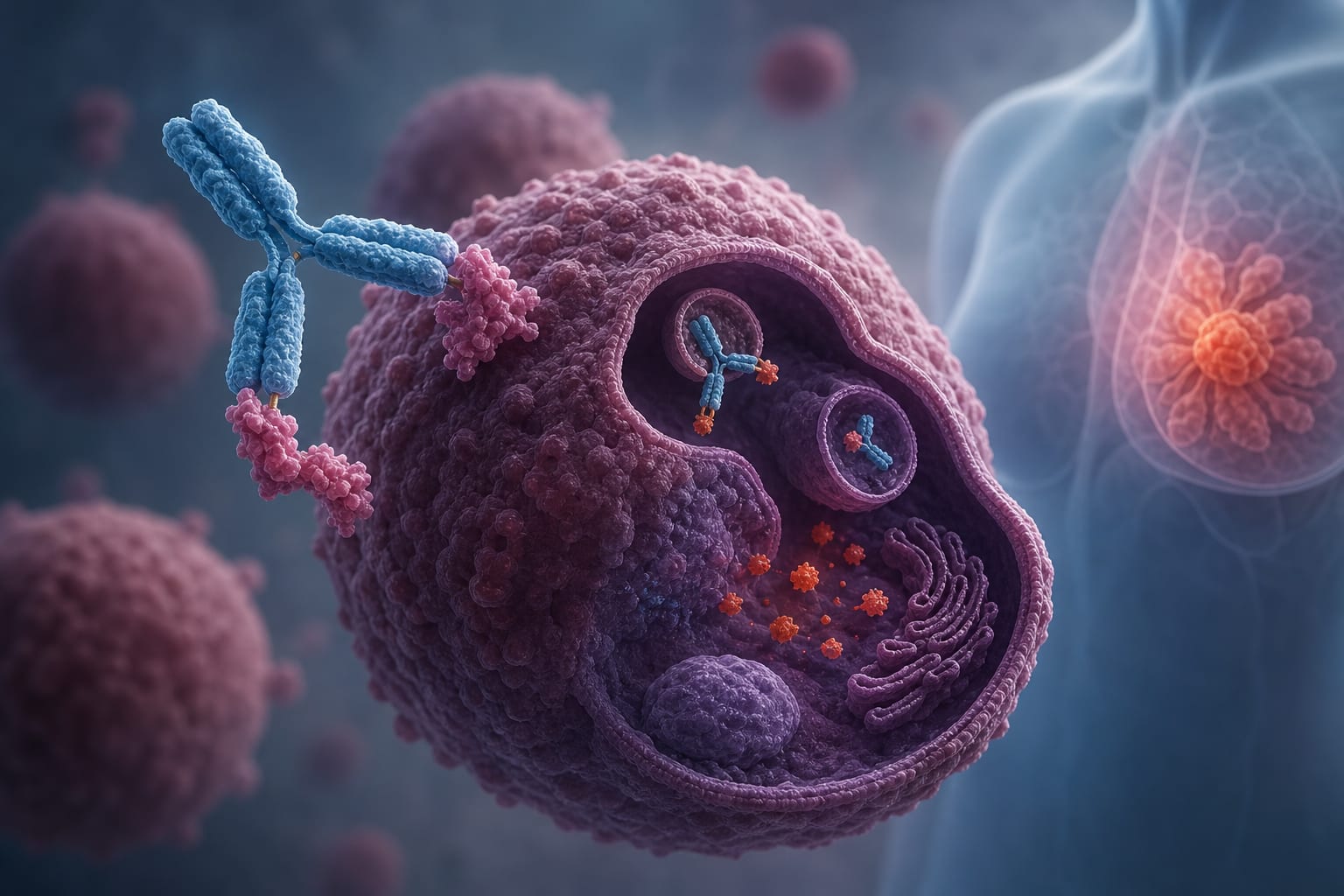
- SDT utilizes ultrasound to activate sonosensitizers, generating reactive oxygen species (ROS) for tumor cell destruction.
- Stimulus-responsive nanosonic sensitizers enable precise drug delivery and deep tumor penetration.
- Challenges include low ICD efficiency in hypoxic tumors and TME heterogeneity.
Guideline-Based Recommendations
Diagnosis
- Assess tumor microenvironment characteristics including pH, GSH levels, and hypoxia.
Management
- Utilize SDT in conjunction with ICB and other therapies.
Monitoring & Follow-up
- Monitor for immune-related adverse events (irAEs) and treatment efficacy.
Risks
- Potential for severe irAEs and treatment-related toxicity.
Patient & Prescribing Data
SDT enhances local tumor control and systemic immunity.
Clinical Best Practices
- Implement multimodal treatment strategies.
- Focus on patient-specific tumor characteristics.
Related Resources & Content