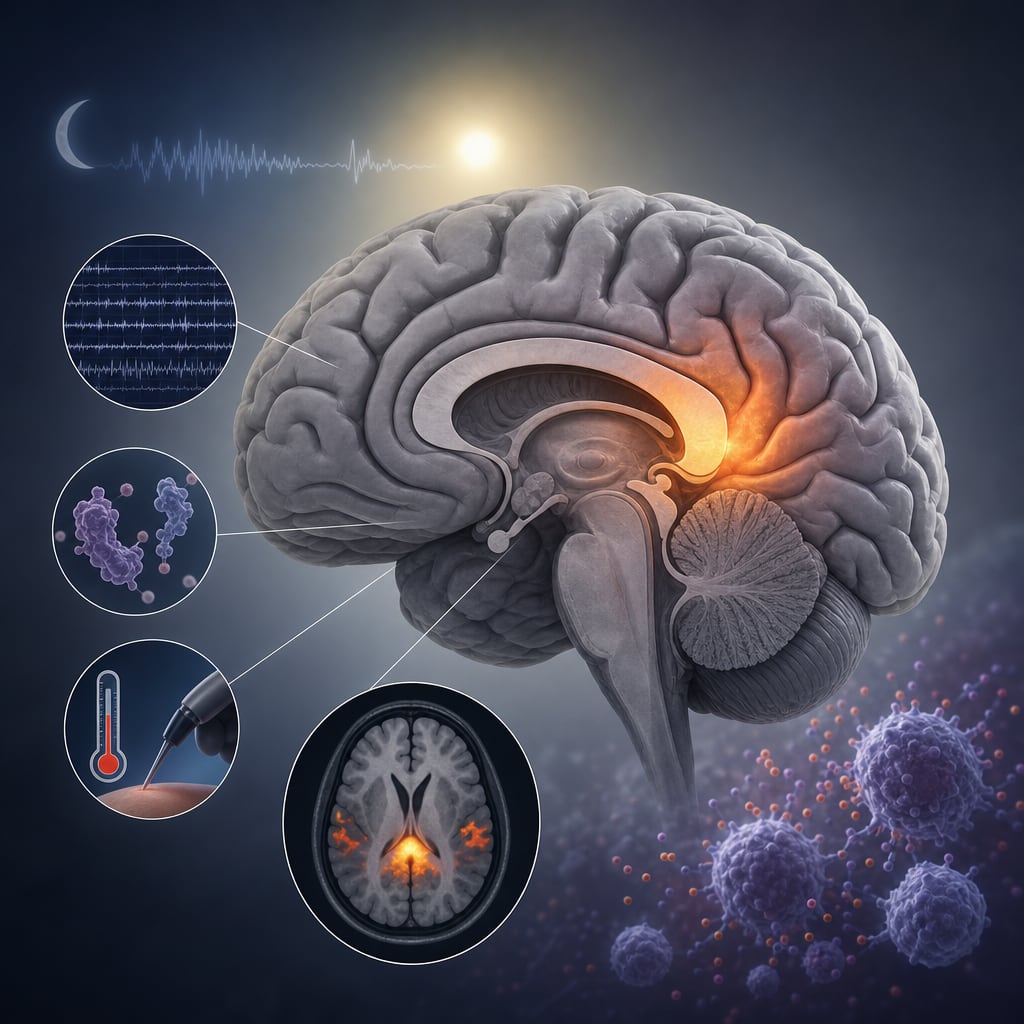
Clinical Scorecard: Hyperexcitability of the Precuneus Facilitates Inflammatory-Induced Pain Sensitivity After Sleep Disruption: A Multimodal Neuroimaging Investigation
At a Glance
Category
Detail
Condition
Pain hypersensitivity linked to sleep disturbance and inflammation
Key Mechanisms
Increased IL-6 levels and precuneus hyperactivity
Target Population
Individuals with chronic pain and sleep disturbances
Care Setting
Clinical and experimental research settings
Key Highlights
Forced awakening leads to decreased slow-wave sleep and increased pain sensitivity.
IL-6 levels correlate inversely with pain thresholds.
Precuneus hyperactivity mediates the relationship between inflammation and pain hypersensitivity.
Longitudinal data show that precuneus normalization is linked to improvements in pain and sleep quality.
Guideline-Based Recommendations
Diagnosis
Assess sleep quality and pain thresholds in patients with chronic pain.
Management
Consider interventions targeting sleep disturbances to alleviate pain.
Monitoring & Follow-up
Monitor inflammatory markers such as IL-6 in patients with sleep-related pain.
Risks
Increased pain sensitivity may arise from sleep disruption and elevated inflammatory responses.
Patient & Prescribing Data
Chronic pain sufferers with sleep disturbances
Addressing sleep quality may improve pain management outcomes.
Clinical Best Practices
Utilize multimodal assessments including neuroimaging and inflammatory profiling.
Implement strategies to improve sleep hygiene in chronic pain patients.