CLEAR report 1: a scoping review and meta-analysis for definitions, imaging metrics, and functional correlates of photoreceptor integrity in AMD - Scorecard - MDSpire
Advertisement
CLEAR report 1: a scoping review and meta-analysis for definitions, imaging metrics, and functional correlates of photoreceptor integrity in AMD
Clinical Scorecard: CLEAR Report 1: A Comprehensive Review and Meta-Analysis of Definitions, Imaging Metrics, and Functional Associations of Photoreceptor Integrity in Age-Related Macular Degeneration
At a Glance
Category
Detail
Condition
Age-Related Macular Degeneration (AMD)
Key Mechanisms
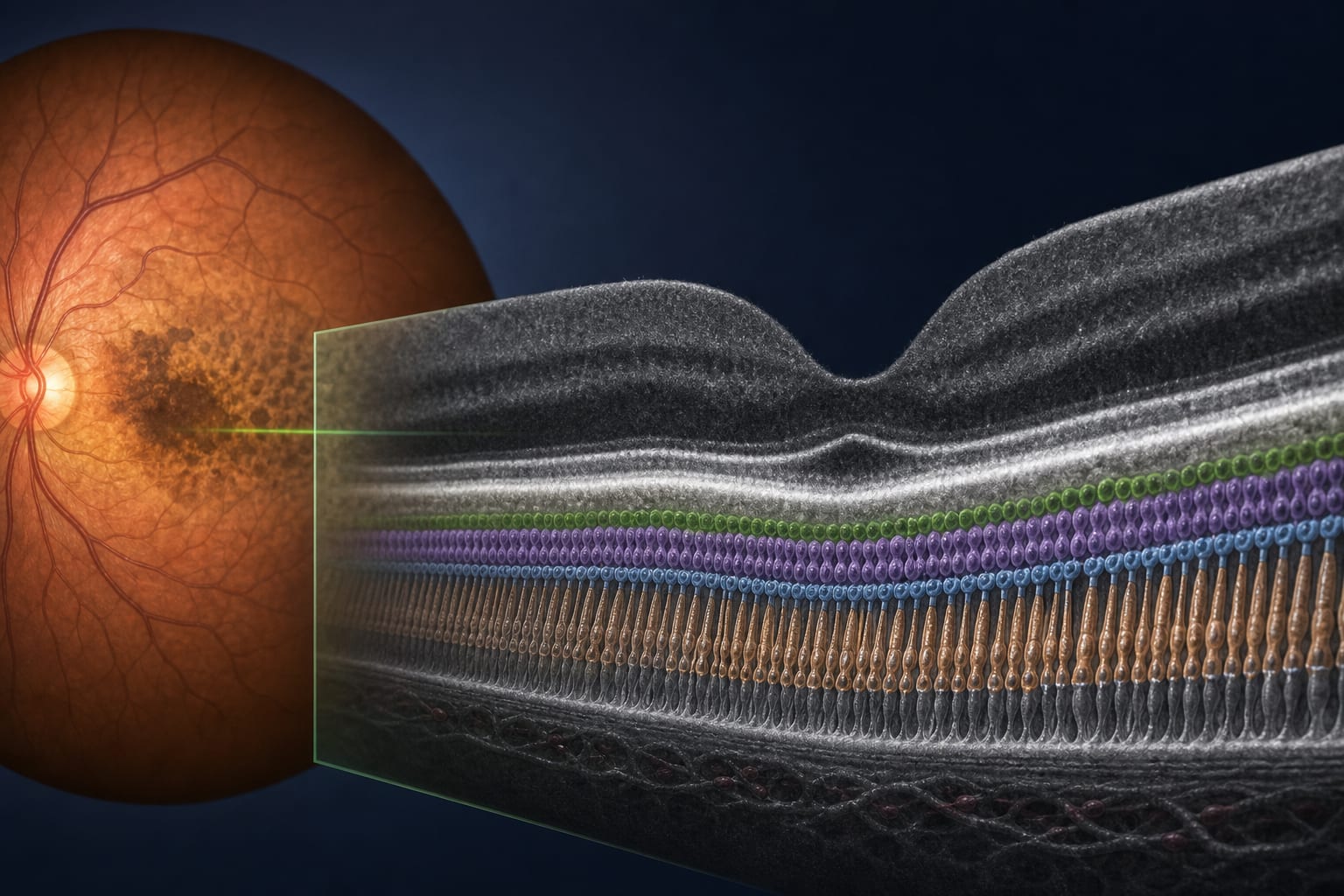
Photoreceptor degeneration, particularly involving the ellipsoid zone (EZ) and outer nuclear layer (ONL), is linked to functional impairment.
Target Population
Older adults with advanced age-related macular degeneration.
Care Setting
Clinical trials and regulatory evaluations involving OCT-derived photoreceptor biomarkers.
Key Highlights
OCT enables non-invasive quantification of photoreceptor integrity.
High reliability for EZ and ONL metrics when definitions and methods are consistent.
Moderate-to-strong correlations exist between photoreceptor loss and visual function.
Substantial heterogeneity in definitions and reporting complicates cross-study comparisons.
Consensus on boundary definitions and reporting standards is necessary for reproducibility.
Guideline-Based Recommendations
Diagnosis
Utilize OCT-derived photoreceptor biomarkers for assessing AMD.
Management
Adopt standardized definitions and reporting practices for photoreceptor metrics.
Monitoring & Follow-up
Implement structure-function analyses to track disease progression.
Risks
Inconsistent definitions may lead to misinterpretation of disease activity and treatment efficacy.
Patient & Prescribing Data
Patients with advanced AMD, including geographic atrophy and neovascular AMD.
Early intervention may be facilitated by identifying photoreceptor loss before complete atrophy.
Clinical Best Practices
Ensure clear definitions and consistent application of measurement protocols in clinical studies.
Utilize automated and deep learning methods for reproducible quantification in multicenter trials.
Incorporate structure-function correlations in clinical assessments of AMD.