A transfer learning-based multimodal model for early prediction of 90-day respiratory failure in dermatomyositis-associated interstitial lung disease - Scorecard - MDSpire

A transfer learning-based multimodal model for early prediction of 90-day respiratory failure in dermatomyositis-associated interstitial lung disease

  • By

  • Lihui Guo

  • Yaning Yao

  • Qirui Wu

  • Hui Wang

  • Caiyun Niu

  • Gang Wang

  • Fei Chen

  • July 16, 2026

Share

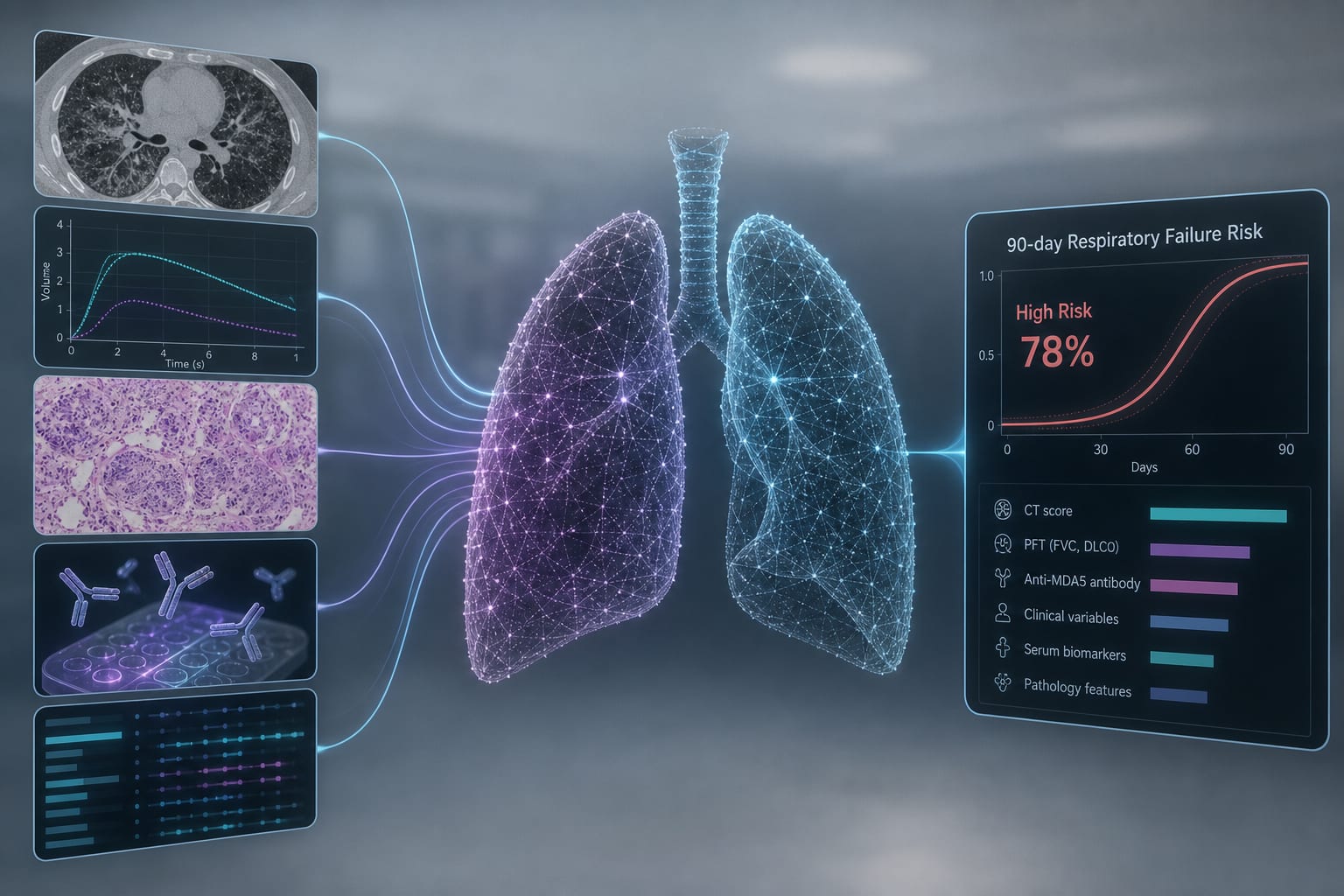
Clinical Scorecard: A multimodal model utilizing transfer learning for the early detection of 90-day respiratory failure in patients with interstitial lung disease linked to dermatomyositis
At a Glance

CategoryDetail
ConditionDermatomyositis-associated interstitial lung disease (DM-ILD)
Key MechanismsEarly identification of anti-MDA5 positivity and risk assessment based on admission data.
Target PopulationAdult patients with DM-ILD, particularly those at risk for respiratory failure.
Care SettingSingle-center retrospective study.

Key Highlights

  • Developed a multimodal model to predict 90-day respiratory failure in DM-ILD patients.
  • Model achieved an AUC of 0.967 and a PR-AUC of 0.879.
  • Key predictors included arthritis, pulmonary function indices, and latent CT features.

Guideline-Based Recommendations

Diagnosis

  • Diagnosis of DM-ILD confirmed based on clinical findings and HRCT features.

Management

  • Early management guided by clinical severity, especially when anti-MDA5 results are pending.

Monitoring & Follow-up

  • Monitor respiratory function and clinical status within the first 48 hours of admission.

Risks

  • High mortality rates in anti-MDA5 positive patients with rapidly progressive interstitial lung disease.

Patient & Prescribing Data

Adult patients admitted with DM-ILD.

Timely intervention is crucial for patients at risk of respiratory failure.

Clinical Best Practices

  • Utilize a multimodal approach for early risk stratification in DM-ILD.
  • Incorporate high-dimensional imaging features for improved prediction of respiratory outcomes.

Related Resources & Content

Original Source(s)

Related Content