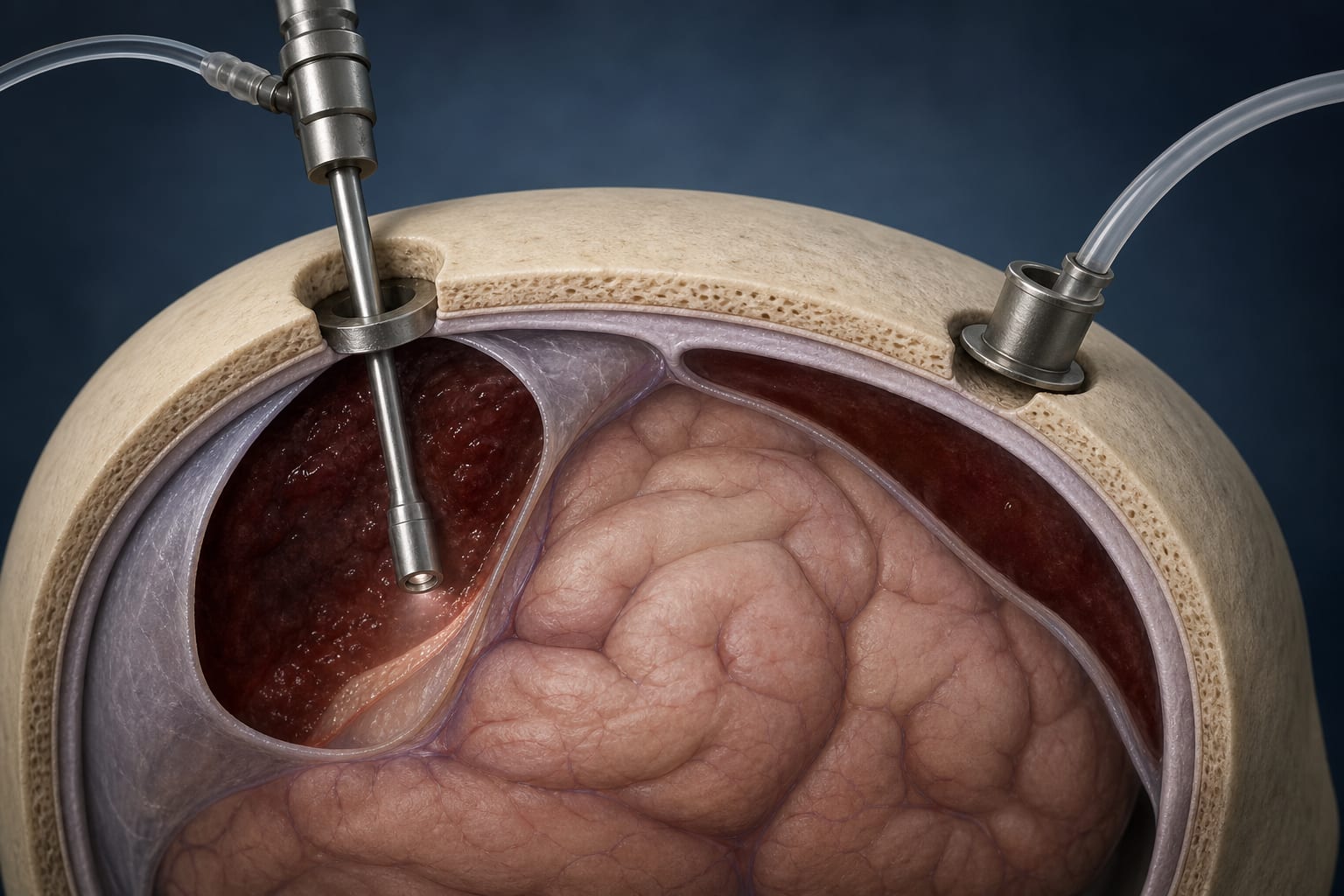
Clinical Scorecard: Bridging the Divide: Enhancing Brain Metastasis Resection Rates with Sodium Fluorescein Utilization
At a Glance
Category
Detail
Condition
Brain metastases (BM)
Key Mechanisms
Sodium fluorescein highlights disrupted blood–brain barrier in contrast-enhancing lesions to guide fluorescence-assisted surgical resection
Target Population
Patients undergoing surgical resection of brain metastases
Care Setting
Neurosurgical operating room with fluorescence-guided surgery capability
Key Highlights
Brain metastases are the most frequent intracranial tumors with significant impact on quality of life.
Sodium fluorescein facilitates visualization of tumor margins by staining areas of blood–brain barrier disruption, aiding extent of resection (EOR).
Complete tumor resection correlates with prolonged overall survival and improved neurological outcomes.
Guideline-Based Recommendations
Diagnosis
Use preoperative contrast-enhanced MRI to identify brain metastases and plan surgery.
Perform early postoperative MRI within 48 hours to assess extent of resection.
Management
Consider surgical resection especially for larger lesions with mass effect and limited number of brain metastases.
Utilize sodium fluorescein with a 560 nm filter during surgery to enhance tumor visualization and maximize resection.
Apply fluorescence-guided surgery adjunctively to improve extent of resection without increasing neurological damage.
Monitoring & Follow-up
Assess neurological status and Karnofsky Performance Score pre- and postoperatively.
Monitor for cerebral and systemic progression using follow-up imaging per RANO criteria.
Risks
Surgical resection is generally safe with low incidence of postoperative neurological decline.
No increase in postoperative neurological damage reported with sodium fluorescein use.
Patient & Prescribing Data
79 patients undergoing brain metastasis resection; median age 63 years; 67% received sodium fluorescein-guided surgery.
Sodium fluorescein use was associated with improved visualization of tumor margins, potentially increasing extent of resection and correlating with better postoperative outcomes.
Clinical Best Practices
Obtain informed consent specifically addressing the use of sodium fluorescein and fluorescence-guided surgery.
Use a surgical microscope equipped with a 560 nm filter to visualize fluorescein fluorescence intraoperatively.
Perform volumetric analysis of tumor pre- and postoperatively to objectively assess extent of resection.
Incorporate intraoperative tools such as monitoring, mapping, and stimulation alongside fluorescein to preserve neurological function.
Evaluate surgeon’s estimated extent of resection against early postoperative MRI to identify residual tumor.