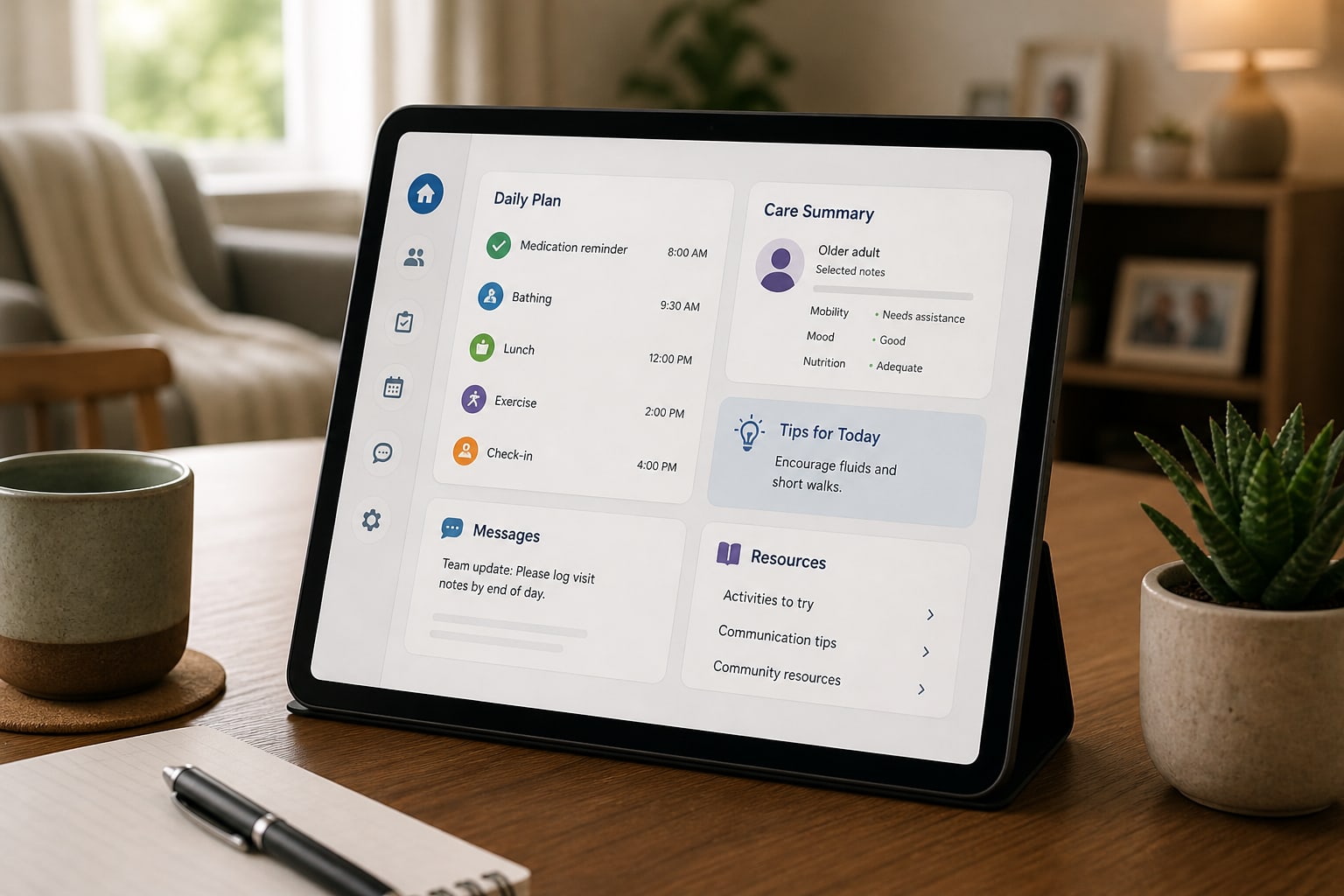
HHS Awards $2.25 Million to 19 Phase 1 Winners of Caregiver AI Challenge for Tools to Strengthen Care
-
By
-
Assistant Secretary for Public Affairs (ASPA)
-
November 18, 2026
Clinical Scorecard: HHS Announces 19 Phase 1 Winners of Caregiver AI Prize Challenge; Awardees Receive $2.25 Million Collectively
At a Glance
| Category | Detail |
|---|---|
| Condition | Caregiving needs among older adults and people with disabilities living at home or in their communities |
| Key Mechanisms | The challenge seeks practical SI tools to address everyday care needs, including reducing paperwork and scheduling demands and offering on-demand education and peer-support access. |
| Target Population | Family caregivers, direct care workers, home care agencies, older adults, and people with disabilities |
| Care Setting | Home and community care; Phase 2 teams will assess tools in real-world settings. |
Key Highlights
- HHS announced 19 Phase 1 winners, which collectively received $2.25 million; each winner received up to $100,000.
- The three-phase challenge has two tracks: supporting care at home or in the community, and improving workplace efficiency for the direct care workforce.
- Seven winners received special recognition for innovations supporting people with intellectual and developmental disabilities or dementia.
- Phase 1 winners automatically qualify to participate in Phase 2, which includes real-world assessment, testing-plan refinement, effectiveness measurement, and feedback-based improvement.
- The challenge seeks tools that are safe, affordable, accessible, privacy-protective, respectful of dignity and individual choice, and designed to preserve people’s control.
Guideline-Based Recommendations
Diagnosis
Management
- The challenge seeks practical tools to address everyday care needs, including reducing paperwork and scheduling demands and offering on-demand education and peer-support access.
- In Phase 2, teams will assess tools in real-world settings, refine testing plans, measure effectiveness, and use feedback from caregivers and people receiving care to improve the tools.
Monitoring & Follow-up
- Phase 2 includes real-world assessment and measurement of tool effectiveness.
Risks
- The challenge specifies that tools should protect privacy and respect dignity, individual choice, and people’s control.
Patient & Prescribing Data
Older adults and people with disabilities, including people with intellectual and developmental disabilities or dementia.
The article describes a technology prize challenge, not a clinical treatment or prescribing intervention. Tools are intended to support caregivers and care recipients in home and community settings.
Clinical Best Practices
Related Resources & Content
Based on findings from:
HHS Announces $2.25 Million for Phase 1 Winners of the Caregiver AI Prize Challenge: Smarter Tools, Stronger Care
Assistant Secretary for Public Affairs (ASPA). United States Department Of Health And Human Services, 2026.
https://www.hhs.gov/press-room/hhs-announces-caregiver-ai-prize-challenge-phase-one-winners.html
This content is an AI-generated, fully rewritten summary based on a published scholarly article. It does not reproduce the original text and is not a substitute for the original publication. Readers are encouraged to consult the source for full context, data, and methodology.