Lineage plasticity and immune invisibility in primary SCLC and LUAD-to-SCLC transformation: antigen presentation loss and therapeutic redirection - Scorecard - MDSpire
Conexiant’s news site is now MDSpire News. Learn more
Advertisement
Plasticity of Lineage and Immune Evasion in Primary SCLC and Transformation from LUAD to SCLC: Loss of Antigen Presentation and Shifts in Therapeutic Strategies
Clinical Scorecard: Plasticity of Lineage and Immune Evasion in Primary SCLC and Transformation from LUAD to SCLC: Loss of Antigen Presentation and Shifts in Therapeutic Strategies
At a Glance
Category
Detail
Condition
Small Cell Lung Cancer (SCLC)
Key Mechanisms
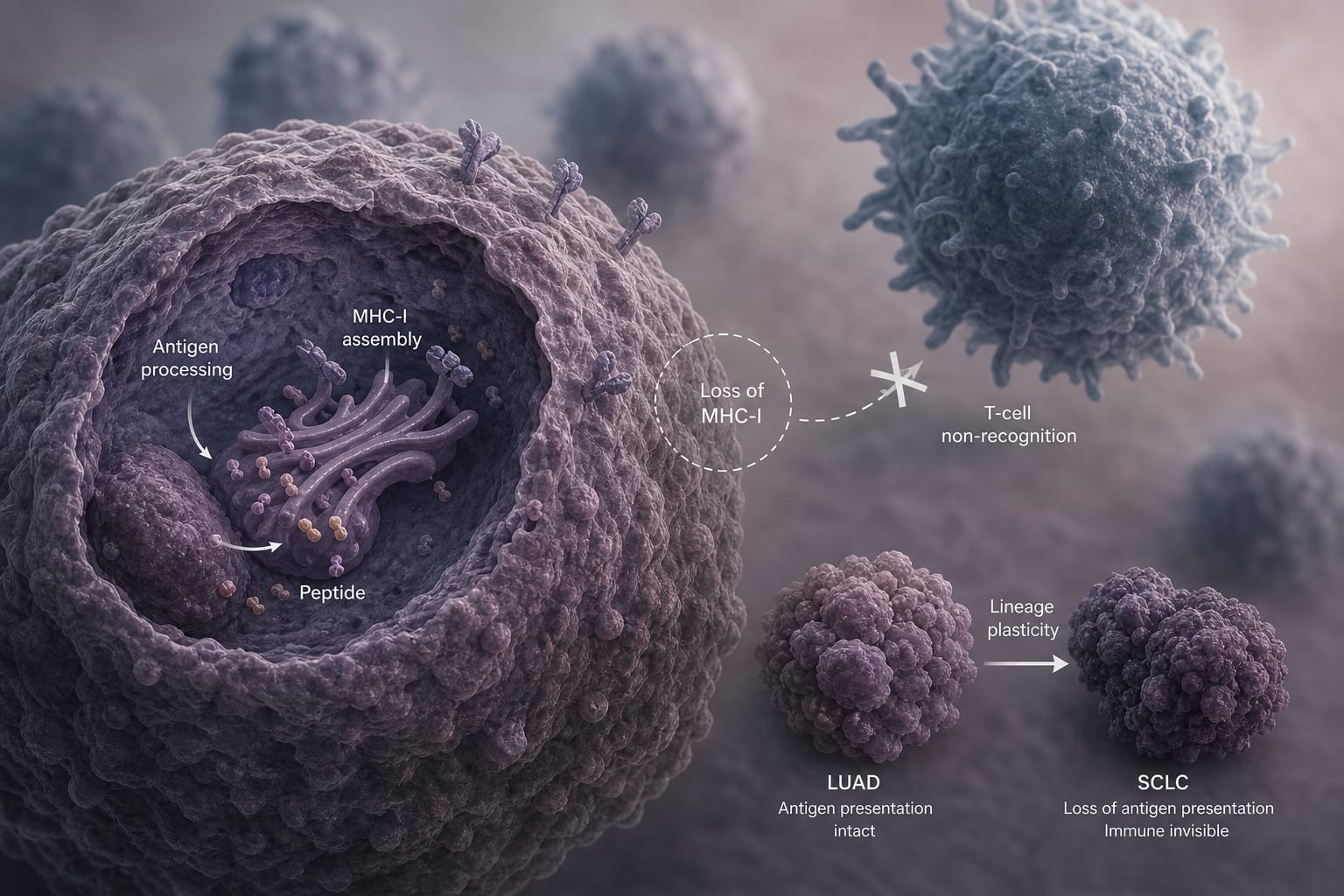
Lineage plasticity and impaired MHC-I antigen processing and presentation
Target Population
Patients with primary SCLC and those with transformation from EGFR-mutant LUAD to SCLC
Care Setting
Oncology
Key Highlights
Lineage plasticity contributes to immune resistance in SCLC.
Impaired MHC-I antigen presentation leads to 'immune invisibility'.
Chemoimmunotherapy is established for extensive-stage SCLC.
Transformation from LUAD to SCLC may affect immune response.
Durable benefits from immune checkpoint inhibitors in SCLC remain limited.
Guideline-Based Recommendations
Diagnosis
Assess lineage plasticity and antigen presentation capacity.
Management
Consider chemoimmunotherapy for extensive-stage SCLC.
Investigate DLL3-directed T-cell engagement for previously treated disease.
Monitoring & Follow-up
Monitor for changes in lineage state and antigen presentation.
Risks
Limited efficacy of immunotherapy in transformed SCLC and neuroendocrine tumors.
Patient & Prescribing Data
Patients with SCLC and those with LUAD transformation
Responses to PD-1/PD-L1 blockade are low in EGFR-mutant and ALK-rearranged NSCLC.
Clinical Best Practices
Evaluate tumor mutational burden and PD-L1 expression.
Consider T-cell infiltration and tumor microenvironment factors.
The goal of this clinical trial is to learn if Adaptive Radiation Therapy (ART) is safe and effective in treating patients with locally advanced pancreatic cancer.