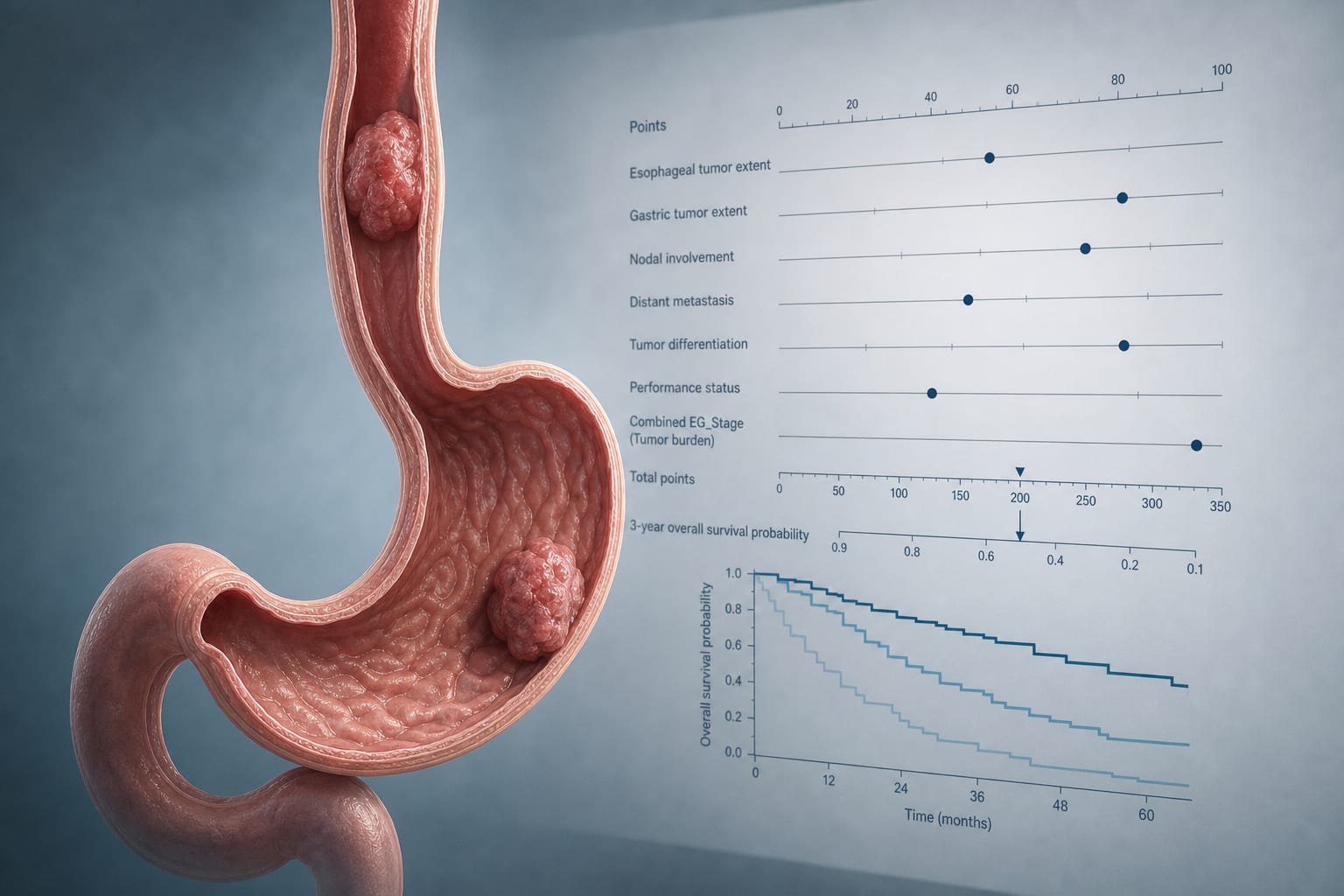
A novel nomogram utilizing tumor burden for assessing synchronous esophageal and gastric cancers: creation and external validation
By
Meng Xie
Jing Wang
Ziyu Jia
Ke Ji
Qi Wu
September 4, 2026
Clinical Scorecard: A novel nomogram utilizing tumor burden for assessing synchronous esophageal and gastric cancers: creation and external validation
At a Glance
Category Detail
Condition Synchronous esophageal and gastric cancers (SEGC) Key Mechanisms Combined EG_Stage framework for risk stratification Target Population Patients with synchronous esophageal and gastric cancers Care Setting High-volume tertiary cancer center
Key Highlights
Development of a prognostic nomogram integrating age, treatment modality, and Combined EG_Stage External validation showed a C-index of 0.681 for overall survival Median overall survival was significantly different between risk stratification groups (41 vs 22 months) Nomogram aims to improve individualized prognostic evaluation for SEGC Limited sample size warrants cautious interpretation of results Guideline-Based Recommendations
Diagnosis
Pathologically distinct primary malignancies diagnosed within a six-month interval Management
Multimodal treatment options including surgery or endoscopic therapy Monitoring & Follow-up
Survival follow-up and assessment of treatment outcomes Risks
Prognostic uncertainty due to clinical heterogeneity of SEGC Patient & Prescribing Data
Patients diagnosed with synchronous esophageal and gastric cancers
Incorporation of treatment modality as a prognostic indicator
Clinical Best Practices
Utilize the Combined EG_Stage framework for assessing tumor burden Consider age and treatment modality in prognostic evaluations Engage in multidisciplinary management for SEGC patients Related Resources & Content