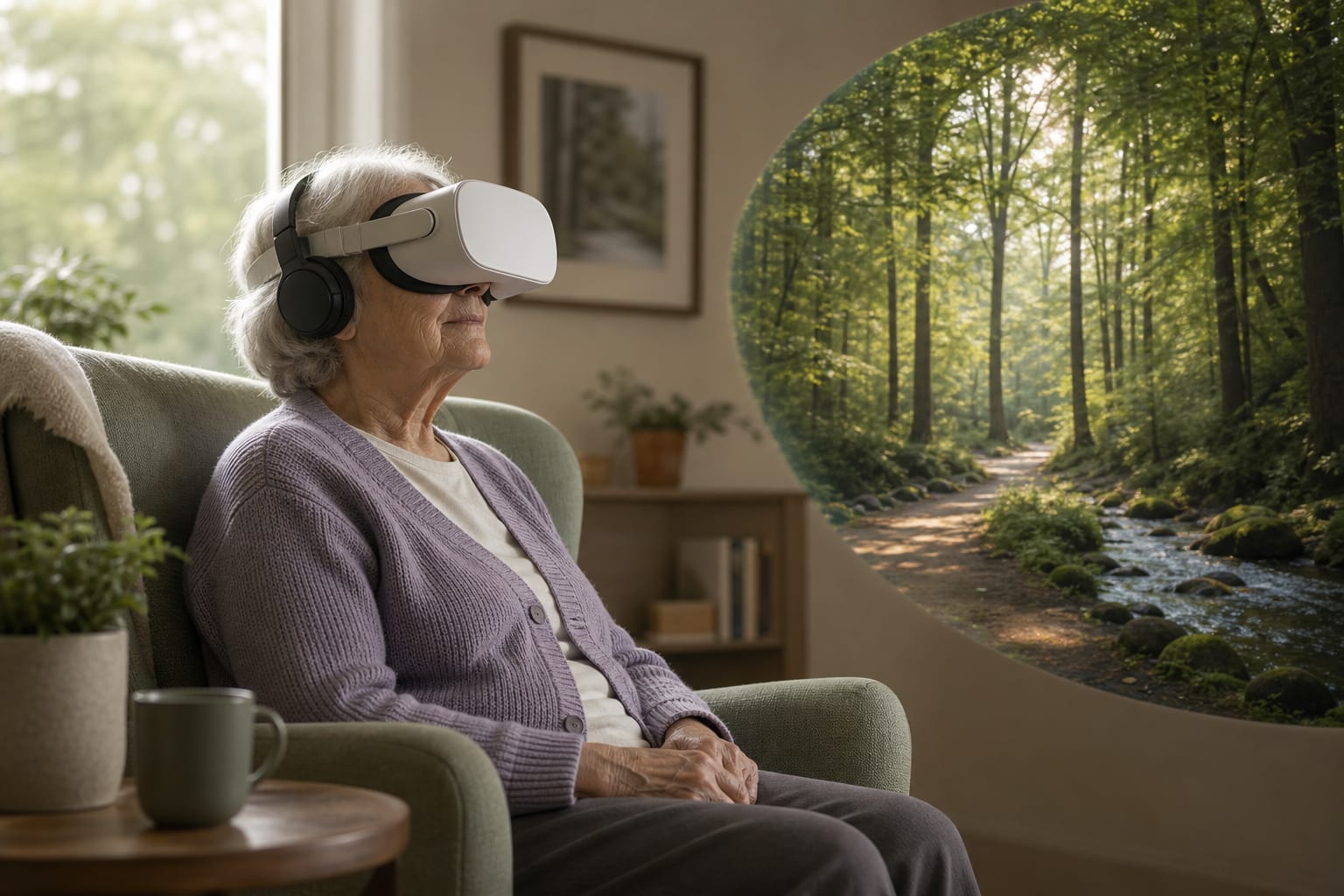
VR-based nature interventions for health promotion in long-term care facilities (Nature Boost)—a mixed-methods feasibility study protocol
Clinical Scorecard: Feasibility Study Protocol for a Virtual Reality Nature Intervention to Enhance Health in Long-Term Care Settings (Nature Boost)
At a Glance
Category Detail
Condition Long-term care Key Mechanisms Virtual reality-based nature intervention aimed at enhancing psychosocial well-being. Target Population Residents in long-term care facilities and nursing staff. Care Setting Long-term care facilities
Key Highlights
Assessment of feasibility and acceptability of VR nature intervention. Focus on psychosocial effects including sleep quality and anxiety. Involvement of both residents and nursing staff in the intervention. Potential to improve nurse-patient relationships and overall well-being. Framework for international adaptation of VR interventions. Guideline-Based Recommendations
Diagnosis
Qualitative assessment of feasibility through semi-structured interviews. Management
Implementation of twelve 15-minute VR sessions over four weeks. Monitoring & Follow-up
Quantitative analysis of secondary outcomes such as depressive symptoms and loneliness. Risks
Potential barriers to implementation in long-term care settings. Patient & Prescribing Data
Residents in long-term care facilities with limited access to natural environments.
Nature-based interventions may enhance mental health and well-being.
Clinical Best Practices
Integrate low-threshold nature-based interventions into everyday care routines. Foster trust and strengthen nurse-patient relationships. Related Resources & Content