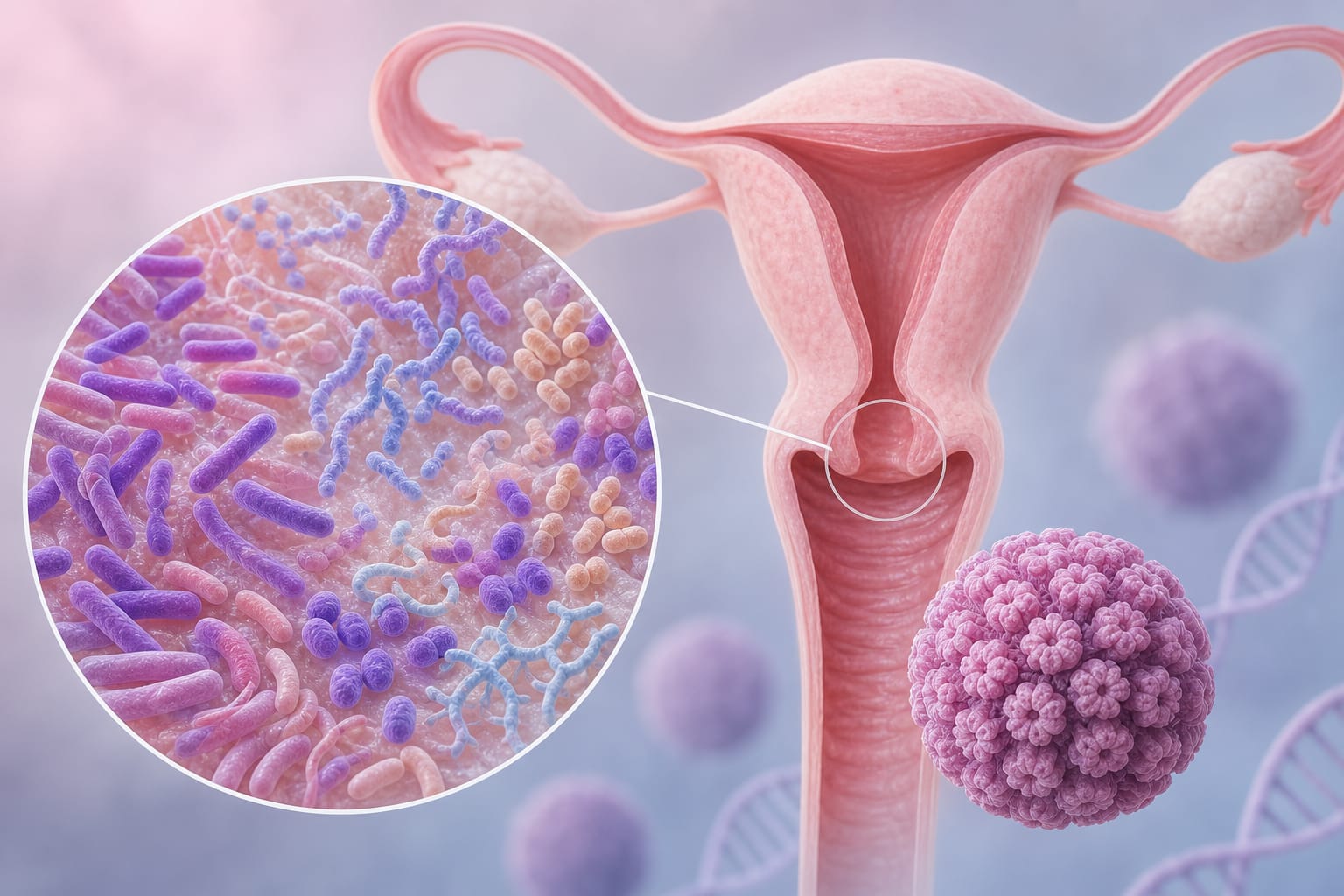
Associations between vaginal microecological status and high-risk human papillomavirus positivity in women from Eastern China: a retrospective cross-sectional study - Scorecard - MDSpire
Advertisement
Associations between vaginal microecological status and high-risk human papillomavirus positivity in women from Eastern China: a retrospective cross-sectional study
Clinical Scorecard: Linking Vaginal Microbiome Characteristics to High-Risk Human Papillomavirus Infection in Women from Eastern China: A Retrospective Cross-Sectional Analysis
At a Glance
Category
Detail
Condition
High-Risk Human Papillomavirus Infection
Key Mechanisms
Vaginal microecological status influences hrHPV infection rates.
Target Population
Women attending gynecological and reproductive health services in Eastern China.
Care Setting
Hospital-based laboratory assessment.
Key Highlights
Overall hrHPV positivity was 15.99% among 14,359 women.
Bacterial vaginosis (BV) and trichomonal vaginitis (TV) were associated with higher odds of hrHPV positivity.
Age-specific distributions of hrHPV positivity were observed, with the highest rates in women aged ≤20 years.
Guideline-Based Recommendations
Diagnosis
Utilize same-visit vaginal and cervical sampling for hrHPV testing.
Management
Consider vaginal microecological status in hrHPV infection management.
Monitoring & Follow-up
Monitor for vaginal dysbiosis in women with hrHPV positivity.
Risks
Increased risk of hrHPV positivity associated with BV and TV.
Patient & Prescribing Data
Women with diverse clinical indications for gynecological evaluation.
Addressing vaginal microecological abnormalities may be relevant in hrHPV management.
Clinical Best Practices
Conduct comprehensive assessments of vaginal microbiome in hrHPV positive women.
Implement age-specific strategies in hrHPV screening and management.