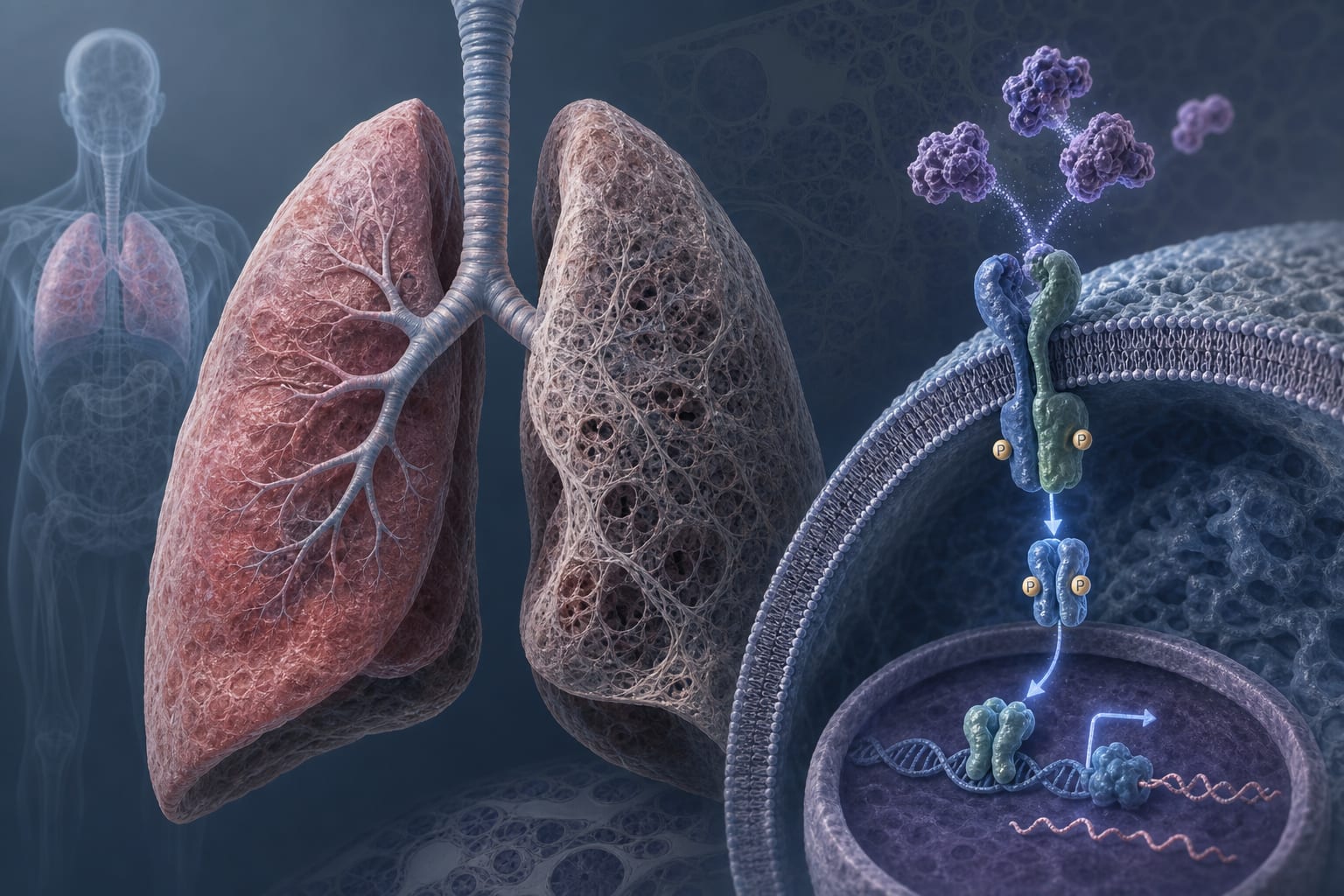
Activation of the Type I Interferon Pathway in Interstitial Lung Disease Linked to Connective Tissue Disorders
-
By
-
Tobias M. Defesche
-
Thomas Koudstaal
-
Marjan A. Versnel
-
Odilia B.J. Corneth
-
Zana Brkic
-
June 11, 2026
Clinical Scorecard: Activation of the Type I Interferon Pathway in Interstitial Lung Disease Linked to Connective Tissue Disorders
At a Glance
| Category | Detail |
|---|
| Condition | |
| Key Mechanisms | Type I interferon (IFN-I) signaling is implicated in the pathophysiology of CTD-ILD. |
| Target Population | |
| Care Setting | |
Key Highlights
- Up to 40% of ILDs are progressive, marked by lung function decline and increased symptoms.
- IFN-I activation correlates with pulmonary decline in CTD-ILD.
- Anifrolumab, an IFN-I blocking agent, is under clinical investigation for CTD-ILD.
Guideline-Based Recommendations
Diagnosis
- Progression of ILD in CTD is defined by ≥ 10% relative decline in forced vital capacity (FVC) or radiological progression.
Management
- Immunosuppression is standard therapy for ILD; antifibrotics like nintedanib are used in progressive fibrotic cases.
Monitoring & Follow-up
- Serial pulmonary function testing is essential to assess progression of ILD.
Risks
- Up to 40% of patients with CTD-ILD develop progressive pulmonary fibrosis (PPF).
Patient & Prescribing Data
Patients with connective tissue diseases experiencing interstitial lung disease.
Many patients continue to progress despite treatment, highlighting the need for biomarkers and targeted interventions.
Clinical Best Practices
Related Resources & Content