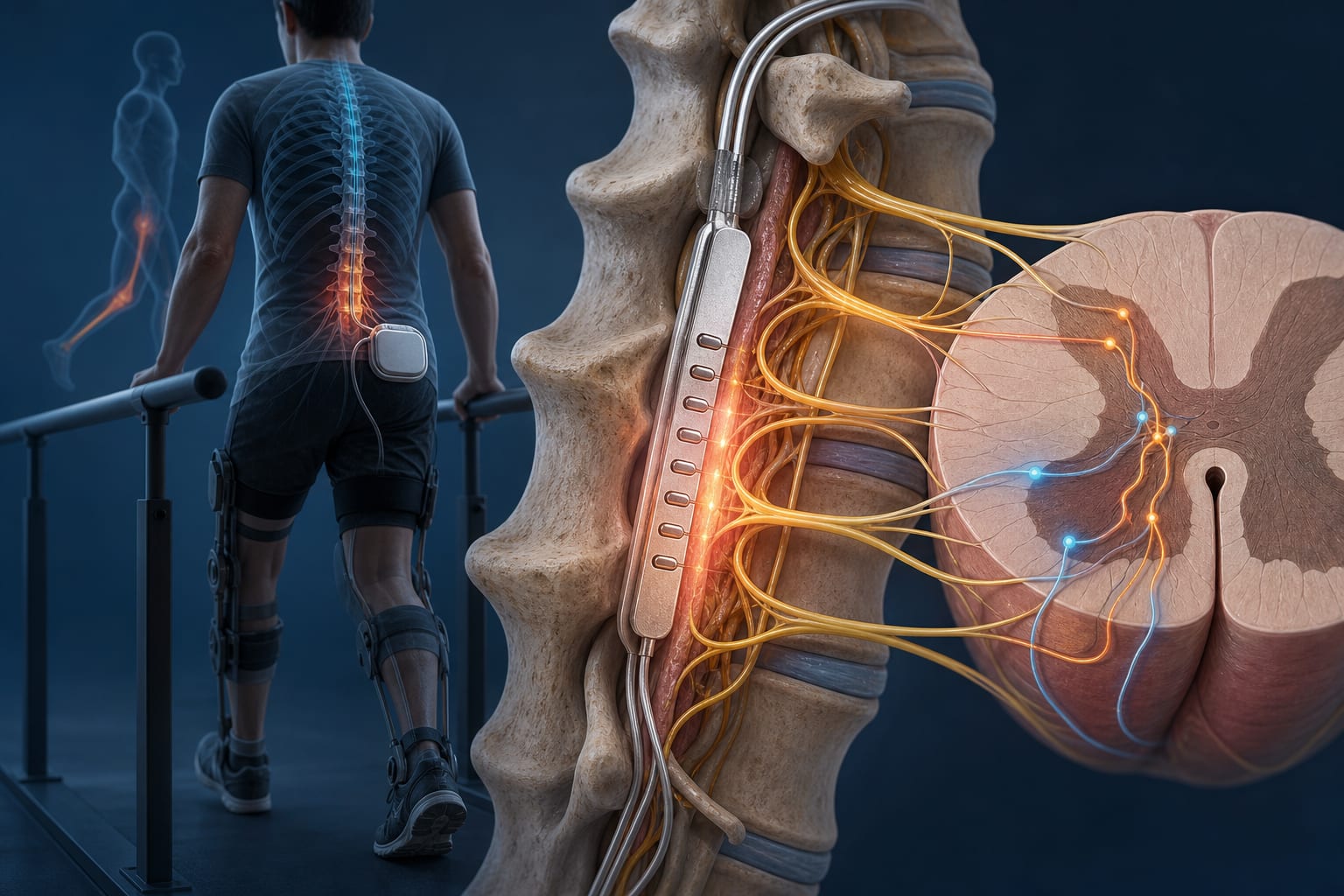
Research progress on the effects of epidural electrical stimulation on lower extremity function in patients with spinal cord injury
By
Fei Xie
Chao Bai
Xinping Luan
Jian Xu
July 9, 2026
Clinical Scorecard: Advancements in Understanding Epidural Electrical Stimulation's Impact on Lower Limb Function in Spinal Cord Injury Patients
At a Glance
Category Detail
Condition Spinal Cord Injury (SCI) Key Mechanisms Epidural electrical stimulation (EES) modulates spinal motor networks and enhances excitability through targeted stimulation. Target Population Patients with chronic incomplete SCI and a subset of those with motor-complete SCI. Care Setting Rehabilitation settings focusing on neuromodulation and motor recovery.
Key Highlights
EES can improve lower extremity motor functions including standing, stepping, and walking. EES effectiveness is influenced by injury severity, stimulation parameters, and rehabilitation intensity. Current evidence is limited by small sample sizes and heterogeneity among studies. Guideline-Based Recommendations
Diagnosis
Assess injury completeness, neurological level, and time since injury. Management
Integrate EES with task-specific training for optimal outcomes. Monitoring & Follow-up
Evaluate functional recovery and adjust stimulation parameters based on individual response. Risks
Consider potential limitations due to severe conus medullaris or peripheral nerve involvement. Patient & Prescribing Data
Individuals with chronic spinal cord injury, particularly those with incomplete motor function.
EES may facilitate recovery in patients with residual descending pathways when combined with rehabilitation.
Clinical Best Practices
Utilize individualized programming approaches for EES. Combine EES with activity-based therapy to enhance motor recovery. Related Resources & Content